
By Taylor Ware
“By 3 years of age, there is a 30-million-word gap between children from the wealthiest and poorest families. A recent study shows that the vocabulary gap is evident in toddlers. By 18 months, children in different socio-economic groups display dramatic differences in their vocabularies (Fernald, Marchman, & Weisleder 2013).”
To address this issue, the National Youth Leadership Council devised the National Literacy Project: Bridging the Divide. Tasked with developing this initiative was the Citizenship and Service-Learning (CASL) office here at Missouri State University. The project asks that students create and assemble a variety of reading and writing literacy resources which are to be housed on the CASL website.
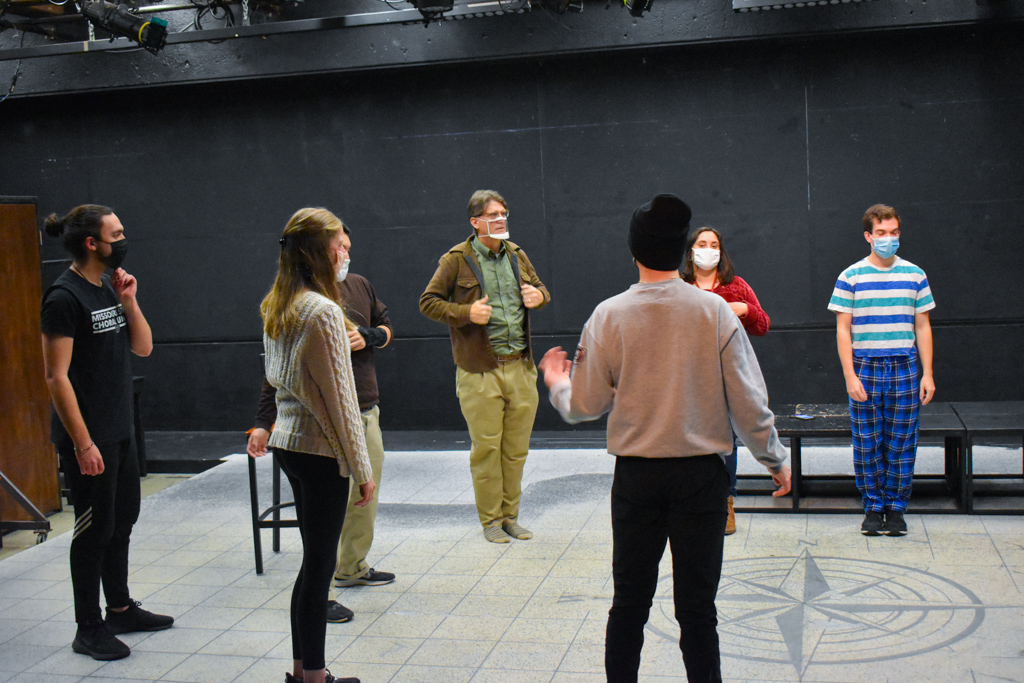
Last fall, an entire classroom committed to this project. Professor Telory Arendell’s Theatre for Social Change course spent their semester hard at work writing, practicing, designing, and performing. Honor’s student Matt Walter took the lead as producer of their project.
Theatre for Social Change is considered the capstone experience for theatre students. The first half of the semester is spent learning the history of social movements in relation to theatre. The second half of the semester is spent drafting and fleshing out new pieces focused on social change.
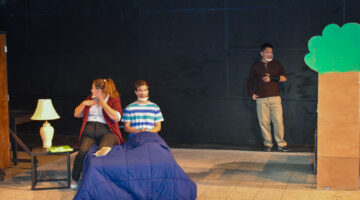
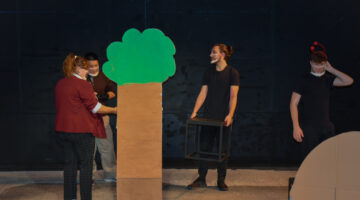 When asked what theatre for social change meant, Walter said, “It’s a stage performance that has a weighty social agenda. It moves away from being solely about entertainment and adds a crucial educational piece.”
Their approach to the project was inventive. It operated on the philosophy that visual media are among the first ways children begin to understand language and storytelling which are the building blocks of literacy. Theatre allows its viewers to participate in a unique way. There is a specific atmosphere carefully crafted for them. Audiences observe as emotions take shape on the performer’s faces in real-time. These factors make theatre the perfect place for kids to foster an interest in literacy and an ability to interpret it.
The class utilized two stories written by Richard Beans who is on sabbatical from working as a psychology professor. These plays were intended for a preschool-aged audience, so they also adapted the stories for middle schoolers. The pieces dealt with issues like friendship, collaboration, decision making, empathy and more.
Professor Arendell said, “It’s a well-known fact that those who have been read to from a very young age are at an advantage. It helps them learn to transfer words from a page to real concepts in the mind. This is the development of imagination which helps later once books don’t have pictures. It’s an important stage of childhood. Theatre puts those pictures and words on the stage and gives it emotion making it the perfect place to address literacy.”
It is also the perfect place to address issues that many children and people face. Theatre for social change is a growing movement in the United States and is even making its way onto Broadway. Those with disabilities are being invited to perform in shows that are compatible with their needs. Shows like The Curious Incident of the Dog in the Night-Time about a boy with autism can see success in massive venues like in the West End. Professor Arendell expressed that those types of opportunities weren’t around when she began at MSU in 2008.

Aside from the wonderful things this project is doing for audiences, it’s also a great experience for the students working on it. “We are very excited for this opportunity to be working on something bigger than our classroom that’s on a national level. We get to actually do theatre for social change rather than only talk about it,” said Walter.
As producer, Walter worked as the bridge between his class and the service-learning office. This fits very well with what a producer does for larger productions. He also created a timeline as well as coordinated supplies, resources and the filming of the pieces.
Walter was not the only student with a leadership role. There were two directors, an assistant director, a stage manager and students responsible for costume, lighting, sound, and dramaturgy. “It was definitely a new experience. Learning to balance the expectations of our different roles was a challenge and a great learning tool,” said Walter.
The collaborative efforts of these students are an exceptional example of service-learning in action. Stay tuned to the CASL website for videos of the performances and much more.
Roles
Producer: Matt Walter
Directors: Nathan Lewton & Cassidy Hayden
Assistant Director: Cameron Mabie
Stage Manager: Taryn Huffman
Adapters/Writers: Emily Smith & Chloe Jewell
Set Designers: Matthew Raymer & Kenzi Ream
Costume Designers: Rachel Anthonis & Elysa Wagner
Prop Master: Julia Makarsky
Lighting Designers: Haley Reynolds & Taryn Huffman
Sound Designers: Joseph Pham & Abigail Jensen
Dramaturges: Richard Beans & Logan Starkey
Discover more from Citizenship and Service-Learning Blog
Subscribe to get the latest posts sent to your email.