

For many College of Natural and Applied Sciences (CNAS) students in the department of computer science at Missouri State University, researching how advanced technologies can address real-world challenges is at the heart of their learning experience.
Zubair Faruqui and Abiha Chowdhury are two graduate students who are exploring ways to make artificial intelligence more transparent and reliable in health care.
Faruqui
Originally from Chittagong, Bangladesh, Faruqui developed a love for science early in life through reading science fiction. These stories often featured curious young protagonists solving complex problems through intelligence and compassion.
“Growing up, those stories gave me both an escape and a dream of becoming a scientist and writer,” he said.
While in school, he competed in mathematics and informatics Olympiads, earning several regional and national medals. These competitions sharpened his analytical and problem-solving skills.
Algorithms led him to study computer science in college. During his undergraduate years at Bangladesh University of Engineering and Technology, he participated in programming contests and represented his university twice at the International Collegiate Programming Contest (regionals).
Faruqui’s interest in AI grew as advanced AI systems began solving complex math and programming problems. Curious about how they worked, he pursued graduate study in machine learning, computer vision and natural language processing at Missouri State.
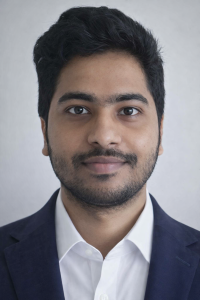
Many machine learning models can analyze medical images, such as chest X-rays and brain MRIs with high accuracy. However, they often work like a “black box,” making predictions without explaining the reasoning.
“In health care, this lack of transparency can be a serious concern. A model might be correct for the wrong reasons,” Faruqui said.
His research guides AI models to focus on medically meaningful areas in images. Radiologists often annotate regions that are important for diagnosis, and his method incorporates those annotations during training. If the model focuses on unrelated areas, it receives a penalty, encouraging it to rely on clinically relevant evidence.
Through experiments using thousands of X-rays, Faruqui found that this approach can significantly improve how well the model’s explanations match expert knowledge while maintaining strong predictive accuracy.
“In simple terms, my goal is to help AI systems be not just accurate, but right for the right reasons,” he said.
In November 2025, he presented his research virtually at the IEEE International Conference on Tools with Artificial Intelligence in Greece.
His thesis advisor, Dr. Rahul Dubey, assistant professor in computer science, has supported him through this project.
“He helped guide my research and encouraged careful thinking about experimental design,” Faruqui said.
After completing his master’s degree in July 2026, he plans to pursue a PhD and build a career at the intersection of AI research and real-world applications.
Chowdhury
Chowdhury grew up in Dhaka, Bangladesh. Her interest in computing began with video games.
“As a child, I was curious about how games worked behind the scenes,” Chowdhury said. “I wanted to understand how characters moved and how decisions were programmed.”
Over time, this curiosity grew into a broader interest in algorithms and software development. She realized that computer science could also be used to address real-world problems.
Chowdhury moved to the United States for further studies, leading her to Missouri State in May 2024.
“Moving exposed me to new opportunities, perspectives and research environments,” she said.
Her research focuses on explainable AI for medical diagnosis.

Many AI models used in health care generate predictions without clearly explaining how they reached them. This lack of transparency can make it harder for clinicians to fully trust the results.
“My goal is to develop AI systems that are both accurate and transparent,” Chowdhury said. “Doctors should be able to understand how the model reached its decision.”
One of the most exciting moments in her research came when she applied her algorithm to classify stages of Alzheimer’s disease. A medical expert reviewed the results after testing the model and confirmed the approach was both theoretically sound and meaningful for practical medical use.
“That feedback helped me realize the research’s real impact,” Chowdhury said.
She credits several mentors for supporting her work. Her advisor, Dubey, guided the research process and helped strengthen the project’s academic rigor. Dr. Tayo Obafemi-Ajayi, associate professor in the cooperative engineering program, gave feedback on the study’s methods and broader research direction. Dr. Daniel Hier was the medical expert who evaluated the clinical relevance of the results.
Chowdhury presented her research at the Einhellig Interdisciplinary Forum in spring 2025. Her paper, “Enhancing Explainable AI for Medical Imaging: Improved LIME Interpretation with Influence Mapping,” has also been accepted for presentation at the IEEE Conference on Artificial Intelligence this May.
Through her research experience, she has developed both technical knowledge and important research skills, including persistence and structured problem solving.
“In research, setbacks are normal. Learning to stay patient and keep improving your work is very important,” she said.
After graduating this spring, Chowdhury plans to pursue a PhD and continue studying responsible and transparent AI systems.