
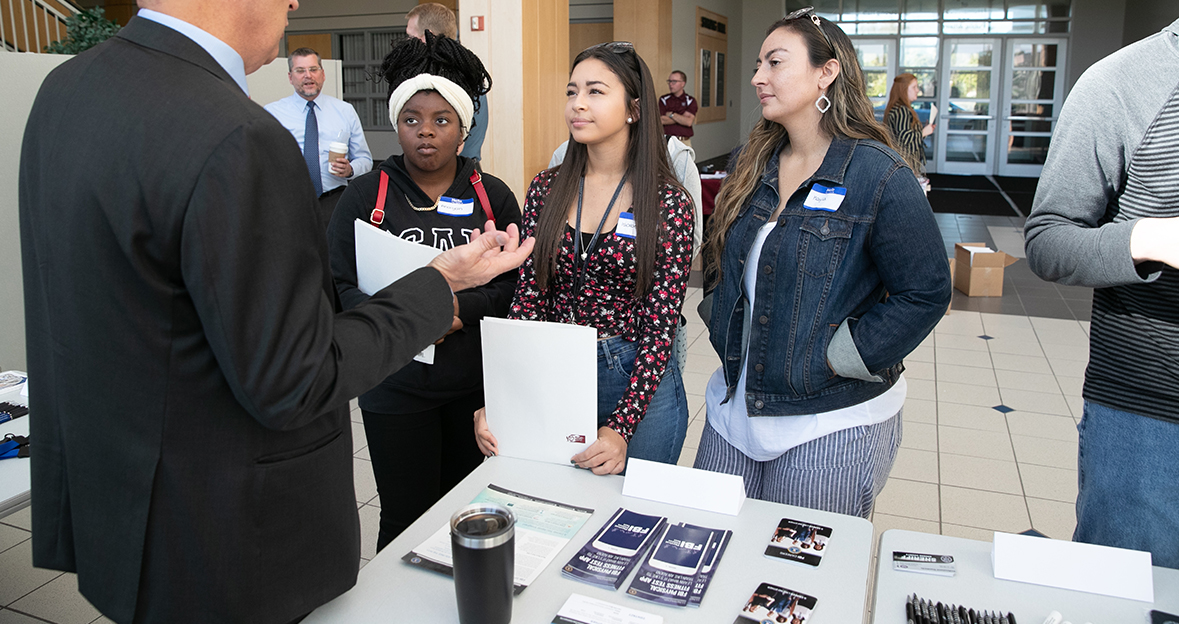
Travel, specialized training, exciting in-the-field work: working for the FBI can seem like the dream gig. To get there isn’t easy, but it’s possible. Here’s what it takes to become a special agent.
…but first off, not every FBI job is to be a special agent. Non-enforcement jobs include:
- Intelligence analyst
- Forensic accountant
- Language analyst
And a background in criminology helps get you to any point you want. Any path you take in the FBI will require the background screening and some interviewing process. To specifically be a special agent, though, there’s a 9-step hiring process. Here is the condensed version of the Special Agent Selection Process Manual along with some tips from Bridgett Patton, Public Affairs Specialist for the FBI.
“We look for people who display leadership and passion in their field.” -Bridgett Patton, Public Affair Specialist, Kansas City FBI
So let the take away here be invest your time in the specific things you love about criminology. (What’s your passion? Investigation? Counter-terrorism? Homeland security?
Step 1: application process
The beginning application process is a straight-forward portal to get your basic info: work experience, education, identification. These things must prove you meet the minimum qualifications:
- Be a U.S. Citizen.
- Be between 23 and 36 years of age.
- Have a bachelor’s degree from a U.S.-accredited college or university.
- Have at least two years of full-time professional work experience.
- Have a valid driver’s license and six months of driving experience.
- Meet the physical requirements.
- Be able to obtain a top secret clearance.
Your application should also communicate the eight “Core Competencies”:
- Collaboration
- Communication
- Flexibility
- Initiative
- Interpersonal Ability
- Leadership
- Organizing and Planning
- Problem Solving and Judgment
Step 2: phase I exam
The phase I exam is taken via computer at testing centers across the country. If your application is accepted, you’ll receive an email on when and where to do this.
The exam is a personality and critical thinking test. You’ll face logic problems where you’ll have to recognize patterns and valid inferences. The personality test will gauge your response to different situations, seeing if you’re a good fit for this work.
Step 3: required information
Just as it sounds. You’ll submit self-evaluated reports of physical, mental and linguistic skill.
Step 4: meet and greet
A meeting with a processing field officer(s). This is the preliminary interview for the next step. This verifies your information and eligibility. The information reviewed to see how you’ll fare in the “phase II test”.
Step 5: phase II test
This is about 23 weeks into the process. Also, get ready to travel; the testing sites for phase II are in or near major U.S. cities.
The test has a written component and an interview component. The written component will test your ability to analyze and report scenarios you’ll encounter. 2.5 hours with a break. The interview is a panel of 3 FBI agents asking straight forward questions. Tips: be yourself, be specific and don’t make any assumptions about what they know or what they’re asking.
Step 6: official physical fitness test
You passed the phase II test. Congrats! But it’s not all mental fortitude; you have to prove your physical mettle now.
There are 4 physical tests everyone takes: situps, 300-meter sprint, pushups, and 1.5-mile run. (Luckily, there’s a training app for this test.)
The handbook has charts with the amount of points for each level of performance in the four tests. If you wanted to evenly spread the work to the tests, the breakdown could be:
| Exercise | Female range | Male range |
|---|---|---|
| Situps | 41-42 | 43-44 |
| Pushups | 22-26 | 40-43 |
| 300-meter (seconds) | 59.9-57.5 | 49.4-48.0 |
| 1.5 mile | 12:59-12:30 | 11:34-11:10 |
Step 7: conditional appointment offer
Shortly after you pass your physical test, you’ll get your conditional appointment offer. You have 5 days to except, then the FBI will start their background investigation
Step 8: background investigation
Medical examination, personal security interview, polygraph examination, drug test, fingerprinting…at this point the weight of responsibility and expectation become very clear. This process takes about 6 months.
Step 9: basic field training course (BFTC)
You’re heading to Quantico, Virginia. The FBI Academy lasts 21 weeks. You’ll be paid during this training.
And special agent isn’t the end of your career path. New, specialized opportunities open up for already-enlisted agents all the time. Wherever you want to go, the criminology department is ready to get you started.