At Missouri State, undergraduates have the chance to quantify their skills in international relations — often without adding classes. They can do this by earning a Peace Corps Prep certificate, which is offered from the Peace Corps right here on our campus. The program is supported by funding from the College of Education and the division of community and global partnerships.
Peace Corps Prep Certificate
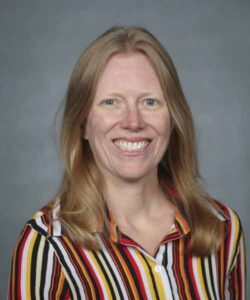
Suzanne Mwengi, academic administrative assistant in the Center for Academic Success and Transition, is a member of the Peace Corps Prep Committee and a returned Peace Corps volunteer. She says the certificate can support a broad range of goals.
For students interested in serving in the Peace Corps, the certificate can provide a competitive edge in the Peace Corps application process. “And for students who aren’t planning on going into the Peace Corps, having the certificate on your résumé shows you’re prepared for international work,” she says.
And since many students already take courses that meet the certificate’s curricular requirements, they can often earn the certificate without adding extra classes to their schedule.
In addition to completing the curriculum, students must meet a few more requirements to earn the certificate. And luckily, these requirements provide great professional development opportunities. For example, the certificate requires at least 50 hours of relevant volunteer service or professional experience. Students must also set up time with Sherry Elkins, career resources specialist, to get feedback on their résumés and interview skills, and they must meet with a member of the Peace Corps Prep committee.
Review All Peace Corps Prep Certificate Requirements
Personal Perspectives
Several Missouri State students who’ve earned the Peace Corps Prep certificate have gone on to serve. One alumnus, Patrick Ladd, who earned his certificate in spring 2024, is currently serving with the Peace Corps in Albania. He shared the following insight:
From Patrick Ladd
“I am working with a local municipality in a youth center, where recently, I have been working with other volunteers and community members to organize a couple of summer camps. One summer camp is based around leadership and community participation… The other is a free, two-week summer camp… for local high-school girls that teaches them the basics of computer programming through front-end and back-end web design…
Overall, I have already learned a lot — not only about Albania, but also about myself… There is a lot of uncertainty within the Peace Corps, such as where you will be placed, where you will be working, what you will be doing at work, who you will be working with, what your host family will be like and sometimes, even what country you will be placed in. All of these things essentially force you to be adaptable; otherwise, I’m not sure you would be able to succeed… Once you arrive at your site, you just have to jump in and try your best to help.”
Suzanne Mwengi’s Story
When Mwengi served in the Peace Corps, she’d recently completed her graduate program in biodiversity, conservation and policy. She happily accepted the chance to serve at a wildlife reserve on the Shire River in Malawi. With a Malawian counterpart, she worked to build connections among the communities that surrounded the reserve — with the hope that they might play a role in managing the reserve. They visited many villages and encouraged residents to create formal constitutions. Once the villages had these constitutions, they would more readily be able to make contracts with the government, including an official agreement to manage the wildlife reserve.
Ultimately, a nonprofit stepped in to manage the reserve, which nullified the original purpose of Mwengi’s project. But like Ladd, she says the Peace Corps amplified her ability to adapt, and she still found great value in the work. “The process of creating a constitution reinforced the villages’ power to decide what they needed and wanted, and it allowed them to apply for other government grants,” she says.
And, she says, there was “another very important thing” about her Peace Corps experience. It’s how she met her husband, Dr. Bernard Kitheka, associate professor in the School of Earth, Environment and Sustainability. He was serving in Malawi with Voluntary Service Overseas, a British organization that’s similar to the Peace Corps. Mwengi and Kitheka met through their work, and the rest is history.
Connect With Colleagues
Across campus, you’ll find people who can share stories like Ladd’s and Mwengi’s. Other returned Peace Corps volunteers include:
- Dr. Erin Kenny, Associate Professor in the Department of Sociology, Anthropology and Gerontology (served in Mali)
- Dr. Ashley Leinweber, Associate Professor in the Department of Political Science and Philosophy (served in Niger)
- Dr. Alan Tinkler, English Department Head (served in Papua New Guinea)
- Dr. Barri Tinkler, College of Education Dean (served in Papua New Guinea)
Discover more from Academic Expressions
Subscribe to get the latest posts sent to your email.