Missouri State University

Skip to content Skip to navigation
a b c d e f g h i j k l m n o p q r s t u v w x y z

Alumni News

A blog for Missouri State University alumni.

  • Alumni Association
  • Resources
  • Update Info
  • Volunteer
  • Homecoming
  • Contact Us
You are here: Home / Feature / Phenomenal, powerful, perceptible progress
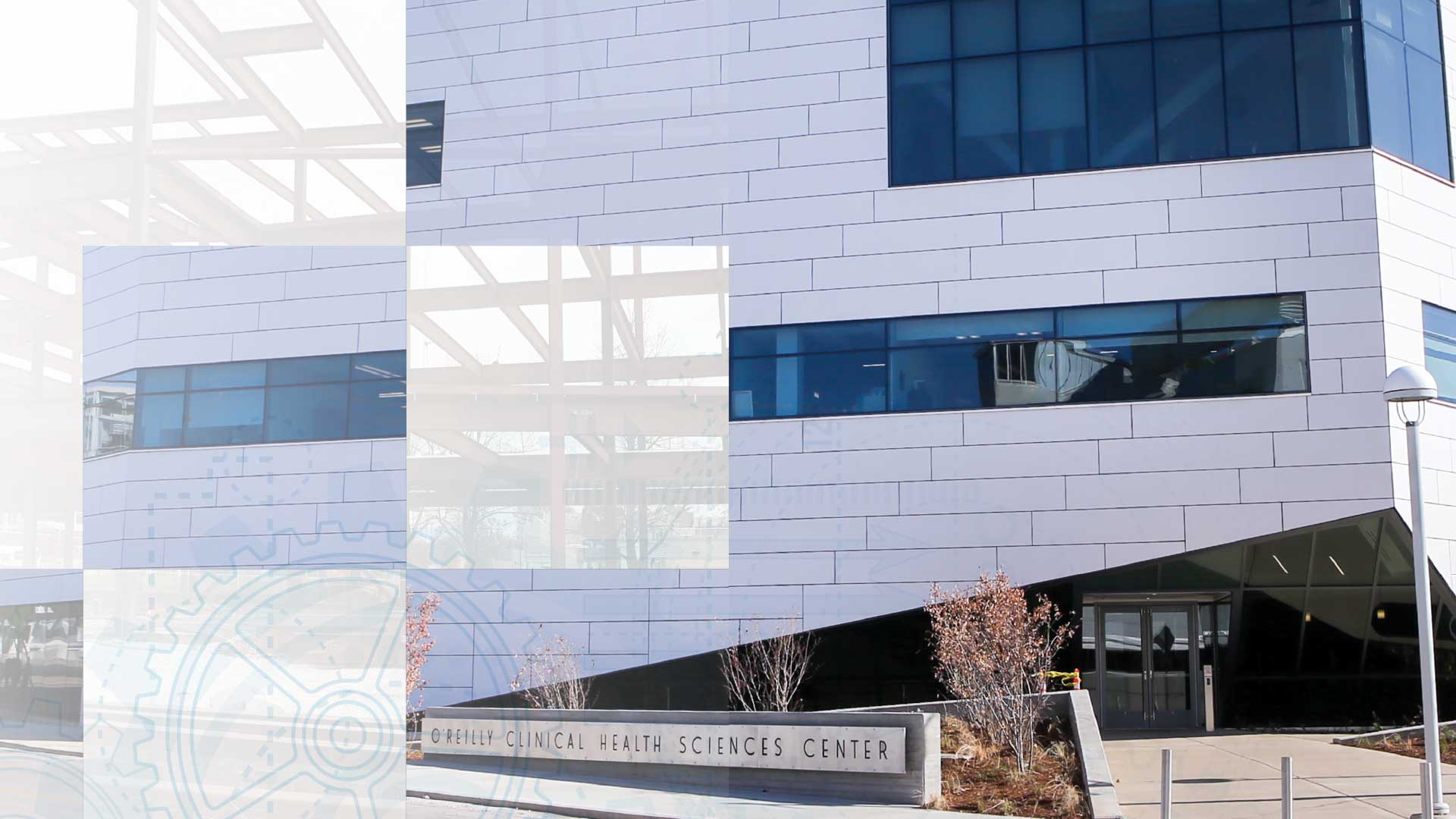
O'Reilly Clinical Health Sciences Center

Phenomenal, powerful, perceptible progress

Brand-new buildings and amazing renovations have recently changed the face of the University, and more improvements are on the way. Here’s why the physical portion of campus is so important and how Missouri State plans to keep enhancing the University environment.

January 21, 2016 by Michelle S. Rose

Share:

  • Share on X (Opens in new window) X
  • Share on Facebook (Opens in new window) Facebook
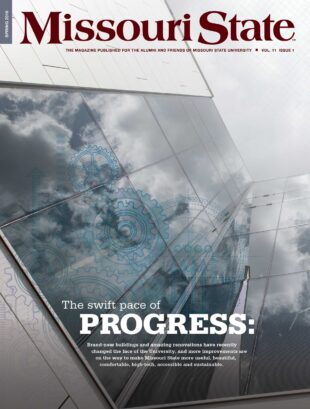
January 2016 magazine cover
Published in the January 2016 issue of the Missouri State Magazine.

Douglas Sampson is the busiest he has been in 25 years working at Missouri State University.

The University architect, who is also the director of planning, design and construction, doesn’t expect the pace to slow any time soon.

“New construction and renovation have really picked up in the past two to five years,” he said, since campus leaders and deans have expressed ambitious visions, private giving has been extraordinary and some long-awaited state funding has finally become available. “President (Clif) Smart has been very successful in putting projects together and allowing construction to start.”

In just a few years, significant new buildings such as the Davis-Harrington Welcome Center and O’Reilly Clinical Health Sciences Center have become part of campus, and Missouri State has renovated many academic, residential and athletic facilities to make them more useful, beautiful, comfortable, high-tech, accessible and sustainable.

“We’re making the campus a better place for students, faculty and staff,” Sampson said. “We take a lot of pride in our campus. We hope these projects are really going to make a long-term impact by attracting more students and bringing pride to alumni.”

We take a lot of pride in our campus. We hope these projects are really going to make a long-term impact by attracting more students and bringing pride to alumni.

Douglas Sampson
Architect and the director of planning, design and construction

Why facilities matter at Missouri State University

One of the first major new construction projects Sampson worked on was Strong Hall. Strong, finished in 1998, is known for a modern look, with streaming sunlight and expansive views from the soaring windows.

“I think that building changed architecture on campus,” he said. “People started to understand what significant projects could do to upgrade the University.”

When you step onto any campus, he said, you get a sense of life at that place.

These new buildings will improve teaching, learning, recruiting, the student experience and raise our profile as a major University.

President Clif Smart

“Buildings mold people. Good architecture leads to a lot of great things, especially classroom development. For example, studies have shown the more natural light you can bring into a classroom, the better the test scores are for students.”

Missouri State is dedicated to improving facilities because the campus experience matters so much to the potential students we want to recruit and retain. Because of a shrinking pool of possible college students nationwide, MSU faces stiff competition.

“These new buildings will improve teaching, learning, recruiting, the student experience and raise our profile as a major University,” President Clif Smart said in his State of the University address. “Students want to come here, and that’s a good thing. … I am very pleased that we are growing in times that are challenging for universities.”
Architectural styles on campus

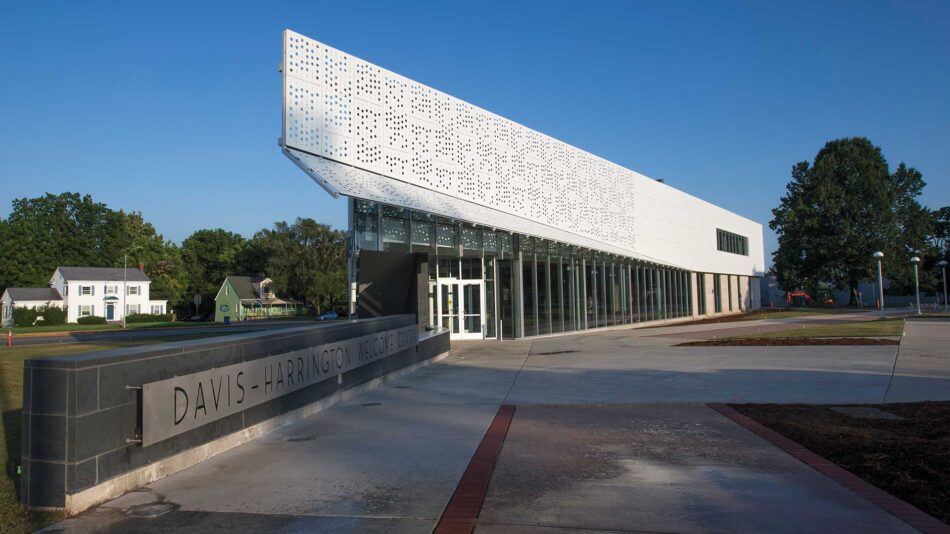
Not all Missouri State buildings look the same, and that is fine, said Douglas Sampson, University architect and director of planning, design and construction. “Each building has its own personality. We have a bit of an eclectic collection that ties together thanks to some style controls.” For example, the roof on Strong Hall mimics the one on Carrington Hall. Some materials and looks are standardized — we have a lot of limestone — and some change due to building needs, sustainability practices and current trends. Some styles on campus:

  • Classical: Carrington Hall, Hill Hall, Siceluff Hall
  • Art deco: McDonald Arena
  • International: Pummill Hall
  • Mid-century modern: Cheek Hall, Ellis Hall
  • Brutalism: Temple Hall
  • Modernism: Davis-Harrington Welcome Center, Foster Family Recreation Center
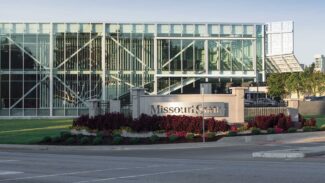
Davis-Harrington Welcome Center
Photo by Jesse Scheve

About the Davis-Harrington Welcome Center

In the highly competitive world of higher education, first impressions are critical.

This 13,000-square-foot facility, opened in August, serves as our new “front door.” Campus tours start from the Welcome Center, and there are displays about Missouri State.

Some admissions offices have moved to the building. Eventually, admissions and registration services may move to this expanded location, providing a one-stop-shop for potential students.

Some materials selected for the project are subtle tributes to Missouri State’s early years as a teacher’s college. Slate, a type of rock, is found in the Welcome Center. Teachers in some of the first MSU classrooms wrote on slate boards. In addition, the dot pattern on the upper siding is a representation of the patterns on composition books students used in school.
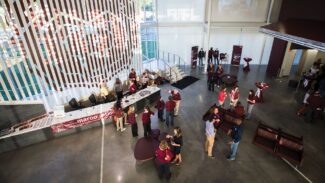
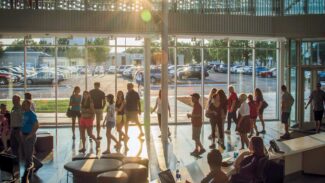
Lobby of the Davis-Harrington Welcome Center
Photo by Jesse Scheve
Lobby of the Davis-Harrington Welcome Center
Photo by Bob Linder
Exterior of the Davis-Harrington Welcome Center and entrance to campus
Photo by Kevin White
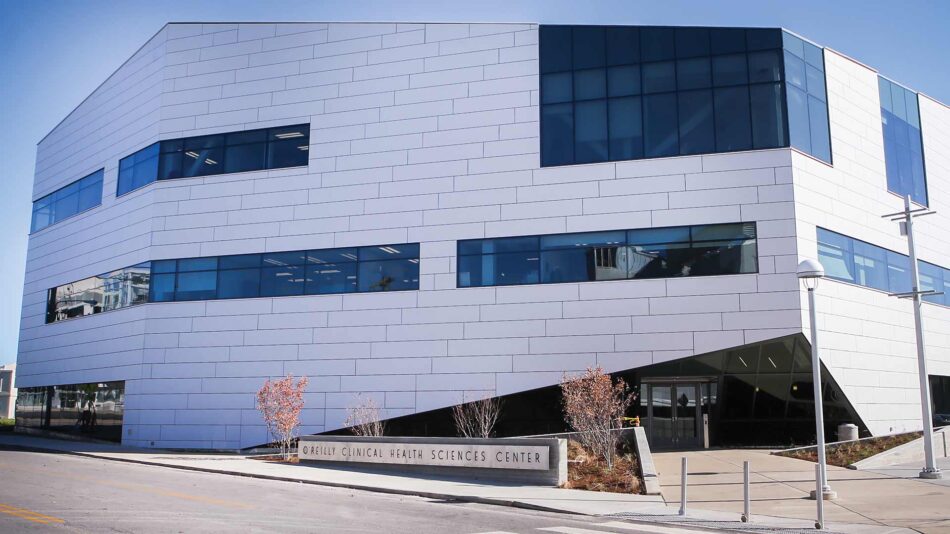
O'Reilly Clinical Health Sciences Center
Photo by Kevin White

About the O’Reilly Clinical Health Sciences Center

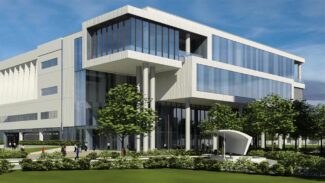
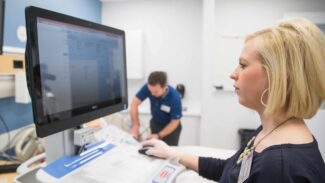
The O’Reilly Clinical Health Sciences Center, opened in fall 2015, houses the nursing, nurse anesthesiology, occupational therapy and physician assistant programs.

“That’s a jewel that has been created over there,” Sampson said. “That building, the Professional Building and McQueary Family Health Sciences Hall, all next to each other, are starting to create a ‘mini campus’ for the College of Health and Human Services.”

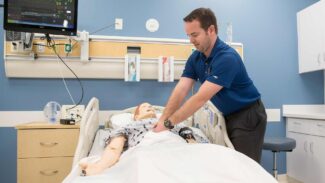
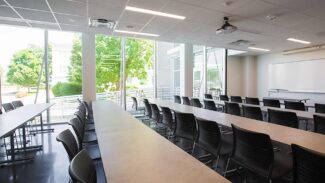
The O’Reilly Center has state-of-the-art classrooms and laboratories, with technology such as mannequins that simulate real patients — they breathe, speak, respond to inquires, have a pulse and can even receive an IV.

This equipment allows students to apply what they’ve learned in the classroom to a more real-world situation without fear of harming the “patient.”

The center also has a primary care clinic, called MSU Care, for uninsured adult patients who are not eligible for coverage under Medicare or Medicaid.

“(This) will expand our ability as a community to reach out to the working poor,” said Smart at the Oct. 6 dedication for the O’Reilly Center.

MSU Care is a partnership between Missouri State and Mercy health care system. Missouri State students are able to receive hands-on training in collaboration with Mercy medical staff, and may earn practicum hours required for their degrees while working in the clinic.
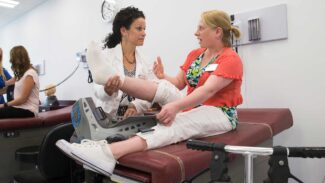
Clinician checking a patient's leg
Photo by Jesse Scheve
Woman looking up healthcare records
Photo by Jesse Scheve
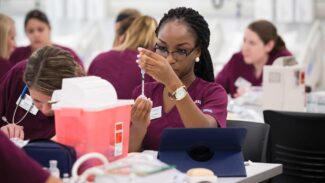
Woman using a syringe to draw medicine
Photo by Jesse Scheve
Man giving chest compressions to a medical mannequin
Photo by Jesse Scheve

Alumna’s passion for nursing benefits students, community

Dr. Susan Berg shares how the new O’Reilly Clinical Health Sciences Center is a beacon of pride for the University.

Read more

How facilities are funded

Many sources come together to make construction and renovations possible. It is always Missouri State’s goal to avoid placing the burden of paying for projects mostly on our students. For example, the new Davis-Harrington Welcome Center was built only through private money and direct state appropriations — no University reserves were used. Some common sources of funding:

State appropriations

As the financial crisis unfolded in the 2000s, overall state appropriations to public universities were often either slashed or stagnant, and little to no funding was provided for construction or building maintenance. State support is trending in a better direction recently, however. In 2015, Gov. Jay Nixon’s budget included both an increase in operating funds for public higher education as well as support for select maintenance and repair projects at Missouri State.

Private giving

The bulk of recent construction on campus was made possible by supporters who see a need on campus and help Missouri State fulfill it. Families, including the Allisons, Davis-Harringtons, O’Reillys, Fosters and Gourleys, have contributed naming gifts. Other alumni and friends have given at many levels. “This has allowed the University to do a lot of things that we couldn’t do otherwise,” Sampson said.

Bonds

Public universities may raise money by issuing bonds, a type of long-term borrowing. Bonds are sold to investors. In exchange, MSU promises to repay the borrowed money with interest. Bonds may be tax-exempt.

Grants

These may be from either governmental or private sources.

Budget items

Missouri State tries to put aside money in the budget to address necessary upgrades.

Student fees

Students may vote to impose fees on themselves for projects they want (for example, the Taylor project). The recent Bear Experience and Recreation Fee contributed to new student seating at Plaster Stadium and the creation of several new complexes used for soccer, track and field, sand volleyball, field hockey and lacrosse.

Other recent improvements

Sampson predicts 2016 will be just as busy as 2015, since some projects have just been started and others are expected to start soon. Here are some upgrades that have recently been completed or are in progress.

Renovations and additions to Glass Hall

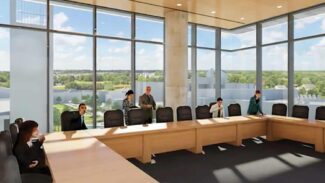
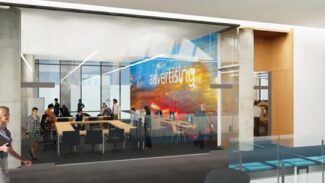
The groundbreaking for this project was held Oct. 15, 2015. The College of Business, now one of the leading business schools in the Midwest, has outgrown its facilities in Glass Hall. The goal of this renovation is to create the best possible environment for business students, with everything from an executive-style boardroom to an area that simulates the New York Stock Exchange trading floor. Glass Hall will get a new main entrance and improvements to common areas, including a café. An addition will house the Robert Gourley Student Success Center, named for alumnus Gourley, ’60, who provided a significant gift. It will have a career center and spaces for advisors and corporate recruiters.
Conceptual meeting room rendering of Glass Hall renovation
Conceptual interior rendering of Glass Hall renovation
Glass Hall exterior renovation

Renovation of Meyer Library

The library is changing to match the needs of its increasing number of users. Books and other print materials will move to more compact shelving, freeing up space for studying and group work, and the computer lab will move. Several offices that serve students are also moving to the library. Phase one of this renovation started in April 2015.

Meyer Library was built in 1980, with an addition in 2002. Since then, foot traffic has nearly doubled.

Annual visitors: 338,266 (2002); 697,095 (2014)

Renovation of Pummill Hall

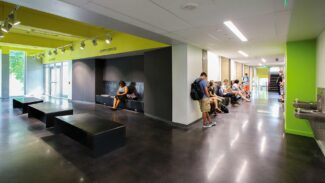
Richard P. Stahl, a renowned Springfield-based proponent of modern architecture, designed Pummill Hall around 1956. It was completed in 1957 and had not had a full refresh until 2015, when it was remodeled inside and out while respecting Stahl’s original design. Pummill is home to the School of Social Work, and the department of hospitality and restaurant administration moved to the third and fourth floors of this building from its former home in the Professional Building. This makes Pummill the new location of the student-run Carrie’s Café, now with a state-of-the-art kitchen.
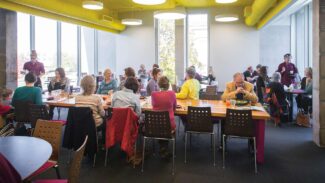
Pummill Hall common area
Carrie's Café
Pummill Hall classroom

Renovation of Temple Hall

This project is to improve laboratory spaces for the College of Natural and Applied Sciences.

Renovation of Sunvilla Tower

Sunvilla was built in 1963 as a high-rise apartment complex, and Missouri State bought it in 1976 primarily to provide housing for nontraditional, older and married students. Sunvilla has been showing its age, and the University considered building a new housing facility — but renovations of this existing one turned out to be more economical. The recent updates to aesthetics, technology and functions (such as the addition of fire sprinklers) have helped to modernize Sunvilla, making it more safe, attractive and comfortable.

Brick City

In 2007, renovations began on a cluster of brick buildings in downtown Springfield that were about 100 years old. This complex is now Brick City, which since late 2013 has been the home of all of the programs in the art and design department at Missouri State.

Renovation of the fifth floor at Jim D. Morris Center

Changes were made to this downtown building to accommodate growth in both the English Language Institute and the Foreign Language Institute.

Renovations at Plaster Student Union

This building has been changed in phases during the past few years. Recently, the entire third floor was overhauled.

JQH Arena

A new LED ribbon board was added to the mezzanine façade to enhance the game-day experience at both Bears and Lady Bears basketball games.

The vision for other campuses

Missouri State University-West Plains

West Plains is a 25-acre, open-admission campus 110 miles southeast of Springfield. It has seen rapid growth in the past few years. In recent years, Gohn Hall — one of the main buildings on campus — was renovated and an addition was built. A student recreation center was built that also serves as a community storm shelter. The latest visioning guide for this campus includes plans to build a new library, an 850-seat outdoor amphitheater and classroom buildings. Expansions and renovations are planned for sites including Hass-Darr Hall, Drago College Store, Missouri Hall and the current library, which will be converted to a different use when the new library is built.

Missouri State University-Mountain Grove

This 192-acre campus, 60 miles east of Springfield, is part of the William H. Darr School of Agriculture. The latest visioning guide for this campus includes plans to create a place to store, taste and sell fruit and wine; develop a wine garden; add a new shadehouse; expand the arboretum; renovate Shepard Hall to provide additional laboratories; remodel the director’s residence and more.

Off-campus resources

  • A master plan is being developed for the William G. and Retha Stone Baker Observatory, located 10 miles northwest of Marshfield.
  • The physical needs of the Bull Shoals Field Station, a research facility at Bull Shoals Lake used by faculty, students and visiting scientists, are being identified.

What’s next for the Springfield campus

Missouri State’s department of planning, design and construction, which is responsible for the development of the campus’ physical environment, has a draft of a visioning guide that outlines major projects for the next 25 years. Here’s what’s coming up in Springfield.

Under way or programmed (projects expected in the next two to five years)

Ellis Hall renovations

Ellis, built in 1959, houses the music department. The building has had few upgrades, so the conditions are less than ideal for a great music program. Renovations will improve acoustics, lighting, climate control (vital for proper instrument storage), handicap accessibility, technology infrastructure, energy efficiency, fire safety and more. The renovations come as the music department is moving toward attaining all-Steinway status, which is when all pianos owned by an institution are designed by Steinway & Sons. Becoming an all-Steinway school will give the music program national prestige. Sam Hamra, chairman of Hamra Enterprises, made a significant gift to the Missouri State University Foundation for the purchase of a Steinway grand piano that will be placed in the renovated recital/lecture room at Ellis.

Hill Hall renovations

Hill, built in 1924, houses the College of Education and the department of psychology. Parts of the building have not been upgraded since original construction. Offices and classrooms have been created from every usable space, and the rooms do not meet the needs of today’s students and teachers. Planned renovations will improve handicap accessibility, heating and cooling, the electrical system, lighting, restrooms, technology infrastructure, energy efficiency, fire safety and more.

Ozarks Health and Life Science Center construction

This new interdisciplinary science center will be between Kemper Hall and Glass Hall. It will house undergraduate and graduate programs.

McDonald Hall renovations

McDonald Hall, built in 1940, houses the kinesiology department. It will have interior renovations to meet the current needs of the program, as well as electrical and mechanical system upgrades.

Carrington Hall renovations

This campus landmark, built in 1908, is Missouri State’s main administration building. It will be renovated to reallocate space to better meet current and future needs. It will also have infrastructure upgrades.

Welcome Center expansion

This second phase will allow some departments to move from Carrington Hall to the Welcome Center, freeing up some room as Carrington is also renovated.

Science complex phase one (Temple Hall renovations)

This is the first phase of a two-phase vision for a “science quad” in the southwest corner of campus. Temple, constructed in 1969, is the home of the College of Natural and Applied Sciences. It needs major upgrades to expand and modernize classrooms, laboratories and research space.

New facility for theater and dance

The current Art Annex will be razed, and a new facility designed just for theater and dance will be built. It will have studios, at least one theater, a scene shop, dressing rooms and more.

New connections to public transportation

An “intermodal transfer station” is planned for the northeast edge of campus. The station will be a place where people can connect to public transportation or access pedestrian and bicycle pathways. It will increase parking options and will also have retail and office space. The University will partner with City Utilities and the Ozark Transportation Organization to bring expanded transportation options to downtown Springfield, and will work with the City of Springfield and Ozarks Technical Community College to promote and increase mass transit use.

Support services center

This building on the west side of campus will consolidate services such as receiving, custodial, environmental management, grounds, maintenance and work management.

Planned (projects expected in the next six to 10 years)

  • Cheek Hall renovation: To redesign and modernize the building
  • Craig Hall renovation: To upgrade Coger Theatre and change the building to meet the current and future needs of the College of Arts and Letters
  • Professional Building addition: To meet the needs of the College of Health and Human Services
  • Science complex phase two: Kemper Hall and Kings Street Annex renovations
  • Updates to Baker Bookstore

Students pass referendum to help pay for upgrades to health center

In October 2015, Missouri State students voted in favor of a fee of $29 per semester, per student, to pay for improvements to Taylor Health and Wellness Center. The Student Government Association proposed this referendum in acknowledgement of interest from the student body.

Taylor is the medical home for MSU, with primary care providers and specialists such as psychiatrists and dermatologists. All students who have prepaid a health fee, and their household members age 6 and older, are eligible for services at Taylor. MSU faculty, staff, retirees and household members age 6 and older may also receive services. Visitors to campus who become ill or injured may also be seen at Taylor.

Exterior of the current Taylor Health and Wellness Center
Proposed rendering of the new Taylor Health and Wellness Center

In 2014, a study showed Taylor was running at about 97 percent occupancy on a daily basis and was on track to outgrow its facility. Because the fee passed, a new center, approximately twice Taylor’s size, will be built on the site. Taylor’s services will be moved to another location on campus while the building is being constructed.

This facility is also expected to introduce services that were not previously offered, including a women’s health center, sports medicine clinic, drive-through pharmacy, mental health counseling services and more.

Students won’t be charged the fee until fall 2017. Groundbreaking is expected this fall.

See visioning guides

Support the renovation project of your choice


Discover more from Alumni News

Subscribe to get the latest posts sent to your email.

Filed Under: Feature Tagged With: 2016, Feature, january, spring

Share:

  • Share on X (Opens in new window) X
  • Share on Facebook (Opens in new window) Facebook

Related

Leave a Reply Cancel reply

Your email address will not be published. Required fields are marked *

Connect with Alumni Association

  • Facebook
  • Twitter
  • LinkedIn

#GoMaroon

  • Accessibility
  • Disclaimer
  • Disclosures
  • Equal Opportunity Employer and Institution
  • © 2026 Board of Governors, Missouri State University
  • Contact Information

Loading Comments...