
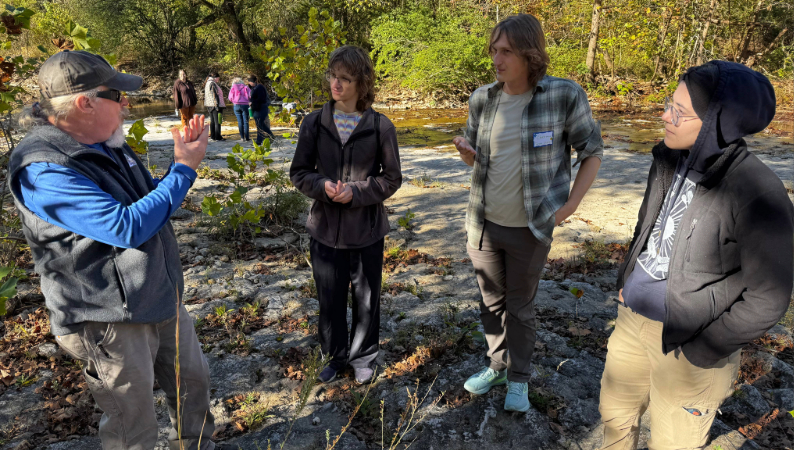
Freshwater research brought scientists and students from seven states together at Missouri State University for three days of learning, collaboration and discovery.
The university’s College of Natural and Applied Sciences (CNAS) and department of biology hosted the 2026 Great Plains Limnology Conference Oct. 16-18 at Roy Blunt Hall. The event welcomed more than 90 participants from Missouri, Arkansas, Iowa, Kansas, Nebraska, Oklahoma and Texas.
Associate professors of biology Dr. Deb Finn and Dr. La Toya Kissoon-Charles organized the conference. It provided an informational and affordable space for students and researchers to share their work, exchange ideas and connect with others in freshwater science.
The annual conference has brought researchers together from across the Great Plains region for more than 50 years.
Sharing research and new ideas
This year’s conference featured 15 oral presentations, 26 research posters and a plenary talk by Dr. Walter Dodds, university distinguished professor at Kansas State University. Presentations covered two major areas: ecosystem ecology and management, and organismal research focused on populations and communities.
Researchers explored topics, such as excess nutrients in aquatic systems, climate change and watershed management.
Several Mo State students presented their research:
- Korinna Brandt, biology graduate student
- Riley Cook, biology/wildlife-fisheries senior
- Darby Foster, biology graduate student
- Sarah Guymon, biology/environmental biology and evolution senior
- Lily Smith, biology/wildlife-fisheries junior
- Kendal Tavares, biology/pre-teacher education senior
- Kalea Yagow, biology graduate student
“This is one of my favorite conferences to attend because the community is so welcoming,” Smith said. “I was able to connect with other students conducting similar research, receive feedback on my own work from experts in the field and brainstorm future collaborative projects.”
The students also helped organize the event. They assisted with registration, presentation setup, session moderation, poster displays and leading field trips.
Three students from the Freshwater Ecosystems class led the kayaking trip at Fellows Lake, drawing on their familiarity from class discussions and coursework.
“These opportunities gave students valuable experience interacting with researchers from across the region,” Finn said.
More than research presentations

Saturday’s sessions took place in Roy Blunt Hall’s new addition. The building’s open spaces accommodated presentations, networking and an afternoon poster session.
Attendees also connected outside the conference sessions. Besides the visit to Fellows Lake, Friday’s activities included a social at Tie and Timber, while Sunday offered a field trip to Bull Creek.
According to Finn, one of the conference’s biggest benefits was helping students build confidence and professional connections.
“I think attendees learned a lot, students got out of their comfort zones and introduced themselves to more well-established scientists,” she said. “Everyone met several new people to add to their freshwater ecology contact lists.”
Those connections could lead to future research opportunities. One group was inspired to propose a special session focused on freshwater ecosystems across the Great Plains at the Society for Freshwater Science’s annual meeting in Omaha in May 2027.
The proposed session will highlight the importance of freshwater systems in a region that often receives less attention in aquatic ecology.
Supporting freshwater research
CNAS and the biology department received support from Bob and Barb Kipfer; City Utilities; James River Basin Partnership; Ozarks Environmental and Water Resources Institute; Society for Freshwater Science; and Watershed Committee of the Ozarks to make the conference possible.
Finn credited these contributions with helping make the event a success.
“We couldn’t have done it without them,” she said.
Discover more from Biology Blog
Subscribe to get the latest posts sent to your email.