Missouri State University

Skip to content Skip to navigation
a b c d e f g h i j k l m n o p q r s t u v w x y z

CNAS NewsWatch

An online publication for the alumni and friends of the College of Natural and Applied Sciences

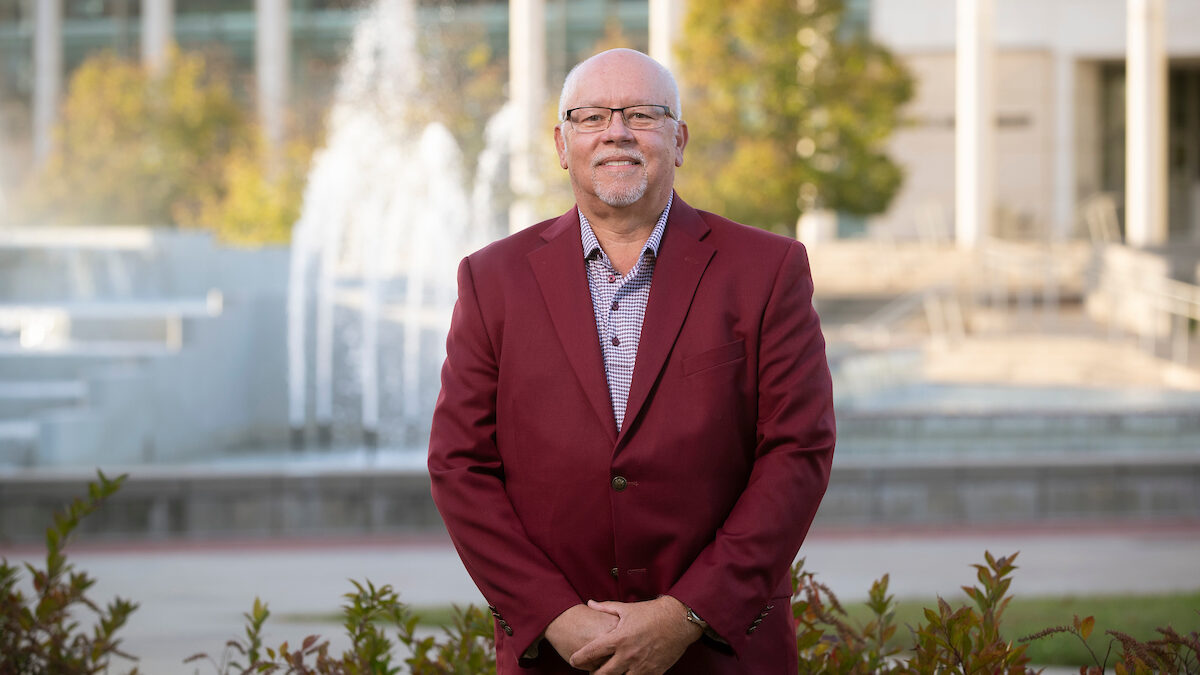
Matt Harthcock on Missouri State University Springfield campus.

Five questions with a campaign cabinet member

Meet Matt Harthcock.

June 25, 2021 by admin

Matt Harthcock graduated from Missouri State with a bachelor’s degree in chemistry in 1977 and went on to receive his PhD in chemistry from Texas A&M University.

His story

Since then, he has made significant contributions to product development and innovation in the plastics, automotive and aviation industries.

His past employers include The Dow Chemical Company and GE Plastics, now a part of Sabic.

He retired in late 2019 from Schneller (a TransDigm company), an aviation and aerospace materials company in Ohio. He now resides in Ohio and Florida, and is CEO of his own company, Solutions by Harthcock Associates.

He has served MSU on the chemistry department’s advisory board and the Foundation Board of Trustees.

Now, he’s also a member of the Onward, Upward campaign cabinet.

He and his wife Patricia — who also attended MSU — have established gifts to help the next generation of chemists and faculty.

Q. This issue is about faculty support. During your time at Missouri State, was there a specific faculty member who transformed your educational experience?

A. I had great professors in general at Missouri State. Drs. James O’Brien, Ralph Sheets, Wyman Grindstaff, Robert Ernst and Clifton Thompson stand out, for example.

In particular, Dr. Clif Thompson, who was at the time dean of what is now the College of Natural and Applied Sciences, was instrumental in me becoming attached to physical chemistry and research. I did undergraduate research with him. Imagine that he had time for me and research as the dean, while he was also teaching a course or two. He was a great teacher, advisor and mentor.

We got a new piece of equipment for the department which I/ we were the first to use and on which I did my research. This Cary UV Visible Spectrophotometer was a great instrument for us to study charge-transfer complexes. I even gave a paper on the research at the Missouri Academy of Science and got the third-place award.

Dean Thompson advised me on my career interests, which turned from forensic science/ chemistry to physical chemistry research. I got more interested in going to graduate school to do research. He had done some postdoctoral work in the state of Texas and recommended that I apply to Texas A&M University’s chemistry graduate program. It was an up-and-coming program — you can tell that today by how they rank. I applied and was accepted. I did great on entrance exams to determine which graduate courses that I could take because of, what I have said many times over the years, my solid education at MSU. I did great in all the graduate courses and graduated with my PhD with an emphasis in physical chemistry five years after graduating from then-SMSU.

He was a great mentor and we remained in contact for many decades after. I appreciate all he did for me!

Q. You, your wife, Patricia, and your family have all given back to Missouri State, both in service and financially. Why do you feel it is important to give back, and why specifically to Missouri State?

A. We made a decision as part of our philanthropic activities to give to the two universities that did so much to build a strong foundation for me to achieve what I have in my career. It has enabled and blessed us to be able to give back.

Missouri State University and Texas A&M University — both maroon-and-white schools — are very special to us and are great educational institutions. I was so blessed and fortunate to have attended these two great universities.

My parents were very supportive of my education endeavors and interest from the start of elementary school. Every time we donate, I think of them and how they supported me emotionally and financially. They even wanted to know what special books or science tools they could get for me — which they often did. That is why our first endowed scholarship was in honor of them, for their 50th wedding anniversary.

Q. What drew you to make a gift to specifically benefit faculty?

A. We had established an endowed student scholarship, as mentioned, in honor of my parents, and an endowed graduate student fellowship. We thought, let’s do something a little different.

One of the areas of focus for the Onward, Upward Campaign is faculty. Faculty have a significant impact on students! As I mentioned, I had several faculty that were very good at MSU. You often don’t realize their impact and quality until you are gone and experience other situations.

Again, Dean Thompson was an inspiration while and after being at then-SMSU. We hope this gift reflects on the importance of high-quality faculty like him and others to educate students.

Creating an endowed faculty fellowship is a way to help recognize faculty. At the same time, students benefit from faculty who have the skills and accomplishments to receive such a fellowship.

Ours is just the second faculty endowment for CNAS. We have largely focused our giving to the chemistry department and CNAS as we like to target specific areas that have benefited us, and to support the sciences.

Q. How do great faculty affect Missouri State as a whole, whether that’s teaching, research or the community?

A. We recently had a meeting of the chemistry department’s advisory board. During the update we received on the department’s activities, I reflected on all the terrific work and activities that are occurring in the department. There have been such significant changes in the decades since I graduated. The university overall has approximately doubled in enrollment.

And when I attended, there really were few undergraduate students who did research projects, and essentially no graduate program.

I went back to my notes from the meeting and here are some highlights that also caused me to reflect on the impact faculty can have:

  • In 2019/2020, there were 175 undergraduate chemistry majors (28 graduated) and 25 graduate students (9 graduated).
  • The department has an 85% retention rate.
  • Nearly $40K in foundation scholarships were given to 31 students.
  • Faculty and students published 41 times this past year, with 30 in a typical year — this was typically 0 or 1, I believe, when I was at MSU.
  • The department has $400K in funding. This is an outstanding accomplishment and change over the decades.

I would like to point out that Mind’s Eye, a yearly publication put out by MSU’s marketing and communication division, has been a great way to highlight faculty teaching, research, scholarly activities and community/global impact. I appreciate this initiative the university has taken to highlight faculty accomplishments.

Faculty and teachers can make such a profound impact on a student. I’ve experienced that personally and with my children.

A mediocre/ bad teacher can be demotivating in so many ways, from a student not learning the subject matter to having a bad attitude about education.

On the other hand, a great educator can motivate students to learn and work hard, and can inspire them to accomplish more than they thought possible.

Teachers/educators are undervalued, and our gift to establish a faculty endowment hopefully helps with increasing the impact they can have.

Q. You are issuing a challenge to supporters. What is it and why are you passionate about this?

A. Please “bear” with me (no pun intended) with a bunch of numbers to make my point – remember my first passion is science!

Also, forgive me if some of the numbers are general, not exact and precise, but hopefully they will serve to illustrate my point.

Currently, only about 4.7% of MSU faculty positions are supported with private funds from the MSU Foundation (34 in total for the university’s 742 or so faculty).

Of these, more than 50% of them are in one college, the College of Business. This translates to about 18% of the faculty in the College of Business being supported with private funds from the foundation. The College of Business is MSU’s largest college. About 28% of the university’s students major in some area of business.

The next largest student enrollment is in the McQueary College of Health and Human Services (24% of enrollment). Fewer than 1% of MCHHS faculty are supported with private funds from the foundation.

My family’s faculty endowment in the College of Natural and Applied Sciences will still result in less than 2% of CNAS faculty being supported with private funds from the MSU Foundation.

I would challenge alumni of this great university to dig deep, to be creative in any way they can, and add to faculty support for all of the colleges.

My challenge would be to have 10% of MSU faculty supported with endowments like ours within the next 5 years. It would be great if that is the case in each college.

While this challenge will go beyond the timetable of the Onward, Upward campaign, I, the faculty, students and the university would, however, be grateful and elated to have that occur by the end of the campaign!

Think of the impact and motivation to both faculty and ultimately the students that this kind of support can stimulate. Thanks for reflecting on this! Go Bears!!


Discover more from CNAS NewsWatch

Subscribe to get the latest posts sent to your email.

Filed Under: Chemistry, CNAS Tagged With: Clifton Thompson, James O’Brien, Matt Harthcock, Ralph Sheets, Robert Ernst, Wyman Grindstaff

Share Your Story

Submit your story or accomplishment by completing this form.

Archives

Meta

  • Log in
  • Entries feed
  • Comments feed
  • WordPress.org
  • Accessibility
  • Disclaimer
  • Disclosures
  • Equal Opportunity Employer and Institution
  • © 2026 Board of Governors, Missouri State University
  • Contact Information