
A group of students in the Missouri Louis Stokes Alliance for Minority Participation (MoLSAMP) program at Missouri State University took their research to the national stage.
They attended the Emerging Researchers National (ERN) Conference in Science, Technology, Engineering and Mathematics (STEM) April 4-6 in Atlanta, Georgia.
The American Association for the Advancement of Science, Inclusive STEM Ecosystems for Equity and Diversity Programs and the National Science Foundation (NSF) Division of Equity for Excellence in STEM (EES) within the Directorate for STEM Education host this annual national event. It is aimed at college and university undergraduate and graduate students who participate in programs funded by the NSF EES unit, including underrepresented minorities and persons with disabilities.
The conference helps students enhance their science communications skills and learn how to prepare for science careers in a global workforce. They can present their research, network and explore future career options.
Research and impact

Representing Missouri State at the event were recent graduates Talon Mitchell, Christopher Wells and Jaslyn Johnson, and undergraduate student Brynn Kayhill. Dr. Tayo Obafemi-Ajayi, associate professor in the cooperative engineering program, joined them. She was a judge and saw a strong, supportive culture.
“It’s inspiring to see various professionals from underrepresented minorities come together,” said Obafemi-Ajayi.
Mitchell, a cell and molecular biology graduate, shared his research on how sunscreen chemicals affect cells after exposure to UV light. His work shows that timing is important and using “repair-boosting” ingredients before sun exposure helps but using them afterward can cause damage.
Out of 30 student presenters, he placed second for his oral presentation in the Biological Sciences category.
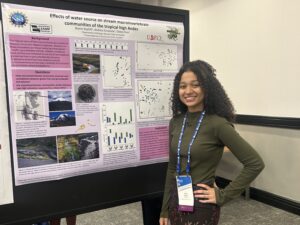
Kayhill, a junior studying wildlife and fisheries biology, shared her findings about small aquatic animals in the tropical Andes. She looked at how these creatures adapt to their environment and how to better protect them.
At the conference, students attended workshops about global STEM careers and connected with representatives from graduate schools.
“I’m excited to find ways to connect research and medicine around the world in the future,” Mitchell said.
The experience also helped students focus on their goals and plan how to achieve them.
“Talking to contacts from graduate schools helped me think about what matters most in picking the right school and gave me a clearer picture of my future path,” Kayhill said.
Discover more from CNAS NewsWatch
Subscribe to get the latest posts sent to your email.