The Missouri Council for Activity and Nutrition recently gave an award to Dr. Daniela Novotny, a registered dietitian and senior instructor in the department of public health and sports medicine at Missouri State University. This award honors a Missouri health professional who finds innovative ways to help Missourians improve nutrition and physical activity for better overall health.
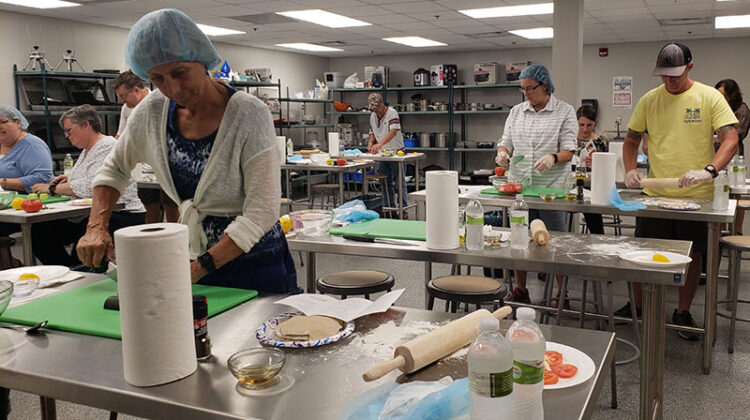
Novotny created a Teaching Kitchen (TK) program for MSU employees and their families. It took place in summer 2021. The program emphasized improving behaviors that affect physical and psychological health through quality health education; the development of new skills; a supportive and safe environment; and exposure to horticulture opportunities in the local community.
Getting students involved
During the program, Novotny created and led education sessions based upon health behavior theory that focused on building nutrition knowledge and encouraging general health principles. These sessions were paired with weekly cooking classes facilitated by MSU dietetics students to increase practical skills and cooking confidence. Novotny provided guidance and mentorship to the students, which allowed them to gain experiences in nutrition education and health promotion.
Additionally, the program consisted of field trips to community sites: a vegetable garden, an urban farm, a farmer’s market tour and a food pantry. Finally, woven throughout the program were activities to emphasize social connectedness, which is associated with improved health outcomes and longevity.
“In my many years of serving as a registered dietitian, this program is at the top of my lists of successes as it allowed me to co-create an experience that addressed social, community and environmental factors related to healthy lifestyles,” Novotny said.
“We can say all day long ‘eat healthier foods and be active,’ but education alone will not bring about change. Pairing educational programs with hands-on activities that promote confidence and self-efficacy with new behaviors has a much better possible outcome.”
Novotny added that the best part about creating the program was working with her students.
“I had an amazing group of students, led by Stephanie Urich, who took on the cooking classes with enthusiasm and creativity. This was 100% a team effort, and without our students volunteering their time and effort, there would be no program. I’m honored for this award, but the true gift for me was being able to share this experience with some amazing students.”
Program outcomes
Data from the program suggested the TK led to improved health behaviors: participants reported increasing their intake of fruits, vegetables and whole grains; making more meals from basic ingredients; and placing a greater emphasis on eating at home. Cooking self-efficacy, comfort in the kitchen and general well-being were also improved among participants.
Furthermore, feedback suggested that the group camaraderie and support were essential for the integration of new behaviors. By taking the initiative to implement comprehensive wellness programming, Novotny provided an environment for laughter and learning—and the encouragement to prioritize health goals amid the pandemic.