Missouri State University

Skip to content Skip to navigation
a b c d e f g h i j k l m n o p q r s t u v w x y z

Health and Human Services News

  • McQueary College of Health and Human Services

Guiding the first steps into college

May 12, 2026 by Sewly Khatun

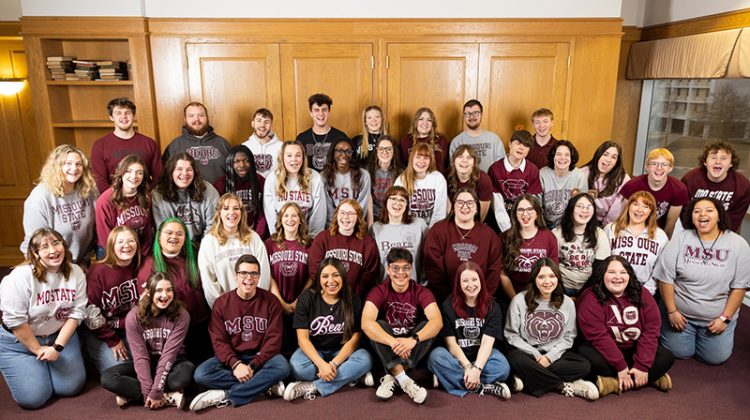
The 2026 SOAR leaders.

Some experiences influence how students begin college. Others define how they remember it.

At Missouri State University, the Student Orientation, Advisement and Registration (SOAR) program does both.  It helps new students navigate campus, connect with advisors, build class schedules and get a clear sense of college life.

What makes the SOAR program stand out is the students leading it.

“SOAR leaders play a key role in helping our new students transition throughout their entire SOAR session,” said Maggie McGowen, coordinator of new student orientation. “They support advising, answer questions and create an environment where students feel comfortable from the start.”

From experience to leadership

Junior biomedical sciences major Kaylee Williams draws on her own experience navigating SOAR for the first time in her role as a SOAR leader.

“I’m a first-generation college student, so coming through SOAR was a very intimidating experience for me,” Williams said.
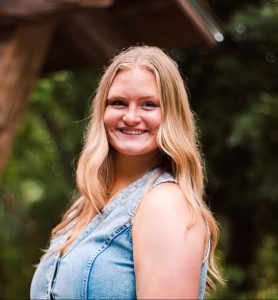
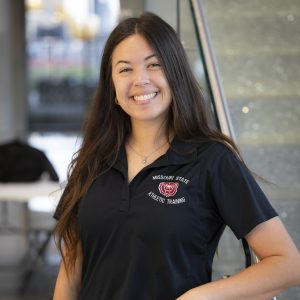
Kaylee Williams headshot.
Kaylee Williams

That moment shaped how she approaches leadership today. After serving as a McQueary College of Health and Human Services (MCHHS) SOAR leader last year, she returns this summer as part of the College of Natural and Applied Sciences (CNAS) team, bringing both experience and perspective.

“I wanted to welcome students who might be feeling overwhelmed,” she said.

Her approach is simple and intentional, centered on connection.

“Students are more likely to open up when they feel like they’re talking to a friend,” she said.

That connection helps students ask questions, build confidence and begin their college journey with clarity.

Stronger support through collaboration

This summer, MCHHS and CNAS will be collaboratively delivering their academic SOAR programming, in an effort to enhance the student experience. Bringing these two colleges together will give the affiliated SOAR leaders an opportunity to learn more about two academic colleges, professionally connect with more staff and faculty and work with a more diverse group of majors.

The idea to collaborate grew from a SOAR practice piloted last summer that allowed undecided students exploring professional health-related pathways to be directed to academic colleges. The goal of the collaboration is to create an experience that helps students better understand the academic contributions each of the two participating colleges present while also encouraging exploration without pressure.

“All of the affiliated SOAR leaders between both colleges will focus upon creating positive experiences that emphasize openness to all the academic opportunities available to them,” said Hillary Mayes, director of MCHHS Student Success and Advisement Center.

SOAR students will participate in shared academic sessions across both colleges. They will hear from multiple advisors, learn about different academic options, and connect with a broader group of peers.  This approach will create consistency in information while giving students more flexibility to explore their interests. It also strengthens the sense of community early in the students’ college experience.

2026 MCHHS SOAR leaders

This year’s MCHHS SOAR leaders are committed to supporting new Bears through the transition to Missouri State. They serve as guides, mentors and trusted voices.

Group 10
Adam Medlar and Faith Barkefelt

Group 11
Oliver Kempker and Sonora Haake

Group 12
Fabian Solano and Kenzie Jasnoch

Group 13
Hannah Helton and I’ron Bell

Group 14
Addison Pollard and Lauren Riddle

Explore SOAR

Filed Under: MCHHS News, Student spotlights Tagged With: Biomedical Sciences, Hillary Mayes, MCHHS Student Success and Advisement Center, students

Where passion meets practice

April 23, 2026 by Sewly Khatun

Athletic training students practice emergency injury response during a hands-on simulation exercise.

A single moment on the field or court can change everything. When an athlete goes down, time slows and someone must be ready, not just with skill, but with calmness, confidence and the instinct to act. 

For Missouri State University graduate students Cooper Lewis and Malia Moore, that moment is not hypothetical — it is the reason they chose the athletic training path. 

Both are in the Master of Athletic Training program at Missouri State and will graduate this spring. Through their time at the university, they have found their purpose by combining a love for sports with a drive to help others. 

Finding the calling

Malia Moore
Malia Moore

Moore grew up in Liberty, Missouri, just outside Kansas City. Her path to athletic training began through personal experience. 

“I played soccer in high school and suffered from an injury,” she said. “I saw what athletic trainers did firsthand and knew this was something I wanted to do in future.” 

While exploring programs across Missouri, Moore was drawn to Missouri State’s strong reputation and felt the Springfield location was the right fit. She began her bachelor’s degree in sports medicine in fall 2020 and, after graduating in May 2024, continued on to pursue her master’s. 

As for Lewis who grew up in Laredo, Missouri, he came to the field through a different way. A lifelong sports enthusiast, he spent years searching for a career that included everything he cared about: athletics, health and helping people. Athletic training brought those pieces together. 

“I loved sports my entire life and wanted a career that could combine my interests,” he said. “Once I discovered athletic training, the rest was history.” 

Lewis chose Missouri State for its high-quality program and supportive learning environment. He also valued the opportunity to complete both his undergraduate degree in sports medicine and graduate degrees in one place, building his clinical foundation from the ground up. 

Learning that extends beyond the classroom 

The duo began their master’s program in summer 2024. They found a curriculum that places students in real clinical environments early and often. They got to work alongside athletes, preceptors and health care professionals in ways textbooks alone cannot replicate. 

“I thought I wouldn’t like any setting other than high school. But I fell in love with the college environment, which I didn’t expect,” Moore said. 

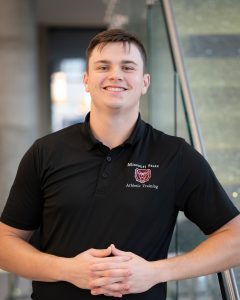
Cooper Lewis
Cooper Lewis

Lewis credits the program for turning him into a professional.  

“The relationships made the biggest impact on my life,” he said. “I’ve enjoyed and developed friendships with classmates, professors, preceptors, athletes and patients.”  

Both students also stepped into research and leadership. Lewis is completing a critically appraised topic research study on dry needling and its effects on chronic tendinopathy injuries. He also serves as president of the Athletic Training Student Association.  

Moore worked on a research project that focused on the effectiveness of dry needling on hamstring strength, range of motion, pain and extensibility. She presented it at the recent McQueary College of Health and Human Services Student Research Symposium. 

An experience that stands out for both of them was traveling with Missouri State Football to its first-ever bowl game, the Xbox Bowl in Frisco, Texas, last December. They enjoyed experiencing a major athletic event. 

“It was such a fun experience and one of my favorite memories,” Moore said.  

Lewis echoes that feeling and described it as an opportunity to build strong connections while working alongside fellow students and professionals. 

What comes next 

With graduation coming up, the students are already clear on their next steps and purpose. 

Moore wants to work in college athletics, building the same kind of relationships with athletes she experienced with her own athletic trainers, including assistant professor Dr. McCall Christan.  

“I hope to help athletes stay healthy, recover from injuries and perform at their best,” she said. “As a former injured athlete, I know the value of having someone steady in your corner.” 

Lewis is interested in rehabilitation and clinical care, with long-term goals in health system leadership. In a profession often misunderstood or overlooked, that kind of advocacy matters and begins with practitioners who believe in the work. 

“I want to continue to advocate for athletic trainers and increase public knowledge of what we do,” he said.  

For Lewis and Moore, athletic training is more than a career path. It is about being present in critical moments, building trust with patients and using knowledge and compassion to help them return stronger. 

Learn more about the athletic training program

Filed Under: Athletic training, Student spotlights Tagged With: Athletic training, Public health and sports medicine, students

A future psychologist in the making

April 13, 2026 by Ella Reuter

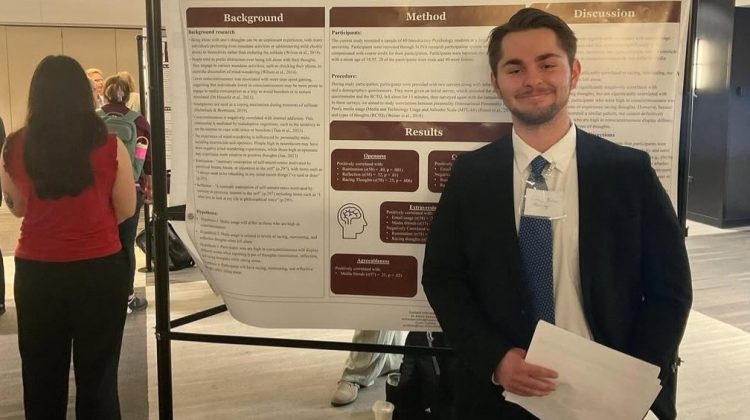
Chance Barber presents his research.

Chance Barber wants to make a difference where it matters most: people’s lives.

As the Missouri State University senior prepares to graduate in May with a bachelor’s degree in psychology, he is one step closer to becoming a psychologist.

“I grew up around Missouri State’s campus, so it’s crazy that not long ago, I was 10 years old looking up to the same kind of hardworking, intelligent individuals I’m now around every day,” Barber said. “It’s been an honor to develop personally and professionally in this environment.”

Finding his way at Mo State

When Barber, who is from Republic, Missouri, began his studies at Missouri State in August 2022, he was undecided on a major.

“I wasn’t 100% set on what I wanted to do yet, but Missouri State was a great place to keep my options open while also having the opportunity to explore specific interests,” he said.

When he finally committed to vocational psychology, it was inspired by his experiences during the COVID-19 pandemic and the chaos it caused.

“Just seeing people struggle through work-related challenges in different areas of my life fueled my drive to see where I could help,” Barber said.

Vocational psychology explores how mental health connects to a person’s work and career development. He is especially interested in how it addresses questions like, “What do you want to do when you grow up?”  and “Does the work I do really matter?”

Barber credits Missouri State for giving him a good mix of hands-on and research experiences that helped him learn and grow.

In 2024, he attended the Society for Industrial and Organizational Psychologists conference in Chicago, Illinois. There, he got to learn from the presentations of peers and professors.

Last year, he presented his research about personality and media usage habits and how they are related to cognition quantity and quality at the McQueary College of Health and Human Sciences Student Research Symposium on campus, as well as the Midwestern Psychological Association’s annual conference in Chicago. Later this month, he will return there to present again.

Barber has also had the opportunity under Dr. Amber Abernathy, professor in the School of Mental Health and Behavior Sciences, and as a part of her S.O.C.I.A.L (stress, observation, conscientiousness, investigation and attitudinal learning) norms lab to conduct research and present the team’s findings.

Getting involved in other ways

Outside of the classroom, Barber maximized his college experience by participating in student organizations and taking on leadership roles.

Chance Barber in SHRM
Chance Barber (front row, far right) with fellow SHRM members.

Since his sophomore year, he has been active in the Society for Human Resource Management (SHRM) student chapter, becoming vice president his junior year. SHRM is a professional organization for people working in or studying human resources.

During his time as vice president, membership tripled and he supported students in exploring opportunities around Springfield.

“I got to rub shoulders and work with a lot of great student leaders during my time in SHRM,” Barber said.

Last year, the chapter won the prestigious SHRM Superior Merit Award. It honors the chapter for excellence in operations and for delivering meaningful programs and services to members and HR students.

Barber is also currently the Psychology Club treasurer, a role he has held since April 2025. These organizations enabled him to make valuable connections, expand his network and grow both personally and professionally.

“Iron sharpens iron, so when you’re in that kind of environment, you really only have one choice: to improve,” he said.

After graduation, he plans to pursue a PhD in Counseling Psychology at the University of Southern Mississippi. There, he will work as part of Dr. Emily Yowell’s Vocational Psychology Research Team.

Be open

Barber encourages students to take time to connect with people around them and embrace opportunities.

“Be open to new opportunities even if you don’t feel qualified, prepared or experienced enough,” he said. “Give yourself time to learn and grow – that’s what college is for.”

Learn more about psychology

Filed Under: Student spotlights Tagged With: Psychology, School of Mental Health and Behavioral Sciences, students

Supporting student success through partnerships

March 23, 2026 by Sewly Khatun

Dr. Mark Smith speaks at the grand opening of the Collaborative Care Clinic on Feb. 20.

Supporting student success comes in many different forms, through multiple avenues and from individuals across the McQueary College of Health and Human Services (MCHHS) community. These include philanthropic financial donations and grants. 

“Philanthropic gifts and grants are essential for the college,” said Dr. Mark Smith, MCHHS dean. “They help us expand access to advanced instructional technology and equipment, provide support services, develop innovative experiential learning opportunities and offer students financial aid.” 

Two recent examples of support for MCHHS are a community partnership gift from Arvest Bank and a collaborative workforce development grant from the U.S. Department of Labor. 

Opening more doors 

 The Arvest Bank gift will benefit the newly opened Collaborative Care Clinic in Kampeter Hall.  

The funds enable the clinic to purchase new toys and essential supplies. These resources will make the clinic more welcoming and help it provide children with the high-quality pediatric and mental health care they deserve. 

As for the workforce development grant, MCHHS partnered with Ozarks Technical Community College, the Alliance for Healthcare Education and several regional health care organizations to secure the grant from the U.S. Department of Labor.  

Through the Strengthening Community Colleges grant program, Ozarks Tech received nearly $5.7 million. It was one of only 18 institutions nationwide to receive the award and the only recipient in Missouri. Missouri State was part of the grant consortium, which brought together education, workforce and health care partners across the region.

This collaboration has provided $800,000 in scholarships for students pursuing degrees in key health fields at MCHHS. 

Eligible programs include: 

  • Bachelor of Science in Nursing (BSN) programs (direct entry, completion and accelerated) 
  • Radiography 
  • Health Services 

Additionally, BSN students at the Alliance campus will also benefit from these funds. They will support the renovation of instructional spaces and facilities, helping to strengthen health care training. 

Explore MCHHS

Filed Under: MCHHS News Tagged With: Collaborative Care Clinic, Mark Smith, School of Health Care Professions, School of Health Sciences, School of Nursing, students

Next Page »

Categories

Archives

Meta

  • Log in
  • Entries feed
  • Comments feed
  • WordPress.org
  • Accessibility
  • Disclaimer
  • Disclosures
  • Equal Opportunity Employer and Institution
  • © 2026 Board of Governors, Missouri State University
  • Contact Information

Loading Comments...