

The Red and Black Triangle Pattern Basket, traditionally known as an Oops bowl, is a type of sweetgrass basketry made by the Zulu culture of southeastern Africa. Although properly woven Oops bowls may be water-tight, they are typically used for holding foods such as nuts, sweets, or potato chips. Young Zulu children are taught to make these baskets in order to carry on the … [Read more...] about Red and Black Triangle Pattern Basket (Oops Bowl): Researched by Jonathan Kodner

During summers, Hausa women harvest different varieties of sweetgrass in order to weave them into bowls or flat tray baskets that are used to store or hold grains. The Blue, Black and Red Shallow Basket is a type of flat basket that is usually given as a wedding gift, and it is displayed as a colorful decoration when it is not being used. These baskets are still used today in … [Read more...] about Blue, Black, and Red Shallow Basket: Researched by Jonathan Kodner

Zulu wire baskets, called imbenge, are hand-woven baskets that use both bare and plastic-coated wire. The imbenge originated when Zulu men, taking breaks from their work at factories, began weaving baskets from discarded scraps of telephone wire. The popularity of these baskets has encouraged the development of imbenge to become a sought-after artform, and today imbenge are … [Read more...] about Orange and Brown Spiral Wire Basket (Imbenge): Researched by Jonathan Kodner

This exhibit includes a variety of 20th century masks from cultures in Western Coastal and Central Africa, including masks of the Ijo, Igbo, Ibibio, and Yoruba cultures from Nigeria, along with masks of the Kuba culture from Democratic Republic of Congo. Artists of these cultures carved the masks from wood and painted them to depict figures with human-like physical … [Read more...] about African Masks and Headdresses: Researched by Katie Kimbrough
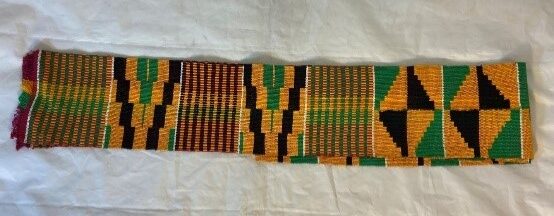
The Asante are a culture living primarily in the Akan region of Western Coastal Africa, in what are now the countries of Ghana and Cote d’Ivoire. Although they have a matrilineal society, with the line of descent traced through women, the Asante have a monarchy style of government that is predominantly—but not exclusively--ruled by men. The Asante people use two different … [Read more...] about Asante Art: Researched by Amanda Steimel