
In May, the Missouri State University Foundation presented its annual awards in teaching, research and service to six outstanding faculty members.
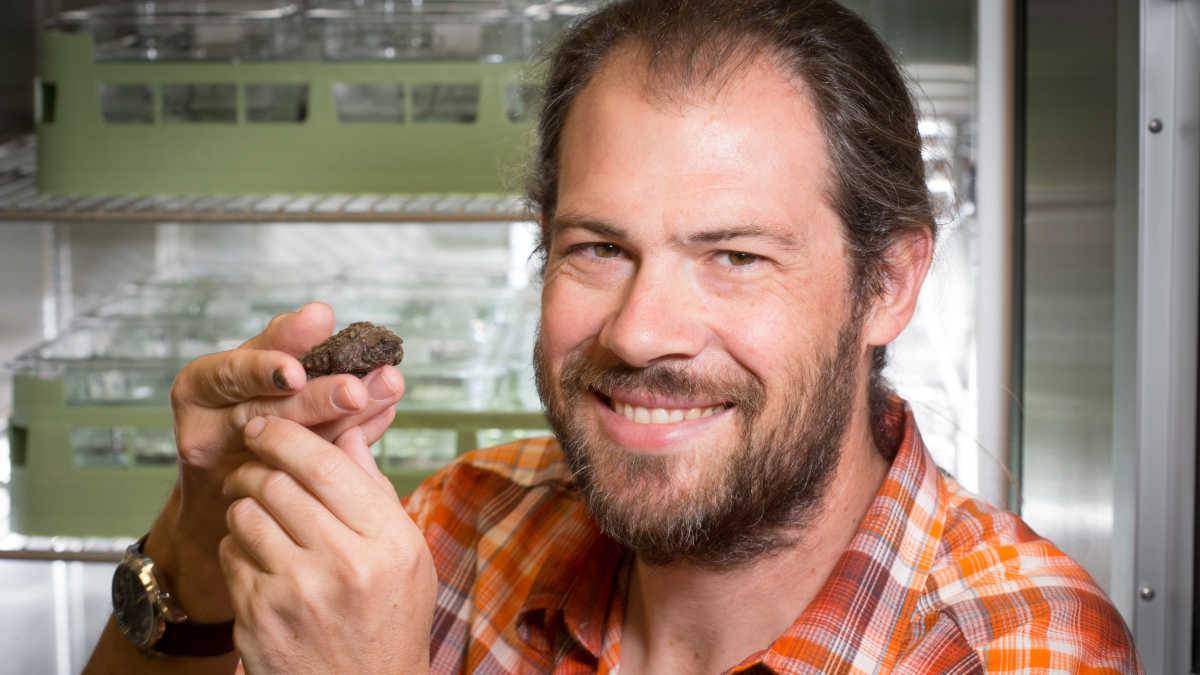
Dr. Day Ligon, professor of biology, received one of the two research awards.
“I’m passionate about the research I do,” said Ligon. “Recognition from the university means a lot as well.”
While some researchers stay in the lab and others go into the field, Ligon does both. His research efforts focus on conservation biology, with work spanning from genetics to community ecology, population biology and more.
He was recognized for his expansive research program and its impact globally and locally.
Conservation meets the classroom
Balancing teaching and research is no easy task, but for Ligon, the two go hand in hand.
The courses he teaches, such as general physiology, wildlife field techniques and comparative endocrinology, are often shaped by his ongoing research projects.
An example includes one of his current studies on turtle submersion times and how they directly connect to classroom discussions about respiration and ecological behavior.
“I enjoy teaching. Bringing my research into the classroom helps students see how the science applies in real time,” he said.
His wildlife field techniques course is especially hands-on, equipping wildlife biology students with practical skills that are not always taught in a traditional classroom. These include experience with radio telemetry (tracking wildlife), designing effective data sheets and strategies for securing loads.
Research in action
Ligon juggles a variety of projects, with major ones in both the Midwest and Central America.
Some highlights include:
- Reintroducing alligator snapping turtles to Kansas
- Long-term conservation work in Belize focused on the Central American river turtle (Hicatee)
- A study on the social behavior of critically endangered turtles
- Combating the spread of invasive armored catfish
“Hicatee turtles are social, intelligent creatures,” he said. “Recognizing that sense of connection can change how people value them.”
In Belize, his team also studies wetlands known as cenotes, working with government and conservation partners to protect local ecosystems.
Words of advice
For new faculty pursuing research, Ligon highlighted the importance of curiosity and collaboration.
“Practice asking interesting questions in any system,” he said. “Building a network of collaborators is also how you can grow your research and find the support you need.”
As his research continues to expand, Ligon remains true to its driving principle: creating meaningful conservation impact.
Discover more from CNAS NewsWatch
Subscribe to get the latest posts sent to your email.