
Last week, the FCTL sat down with Dr. Sarah Murray and Dr. Hillary Roberts, two recipients of last year’s Teaching and Learning Grant, to get a sneak peek on their intriguing in-progress project and the impact its having on students in their field.
The field of teaching and learning is one that is constantly changing. Day after day, the academic community learns more and more about new strategies that support student success—and new information about those that have endured the test of time. The evolution of those practices can be credited in large part to educators over the years who have gone above and beyond, taking it upon themselves to find new and innovative ways to assist their students in their educational journeys.
These educators who look to investigate ways to support student success in the classroom are undeniably vital to furthering teaching and learning as a field, but these pioneers often run into a barrier as old as time when doing so—funding. University budgets are often stretched tight, and it can be difficult for educators to scrounge up the funds necessary to undertake the projects they envision. Grants are the solution in many cases like this, but most grants are highly specific, and come with a long list of prohibited uses that makes it difficult to find a good fit for a project.
The FCTL Teaching and Learning Grant, offered annually by the MSU Faculty Center for Teaching and Learning, aims to help projects like this receive the funding necessary to continue the crucial work of expanding our knowledge on teaching practices and their impact. This grant, which is awarded to a broad scope of projects and has fewer limitations than most other grants on what funds can be used for, paves the way for faculty to investigate areas of teaching and learning impacts without the additional hassle. Two of last year’s recipients, Dr. Sarah Murray and Dr. Hillary Roberts, are using their grant award to do exactly that.
The Road from Shared Curiosity to Supported Study
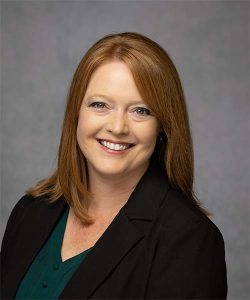
Dr. Sarah Murray, Assistant Professor in the School of Health Sciences and Nutrition and Dietetics Program Director, and Dr. Hillary Roberts, Associate Professor in the School of Health Sciences and Nutrition and Dietetics Graduate Program Director, are currently in the middle of their project, entitled “Leadership and Professional Development Experience for Students: A Domestic Education Abroad Project.” The project, which focuses on the impact of professional conference experience on professional development and sense of belonging, started with a simple problem: a conference that students had no way to get to.
“Our profession [dietetics] has a national conference every year,” Dr. Murray explained. “It’s really expensive to go to. When it’s close by, we tend to have more participation going to [it] from both faculty and students, but it’s always been at your own expense.” The conference, hosted annually by the Academy of Nutrition and Dietetics, brings thousands of professionals in the realm of dietetics together to discuss key issues in the field. The educational value of attending a conference like this was clear, but Dr. Murray and Dr. Roberts were curious about how the experience itself could foster a stronger connection between students and the field.
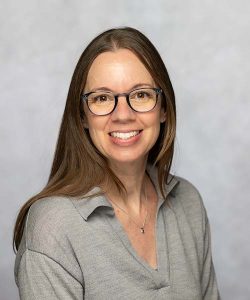
“Looking at the literature, when students attend conferences […] and engage with the professional community at those conferences, their sense of belonging—that [they] belong to that profession—increases.” Dr. Roberts explained. That sense of belonging has important implications for student retention, a topic of particular interest for both Dr. Murray and Dr. Roberts as program directors. That shared priority is closely tied to their academic expertise, as well. Both Dr. Murray and Dr. Roberts hold doctoral degrees in education, a mutual background that has bolstered their interest in building a program that supports, engages, and retains students throughout their educational careers. “Both of us have research interests that look at recruitment, retention, building confidence in students, [and] building programs,” Dr. Murray said. The conference presented a chance to develop a strategy that would support those goals. “We had this idea—how could we get students to this professional conference and guide them through [it] to help connect them with our profession? What does it mean to be a dietician, what does it mean to develop professional skills; but then also, how does it help them connect to us and our program and Missouri State?” The conference could offer more than just new information from experts in the field; it was an opportunity to see how taking part in a community of professionals could impact students on a deeper level.
There was only one problem: Dr. Murray and Dr. Roberts had to figure out a way to fund student registration in a time when university funds are stretched tighter than ever. They began to research funding opportunities, and found the FCTL Teaching and Learning Grant. “We looked at a lot of different things, and then the call for the FCTL grants became available. When you look at the criteria for [the grant], we believed that this matched that.” Dr. Murray said. “The FCTL is […] interested in student learning, which is really what this research projects is about—student learning, professional development, sense of belonging.” The Teaching and Learning Grant seemed to be a perfect fit. The two developed a proposal outlining what they hoped to find, and were announced as awardees in April of last year.
“We had this idea—how could we get students to this professional conference and guide them through [it] to help connect them with our profession? What does it mean to be a dietician, what does it mean to develop professional skills; but then also, how does it help them connect to us and our program and Missouri State?” – Dr. Sarah Murray
Turning Attendance into Active Engagement
With funding secured and logistics in place, Dr. Murray and Dr. Roberts were set to take twelve students to the conference, which was held this year in Nashville, Tennessee, from October 11 to October 14. The real heart of the project began when students entered the conference environment. Dr. Murray and Dr. Roberts knew that the value of the trip wouldn’t come from attendance alone, but from the manners in which students interacted with the people, sessions, and opportunities around them. As part of the study, they developed a conference task page that contained pre, during, and post conference activities that would guide students through the process and facilitate their engagement with the experience.
“We gave them a list of ways to engage; ask a question at a session, talk to a student from another program, attend the expo, things like that. Those things kind of give them instruction on how to utilize the conference, and what to do when they’re there.” Dr. Murray explained. Those methods of engagement encouraged students to actively participate in the conference in a variety of ways, exposing them to different aspects of the experience both personally and professionally. The more students actively participated in the experience, the more opportunities they had to form connections, grow professionally, and increase their sense of belonging with the people around them.
This sense of belonging wasn’t only facilitated during the conference itself though; in fact, it became especially prominent when the group gathered outside of formal sessions. The most impactful part of the experience, Dr. Murray and Dr. Roberts said, was a group dinner that they held during the conference. “We didn’t pick or schedule every minute of the students’ time there, but we did want to come together about midway through the conference to give them a chance to ask questions about their experiences, [or] to share their experiences,” Dr. Murray said. This dinner fostered the sense of belonging already being built by the rest of the conference experience, and provided valuable opportunities for students to form meaningful connections with others from MSU. “We were able to come together and mentor one another,” Dr. Roberts explained. That mentorship could also play a big role in encouraging students to further their education in the field. “The grad students [were] mentoring the undergrads, which we’re hoping takes them into our grad program.” The community formed through interactions like this can light the path forward for students who are questioning what they plan to do after their initial studies conclude.
The formation of community may be crucial to student experience, but Dr. Murray and Dr. Roberts were also aware that facilitating that would require active guidance. As part of that guidance, the dinner was also a venue to try out new exercises that urged students to actively participate in the group as opposed to being a passive part of it. During the dinner, Dr. Murray led an activity called high, low, buffalo, in which students shared their high moment of the conference thus far, their low moment, and a random item that interested them. “That brings unexpected moments, too. It humanizes faculty, as well,” Dr. Roberts said. “It also showcased people’s strengths and some of their niches and what stands out to them in nutrition and dietetics that we didn’t know before going to the conference.” Activities similar to this provide a valuable tool to continue the facilitation of community and connection building beyond simply gathering people together.
Continuing the Conversation
Now that the students are back from the conference, Dr. Murray and Dr. Roberts have post-conference activities lined up in the coming weeks that will allow the students to share their experiences, learnings, and takeaways from the conference with others. “They’re going to attend a student organization meeting next week, and do a panel discussion and talk about what they learned and their experiences there. […] In December, they get to do a lunch and learn for dieticians all over the state to talk about the different sessions, late breaking research, and topics of the profession that they learned about at the conference, and share that with dieticians that didn’t get to go to the conference,” Dr. Murray explained. These discussions will provide useful insight into the impact the experience had, providing the study with information that can then be used to show the positive effects of the conference.
Providing venues for the students to share their experiences with other students and professionals in the field doesn’t just provide information for the study, though—it also serves to further solidify the sense of community and belonging among those students, which may then encourage them to pursue the field farther. When discussing the students presenting to the student dietetics association, Dr. Roberts said, “All our other students are there hearing about the experience, and we’re hoping [that] increases membership in our academy of dietetics. And then those people become our [Missouri Academy of Nutrition and Dietetics] members, and then hopefully get engaged in our Southwest Missouri Academy of Dietetics, to hopefully long term become a part of the community of dietitians in this area.” The process creates yet another avenue of investment, potentially drawing people in to further become involved in the community of learners as they progress in their academic or professional careers.
Lessons for All
The knowledge being gained from Dr. Murray and Dr. Roberts’ project doesn’t end at their conference—and its application doesn’t end at their field of study. “We plan to present this at [the FCTL Faculty Showcase on Teaching and Learning] in the fall. We’re hoping to then also take it to a regional or national conference—within dietetics first, because that’s our field, [but] I could see it in other realms as well,” Dr. Roberts explained. “This could be a model for other programs, once we have our data, about how [this strategy] changes sense of belonging.” The results from their project could provide a valuable framework for other fields of study or programs looking to increase sense of belonging among their students, which can then in turn increase student retention and satisfaction.
“We plan to present this at [the FCTL Faculty Showcase on Teaching and Learning] in the fall. We’re hoping to then also take it to a regional or national conference—within dietetics first, because that’s our field, [but] I could see it in other realms as well. This could be a model for other programs, once we have our data, about how [this strategy] changes sense of belonging.” – Dr. Hillary Roberts
Ultimately, Dr. Murray and Dr. Roberts’ study represents far more than a single conference trip. It offers a glimpse into how intentional experiences can benefit educators and their students across all educational fields. As their project continues to unfold, Dr. Murray and Dr. Roberts are not only expanding opportunities for students in their own program—they’re also paving the way for broader conversations about how experiential learning shapes belonging, confidence, and commitment. Their work illustrates what becomes possible when innovative thinking is backed by flexible funding, and it highlights the lasting impact that our campus community faculty members can have on both students and the future of teaching and learning at MSU and beyond.
Inspired?
If reading about Dr. Murray and Dr. Roberts’ project has given you ideas about teaching and learning projects you would like to undertake, the FCTL invites you to submit a proposal for a Teaching and Learning Grant. Browse through past recipient projects to get some more ideas, take a look at our Teaching and Learning Grants webpage to learn more, or check out our step-by-step guide to submitting a proposal to get started. If you have any additional questions about Teaching and Learning Grants, feel free to contact the FCTL for more information.
Discover more from What's Happening at FCTL
Subscribe to get the latest posts sent to your email.