At first glance, Nicholas Fleece, mathematics instructor, and Troy Wymore, chemistry instructor, at Missouri State University, may seem to live in two different academic worlds. One focuses on abstract puzzles while the other delves into molecular mechanisms.
Yet both faculty members have a shared purpose to make challenging concepts approachable, relevant and fun for their students.
The duo brings fresh perspectives, strong research backgrounds and a genuine love for teaching to the classroom.
Fleece

Originally from New Baltimore, Michigan, Fleece’s path to the College of Natural and Applied Sciences started at Evangel University as an undergraduate in 2016.
He then completed his master’s degree in mathematics at Missouri State in 2021 and later in 2025, earned his PhD in Group Theory from Missouri S&T.
“I had such a great experience as a graduate assistant at Missouri State. When the opportunity came up to come back to teach, it felt like coming home,” Fleece said.
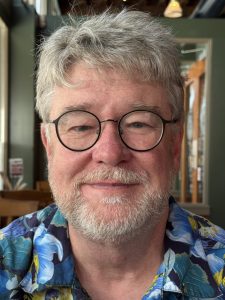
Wymore
A Kansas City, Missouri, native, Wymore earned his bachelor’s and PhD degrees in chemistry at the University of Missouri. He spent over a decade conducting research at institutions, such as Carnegie Mellon, Oak Ridge National Lab, University of Michigan and Stony Brook University.
He joined Missouri State as faculty member when his wife accepted a leadership role on campus.
“The timing with an open chemistry faculty position aligned perfectly,” Wymore said.
Innovating in the classroom and lab
Fleece focuses on group theory and encourages students to model their thinking after his own as he works through problems in class.
“I want students to see how I’m approaching a problem, not just the solution, but the process,” he said.
His courses often include collaborative review sessions and game-based learning, with a focus on creating an open, comfortable space for students to engage and make mistakes.
Wymore’s research dives into enzyme mechanisms, especially how they evolve and interact with light. His lab brings together quantum chemistry and evolutionary biology, two fields rarely combined.
“The quantum-level view of enzymes and their evolutionary pathways is something you don’t see very often,” Wymore said. “It helps us tell deeper stories about how nature works.”
Advice for learners and educators
Fleece believes passion is key: “If it feels like work, it’s going to be harder to succeed. You’ve got to love what you do, teaching, researching, all of it.”
Wymore emphasizes patience and empathy.
“Many students aren’t struggling with the material itself but with everything else happening outside the classroom,” he said.
He encourages using historical context and storytelling to help students connect with scientific ideas.
Both faculty members, beyond teaching, dedicate themselves to mentoring, research and guiding the next generation of mathematicians and scientists. Their combined expertise and enthusiasm strengthen the college’s mission to advance discovery and inspire learning.
Learn more about the College of Natural and Applied Sciences
Discover more from Mathematics Blog
Subscribe to get the latest posts sent to your email.