

Missouri State University

Skip to content Skip to navigation
a b c d e f g h i j k l m n o p q r s t u v w x y z

Residence Life, Housing and Dining Services Blog

  • Residence Life, Housing and Dining Services
  • ResNet Residential Technical Support
  • My Missouri State

Residence Life Diversity Committee – Celebrate Asian Pacific American Heritage Month: May 3, 2021

May 3, 2021 by Rachel Brinley

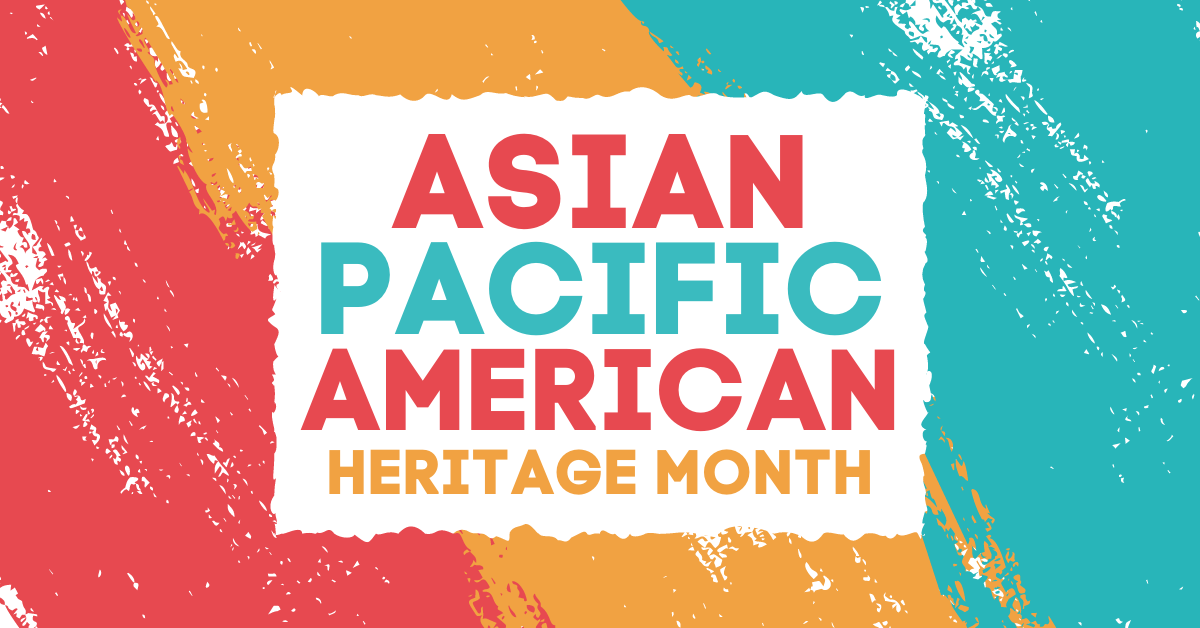
Asian Pacific American Heritage month logo

Asian Pacific American Heritage month logo

What is Asian Pacific American Heritage Month, and why do we celebrate in May? 

In the mid-1970s, Jeanie Jew, a Chinese-American Capitol Hill staffer, first introduced the idea of designating a month out of every year to recognize the achievements and contributions of Asian-Americans and Pacific Islanders in the United States. Having witnessed the U.S. Bicentennial in 1976, Jew was frustrated that Asian-Pacific Americans’ roles in shaping America were not recognized during this important national celebration. Jew’s own great grandfather M.Y. Lee worked on the Transcontinental Railroad in the 1800s, which transformed travel, commerce, settlement, and the very concept of America. As a result of this lack of awareness and inclusion, Jew started a nation-wide campaign advocating for a celebration of Asian-Pacific Americans that ultimately led to Congress. 

In 1977, U.S. Representatives Frank Horton (R-NY) and Norman Y. Mineta (D-CA) introduced a House resolution to set aside part of May in honor of Asian-Pacific American Heritage Week, and Senators Daniel K. Inouye (D-HI) and Spark Matsunaga (D-HI) introduced a similar bill in the Senate. Both bills were passed, and President Jimmy Carter signed a Joint Resolution to designate the annual celebration in 1978. Later, in 1990, President George H.W. Bush signed a bill passed by Congress to extend this into a month-long celebration, and 1992 marked the first official celebration of Asian Pacific American Heritage Month. These legislators chose May to commemorate two specific events: 

  • On May 7, 1843, a 14-year-old fisher named Manjiro Nakahama became the first “official” U.S. Japanese immigrant after being adopted by American whaling captain William Whitfield who rescued Nakahama and his shipwrecked crew off the Japanese coast. 
  • On May 10, 1869, the Golden Spike, the symbolic final link was driven by Leland Stanford at Promontory Summit, Utah Territory to join the rails of the first Transcontinental Railroad across the United States. Chinese workers were excluded from this Golden Spike ceremony despite their incredible contributions to this behemoth engineering feat. Over 12,000 Chinese and Chinese-American laborers worked to build the rail line – over 80% of all workers on the project.

Today, there are more than 20 million Asian-Americans and nearly 2 million individuals of Native Hawaiian and Other Pacific Islander ancestry living in the United States. Asian-Americans are the fastest growing population among all racial and ethnic groups in the United States. Throughout May, we take pause to reflect on the contributions that individuals of Asian descent have made to our culture and society, and to celebrate the ways in which our country is better for the inclusion of folks whose heritage stems from the 47 countries of Asia. Reflect this year on how you can follow in Jeanie Jew’s footsteps and use your voice to raise awareness and advocate for change to make your communities more inclusive.

Learn more about the origins of Asian Pacific Heritage Month and the events that inspired this national celebration:

  • How One Woman’s Story Led to the Creation of Asian Pacific American Heritage Month 
  • Asian Pacific American Heritage Month (Library of Congress)
  • Honoring Manjiro Nakahama – A Story of Patience and Perseverance
  • Descendants of Chinese Laborers Reclaim Railroad’s History

Diversity Committee Logo with embedded Twitter

Tagged With: Consider This

Residence Life Diversity Committee Consider This: April 23, 2021

April 23, 2021 by Matthew McGhee

Diversity Committee Consider This Logo

Corporate Social Justice

Corporate Social Justice is a reframing of Corporate Social Responsibility (CSR) that centers the focus of any initiative or program on the measurable, lived experiences of groups harmed and disadvantaged by society. CSR is a self-regulated framework that has no legal or social obligation for corporations to actually create positive impact for the groups they purport to help. Corporate Social Justice is a framework regulated by the trust between a company and its employees, customers, shareholders, and the broader community it touches, with the goal of explicitly doing good by all of them. Where CSR is often realized through a secondary or even vanity program tacked onto a company’s main business, Corporate Social Justice requires deep integration with every aspect of the way a company functions.

“Our employees and your customers expect you to engage, and not just verbally. They expect you to do something,” says Lisa Osborne Ross, who next month will become the first Black person to serve as chief executive officer for the US division of Edelman, one of the world’s largest and most influential public relations firms.

The release of the 2020 Edelman Trust barometer revealed that brand trust and brand reputation ranked second and third behind price as the most important factors for consumers deciding which new products to purchase. Edelman’s August 2020 special report on “The Fight for Racial Justice in America” found 54% of Americans surveyed had a “continued expectation” for the brands they support to speak out about racism.

“Consumers, customers and employees will buy or boycott based on how they feel about your actions,” Ross said of US business leaders. “The counsel we’ve given clients throughout the summer and that we are giving clients right now on this issue is, ‘Silence is not an option.'”

Consider what social justice causes are significant to you and evaluate how the companies you patron stack up to your expectations. Questions to consider before you do and/or continue to do business with a company – Are they…

  • Speaking out and taking a stance…do their actions back up their words?
  • Spending money in philanthropic efforts and supporting suppliers owned and managed by diverse folks…how much, what percentage, and who benefits?
  • Are they training themselves and their employees on diversity, equity, and social justice topics…is this effective, mandated, and ongoing?
  • Creating policies, procedures, and benefits packages that are inclusive…who is included in making these decisions?
  • Educating, advocating, and using their influence to create positive social change…are they involving the voices of those they are serving as they do this and compensating them appropriately?
  • Criticized for lacking diversity amongst its leadership …ist blind spot failures, where they donate profits, who they liaison with, etc.…is this repeat criticism, what is their response?
  • Intentional about their culture…living their values, focusing on impact and responsibility, holding themselves accountable, employee and customer satisfaction, etc.?

Corporate Social Justice is a new paradigm that imagines a healthier and mutually beneficial relationship between companies and the communities with whom they interact. It is driven by the growing desire of socially-aware consumers and employees for companies, especially socially-conscious and forward-thinking companies, to do better. Companies have an opportunity to rise to the occasion and leverage their influence to build a better world for all — including themselves.

Resources and further learning:

  • Article | Like it or not, ‘woke’ Corporate America is here to stay
  • Article | We’re Entering the Age of Corporate Social Justice
  • Article | Corporate Social Responsibility Took Stage At CES, But 2021 Demands More
  • Human Rights Campaign Foundation – Corporate Equality Index 2021 | Rating Workplaces on Lesbian, Gay, Bisexual, Transgender and Queer Equity

Diversity Committee Logo with embedded Twitter

Tagged With: Consider This

Residence Life Diversity Committee Consider This: April 9, 2021

April 9, 2021 by Matthew McGhee

Diversity Committee Consider This Logo

What is Ramadan?

Ramadan marks the month when the Holy Quran is said to have been revealed to Prophet Muhammad PBUH by Allah. This is observed by a month-long fast.

Muslims around the world abstain from food and drink for 30 days, including water, during daylight hours (from dawn to dusk), as a means of celebrating and reflecting on their faith.

Fasting at Ramadan is one of the five pillars of Islam – the fundamental rules that all Muslims follow.

Ramadan is the 9th month in the Islamic Lunar Calendar which consists of 12 months in a year of 354/55 days. In Arabic, this is called the Hijri Calendar and started with the migration of Prophet Muhammed PBUH to Madinah from Makkah 1442 years ago.

Due to the Islamic Calendar being based on the different phases of the moon, each of the months moves back around 10 days each year. So, Ramadan could be in the middle of summer in 2015 and be in December by 2030! This year, Ramadan begins on Monday 12th April and will end on Wednesday 12th May.

If you do not observe the month of Ramadan, you can help Muslim family, friends, coursemates, and colleagues by:

  • Trying not to schedule meetings around evening time (dusk) when the fast for the day ends, so they can eat on time.
  • Additionally, don’t schedule catch-ups over lunch or dinner, as you will be the only one eating.
  • Don’t make a big deal about eating.
  • Show your encouragement with kind gestures and words.
  • Ask them how you could support them through this month e.g., any adjustments that may need to be made. Everyone’s needs are different, so it’s best to ask individually.

Diversity Committee Logo with embedded Twitter

Tagged With: Consider This

Residence Life Diversity Committee Consider This: March 26, 2021

March 26, 2021 by Rachel Brinley

Diversity Committee Consider This Logo
On March 16, 2021, a series of mass shootings occurred in the Atlanta metro area, resulting in the tragic murders of eight people, including six Asian women: Soon Chung Park, Hyun Jung Grant, Suncha Kim, Yong Ae Yue, Xiaojie Tan, and Daoyou Feng, as well as Delaina Ashley Yaun and Paul Andre Michels, and serious injury of Elcias R. Hernandez-Ortiz. This tragedy follows a surge of anti-Asian hate and violence since the coronavirus first entered the U.S. in 2019, with the majority of reports coming from women.

While there is nothing that can undo the injustice of their murders, we can pay respect to the lives of these individuals by learning the correct pronunciations of their Chinese- and Korean-language names. Respect for a person’s name is respect for their life and identity. The grief from these racist and misogynistic murders is already so complex, and disrespecting them by not learning their names only compounds the violence.

There are many steps that we can and should all be taking to challenge and eliminate hate, racism, and misogyny. Showing respect for an individual’s name is a small step that we can take toward respect, inclusion and anti-racism. This respect should not be exclusive to those whose lives have been lost, but rather we must challenge ourselves to see others’ identities fully every day. As culturally competent ethical leaders we want to express value and humanity and should never do anything that makes someone feel ashamed or embarrassed, or that leads them to distance themselves from their heritage and cultural backgrounds. If we don’t put in the necessary effort to pronounce names correctly, that might be exactly what we are doing.

Learn more about respect and anti-racism related to the pronunciation of names:

  • Asian American Journalists Association video pronunciation guide for the Asian victims of the Atlanta shootings
  • Oregon Live article: Asian American community leaders urge people to ‘learn our names’ to combat anti-Asian racism
  • KUOW’s RadioActive radio news story: The racist practice of mispronouncing names
  • Education Week video: Getting Students’ Names Right: Why it Matters

Diversity Committee Logo with embedded Twitter

Tagged With: Consider This

Residence Life Diversity Committee Consider This: March 4, 2021

March 4, 2021 by Rachel Brinley

Diversity Committee Consider This Logo

Why did Dr. Seuss stop publishing six children’s book titles?

Theodor Seuss Geisel was an author who published children’s books from the 1920’s – 1980’s. He wrote many inspiring books such as “Oh the places you’ll go” often given as graduation gifts. However, some of Dr. Seuss’s books were riddled with racist imagery. Concerns for these books have been raised for years. Yesterday was Read Across America Day, a day inspiring children to read and famous authors are recognized. After years of pointing out the flaws in his children’s literature, the Dr. Seuss Enterprise acknowledged several titles which “portray people in ways that are hurtful and wrong.” Therefore, the following titles will no longer be printed or published including: “And to Think That I Saw It on Mulberry Street,” “If I Ran the Zoo,” “McElligot’s Pool,” “On Beyond Zebra!,” “Scrambled Eggs Super!,” and “The Cat’s Quizzer.” However, some argue this is more cancel culture, essentially erasing that these books were once published. The American Library Association opposes literary censorship.  The counter point is that instead of erasing these books as if they never existed, instead move literature like this and others to a different part of the library where conversations can occur about this part of history. Allowing for conversations to occur around social justice without erasing the fact that these impressionable children’s books existed for decades. What will come of these Dr. Seuss titles? Will they never be seen again or will they be moved to the history section of the library?  Consider looking at literature with a different lens.

Diversity Committee Logo with embedded Twitter

Tagged With: Consider This

« Previous Page
Next Page »

Categories

  • Residence Life
  • Uncategorized

Archives

Tags

Break Closing Break Housing Closing Information Consider This COVID-19 Dig This find roommate Incoming Students Information Living Learning Communities Move-In Residence Life room room change room change request roommate Success Story

Meta

  • Log in
  • Entries feed
  • Comments feed
  • WordPress.org
  • Accessibility
  • Disclaimer
  • Disclosures
  • Equal Opportunity Employer and Institution
  • © 2026 Board of Governors, Missouri State University
  • Contact Information
