
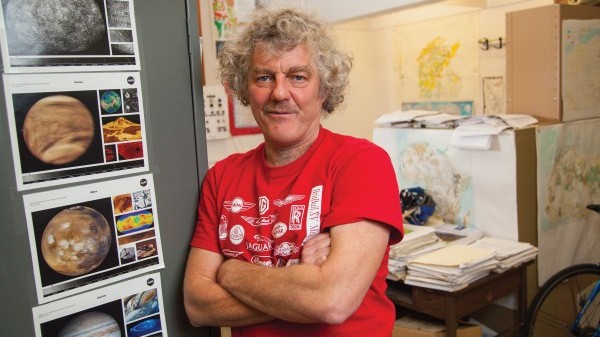
It’s a long way from his home in Missouri, but the opportunity to apply his knowledge of geophysics in Antarctica was unique and exciting — even if the conditions were extreme.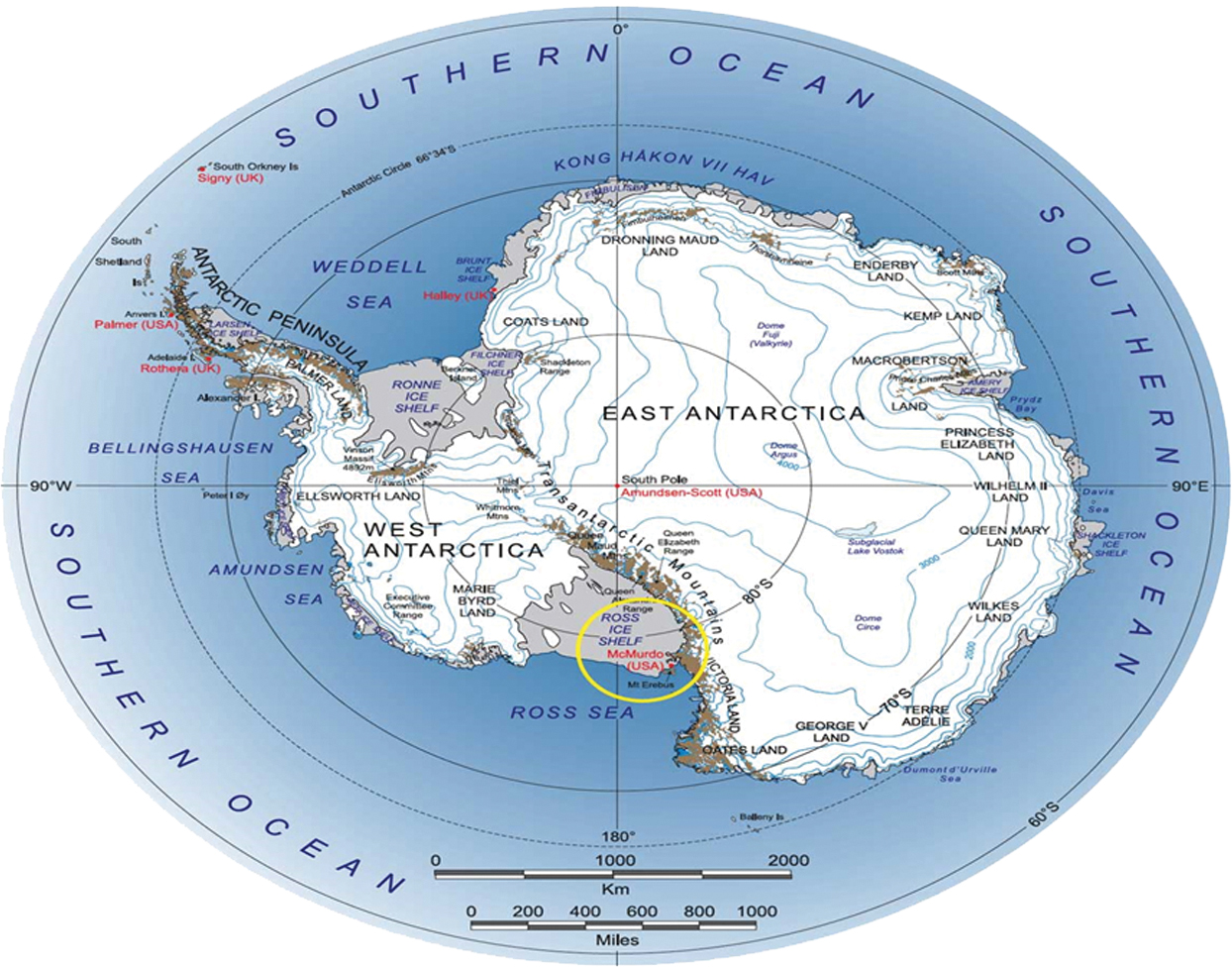
“This is one of maybe three or four volcanoes in the whole world that, when you go up to the crater, you can see lava. This one you get to the top and you look down, and yep, there’s a lava lake down there — you can see it bubbling,” Mickus said.
“Recently, the floor of the crater has risen 30 feet and there has been stuff shooting out of the volcano.”
Mount Erebus is classified as active due to its frequent Strombolian eruptions — eruptions of light, magma and rocks that happen after bubbles form due to a buildup of gas — but it has infrequent ash eruptions and historically rare lava flows.
Actually, the lava flow for decades has been confined to the inner crater. Mickus said studying it is thrilling work, but he hasn’t really been concerned about a destructive eruption.
That all may change, though. The volcano is near two scientific research bases (McMurdo Station and Scott Base), so it is monitored regularly for safety precautions.
Another research team conducted seismic research of Mount Erebus a few years ago and found some regions that indicated it was hot. So Dr. Phil Kyle, a scientist from New Mexico Institute of Mining and Technology who has studied in the region for approximately 40 years, invited Mickus to join the team in 2012.
Studying the volcano
Using a gravity meter on loan from the Department of Defense, Mickus’ primary focus in Antarctica is conducting gravity readings on Mount Erebus to determine any changes in the magma levels and confirm the seismic results.
“We want to understand more about the whole volcanic system,” Mickus said. “We’re looking to understand the subsurface-type things and trying to understand the magma system underneath … Different rocks have different densities, and we can determine that to get an idea what’s underneath the surface.”
Approximately six miles deep inside the crater lies a mass of magma, Mickus said. With the gravity meter, he hopes to determine the movement pattern of that magma or definitively say whether there is heat conducting near the surface. This heat source has caused a unique and dangerous geological feature to form: ice caves.
In order to more fully understand the magma sources and movement on the island containing Mount Erebus, Mickus has expanded his research by gathering gravity, magnetic and electromagnetic readings there.
The electromagnetic study is in conjunction with Graham Hill from the New Zealand Geological Survey, another international expert in the field.
During the 2014-15 academic year, Mickus has been analyzing the gravity and magnetic data of the East African Rift, and he’s also received grant funding for two other projects.
He has contracted with the Department of Defense to collect gravity data in Bhutan to study the evolution of the Himalaya Mountains, and been funded by the government of Saudi Arabia to do gravity and electromagnetics to investigate the evolution of the Red Sea.
Discover more from Alumni News
Subscribe to get the latest posts sent to your email.
Leave a Reply