Missouri State University

Skip to content Skip to navigation
a b c d e f g h i j k l m n o p q r s t u v w x y z

Community Engagement Blog

How we do community engagement at Missouri State

Home » food insecurity » Page 2

Stock up on fall produce at the Bear Pantry

September 2, 2021 by

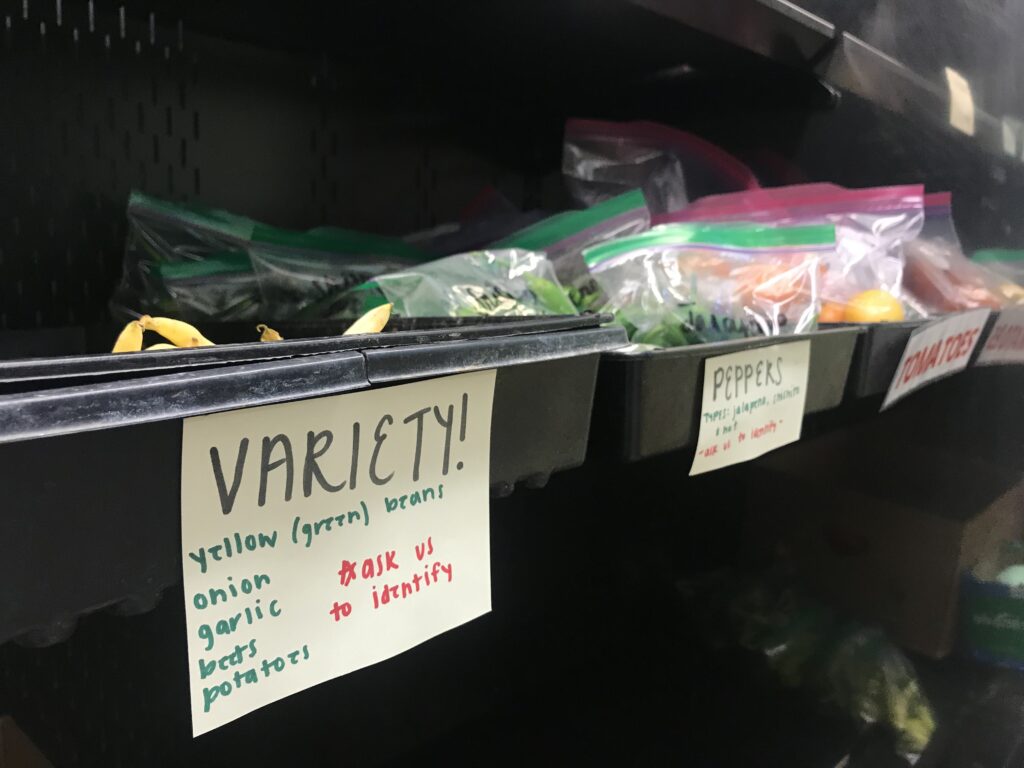
As summer comes to an end and fall begins, so does the harvest of many delicious and nutritious fruits and vegetables. The Bear Pantry provides not only nonperishable foods items, but fresh fruits and vegetables, many sourced right from the MSU campus garden! Peppers, tomatoes, okra, and Swiss chard are staples available in abundance this time of year in the pantry.  

Nutritional benefits 

Each fruit and vegetable adds its own unique nutritional value to your diet!  

Tomatoes

Tomatoes are great sources of vitamin C, potassium, folate, and vitamin K. These vitamins support collagen growth, nervous system, muscle contractions, clotting ability, and maintain your body’s fluid balance. They can be eaten raw on a salad, in a taco, or be the base of your favorite salsa. In addition, tomatoes can be cooked down to be used for tomato sauces, soups, and casseroles.  
Peppers

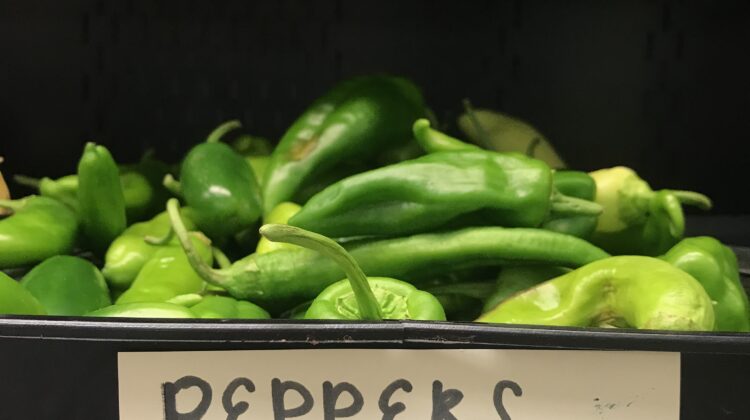
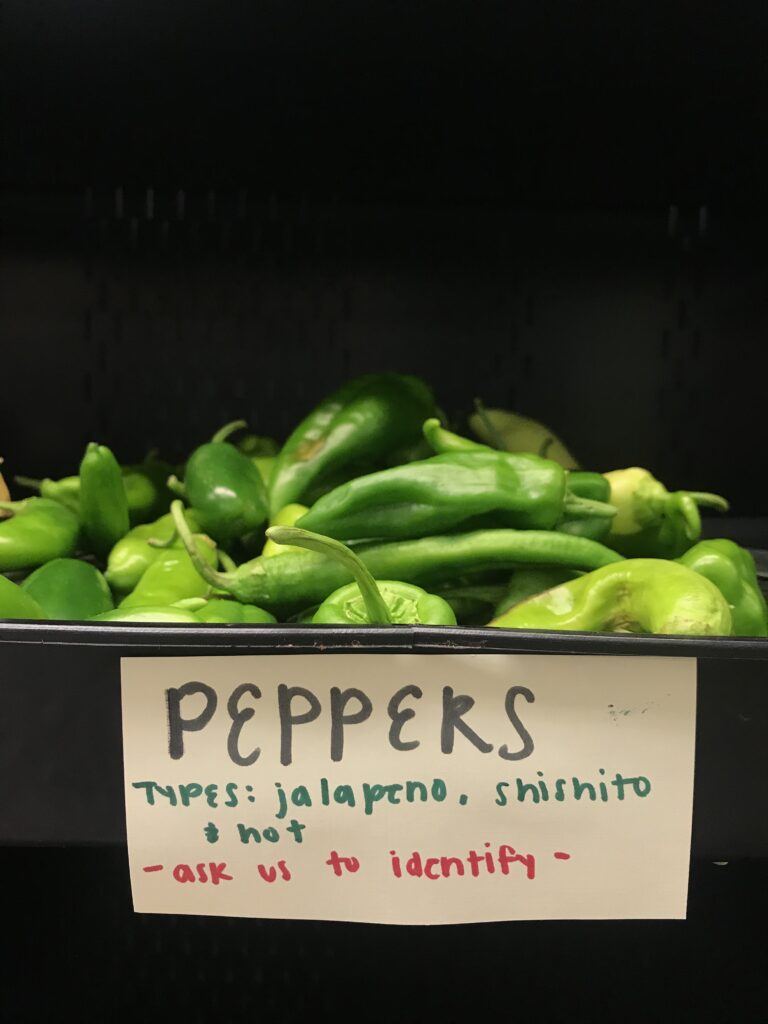
Peppers come in a variety of shapes, sizes, and degrees of hotness. Banana, jalapeno, shishito, and bell peppers are varieties you can find on the pantry’s shelves. Banana and bell peppers are two of the mildest peppers with little to no heat. Banana peppers tend to have a milder and sweeter taste than bell peppers. These peppers are great toppers for sandwiches, salads, and pizza. If you’re looking for a pepper with mild hotness, try shishito peppers. They are often used as an appetizer and filled with soft cheese then grilled or seared in a little oil. Jalapeno peppers are hotter in flavor and are often roasted or cooked then added to soups, jellies, sauces, or appetizers. Regardless of what pepper you choose, you’re consuming a good source of antioxidants which helps prevent inflammation within the body.  

Swiss chard

Swiss chard is a leafy green vegetable that has red and purple stalks and veins. Its leaves and stalks contain vitamin A, C, and K, antioxidants, and which supports vision, immune system, digestive tract, and the body’s clotting ability. Swiss chard can be eaten in many ways. Enjoy it in a mixed salad, soup, sautéed with garlic and olive oil, substituted for basil in pesto, or tossed wilted into pasta.
Okra

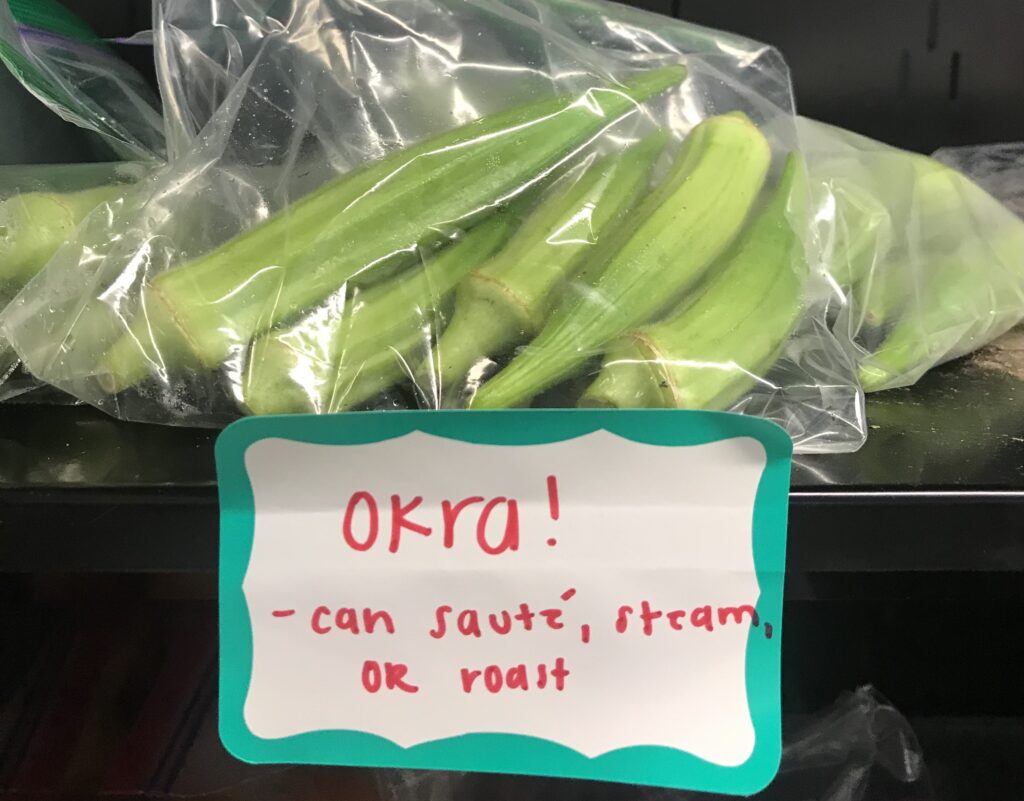
Another pepper looking plant, okra, is known for its seed pods and is rich in vitamin C, K, folate, and antioxidants. Okra can become slimy when cooked, but it can be reduced by cooking it at high heat, in a tomato sauce, roasting in the oven, or grilling until slightly charred.   

Stop in and stock up

Stock up on these fresh and delicious vegetables and see what else is in stock during our hours of operation Mondays, 10 a.m.-3 p.m. Tuesdays, 10 a.m.- 3 p.m. Wednesdays, 12 p.m.- 5 p.m. Thursdays, 10 a.m.- 3 p.m.  
Tagged With: Bear Pantry, Citizen Bear, Community Engagement, food insecurity

Meet Shae – Graduate Assistant for the Bear Pantry

August 21, 2020 by Alex Johnson

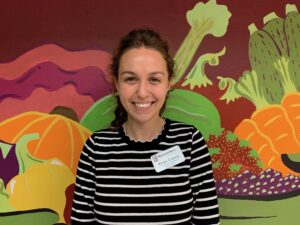
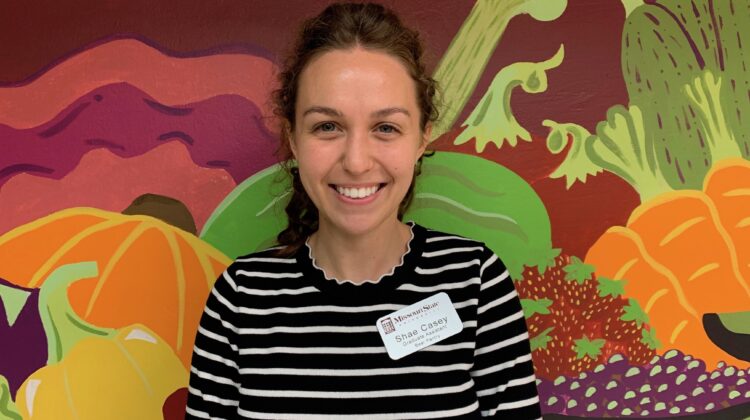
The Bear Pantry is elated to have Shae Casey on board as a Graduate Assistant.  Shae is pursuing a Masters in Nutrition and Dietetics, and began working with the Bear Pantry in fall 2020.

Shae Casey, Graduate Assistant at the Bear Pantry

A true #CitizenBear

Shae says Missouri State feels like home. “It’s a beautiful campus with even better people.”  She originally chose to pursue Dietetics because she was interested in investigating the food fads that her friends were participating in.  The science behind it intrigued her.  “I also experienced how changing my own nutrition affected my performance as an athlete,” she said.  “It’s fascinating and cool to learn about”

Shae has a multitude of experiences working alongside local non-profits, and also completed a Dietetic Internship Graduate Certificate with an emphasis in Public Affairs.

At the Bear Pantry, Shae is eager to answer any food or nutrition questions that Bear Pantry guests may have.  She is also ready to provide healthy eating recommendations and excited to make healthier food choices accessible.

One thing people should know about the Bear Pantry

“This is an amazing resource that I wish I had as an undergrad while living in an apartment, struggling financially.  The Bear Pantry is a resource available for anyone needing assistance. Food insecurity can be temporary or chronic; even if you don’t know how if you’re food insecure, we are here to support you.”


Tagged With: Bear Pantry, Community Engagement, Dietetics, food insecurity, Graduate College, public affairs

Bear Pantry opens in hopes to combat food insecurity

February 4, 2019 by

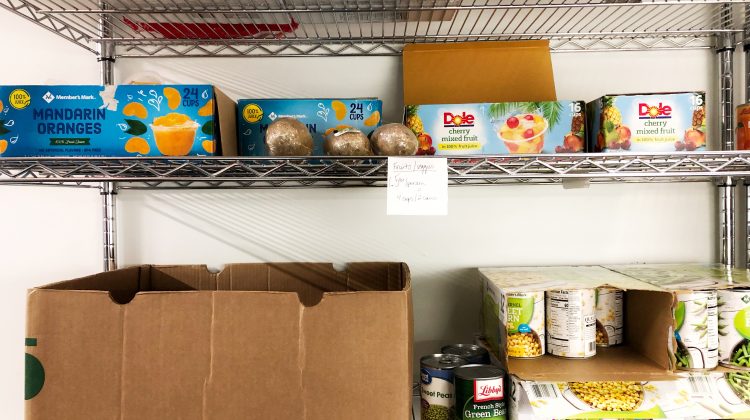
Food donations found in the Bear Pantry at the Center for Community Engagement

The Center for Community Engagement is excited to announce the Bear Pantry is open for business! Established with the help of the Drew Lewis Foundation, the food pantry brings us one step closer to reducing food insecurity at Missouri State University. We also hope to educate our campus and community on the devastating effect hunger has on students.

Logo for the Center for Community Engagement Bear PantryIf you’re unfamiliar with the term, “Food insecurity is the limited or uncertain availability of nutritionally adequate and safe food, or the ability to acquire such foods in a socially acceptable manner” (Wisconsin HOPE Lab). More students than you might imagine struggle with food insecurity, in fact, the Wisconsin HOPE Lab found that 36% of college students are experiencing hunger. To bring this closer to home, according to Feeding America, “Nearly 47,000 people in Greene County (or 1 in 6) are food insecure.” Food insecurity is real and many Missouri State University students are struggling. The Bear Pantry is just one initiative hoping to serve these students well.

So how can students access this service? Confidentially. Privacy is a major concern of students and the Bear Pantry respects that. Students can utilize the pantry twice each month between the hours of 9:00 am and 5:00 pm, Monday to Friday, through several avenues. Students can simply come into the Center for Community Engagement in the Plaster Student Union behind Starbucks and ask about the pantry or make a private appointment through the Bear Pantry website. If made ahead of time, students can enter their appointment through a discrete entrance directly into the pantry. All students need for their first appointment is their BearPass ID. For following appointments, students should also bring the client card received at their first visit. Our hope is to make this as discrete and simple as possible.

If you would like to donate food, please leave your non-perishables at one of our drop-off locations around campus. Drop-off locations include the Center for Community Engagement, Strong 251, Temple 142, University 115, and the Foster Recreation Center. You will find a tub to place your donation and a list of most needed items at each of these locations.

Please reach out to the Center for Community Engagement with any questions you may have either at 417-836-5774 or cce@missouristate.edu.


If you have any further questions or are interested in partnering with the Bear Pantry, please contact the Center for Community Engagement.

cce@missouristate.edu | @MoStateCCE | 417-836-5774

Tagged With: Center for Community Engagement, community, donations, food insecurity, food pantry, Service Learning

« Previous Page

Categories

Archives

Meta

  • Log in
  • Entries feed
  • Comments feed
  • WordPress.org
  • Accessibility
  • Disclaimer
  • Disclosures
  • Equal Opportunity Employer and Institution
  • © 2026 Board of Governors, Missouri State University
  • Contact Information