Missouri State University

Skip to content Skip to navigation
a b c d e f g h i j k l m n o p q r s t u v w x y z

Community Engagement Blog

How we do community engagement at Missouri State

Home » Community Engagement » Bear Pantry

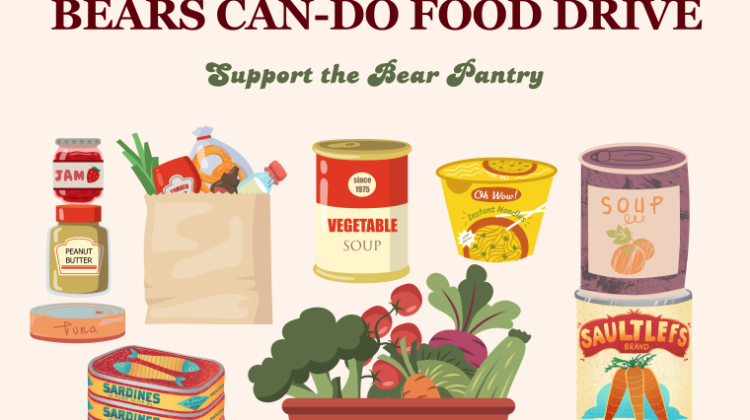
Bears Can-Do Food Drive – Fall 2026

October 30, 2026 by Anita Sam

The Bear Pantry, created in 2019, exists to provide a sense of belonging and inclusion, support students’ basic needs and combat food insecurity on campus. Last year, the Enrollment Management team sponsored the first annual Bears Can-Do Food Drive and raised the equivalent of 2,749.2 pounds of food and supplies for the Bear Pantry. This year, we are again inviting Every Bear from Every Where to participate and surpass last year’s donations.

Need to Know Details 

The drive will take place from November 2nd through November 30th.

You may take donations directly to the Bear Pantry during operating hours; or as an office or organization, you may choose to deliver all items at once. Whatever you choose to do, don’t forget to complete the donation form while at the Bear Pantry to receive Can-Do credit! In a rush? Download the  Bear Pantry Donation Form and bring it with you!

Financial donations are also accepted through our crowdsourcing page. Be sure to include all your details for accurate tracking and awarding.

Fall 2026 Donation Hours

  • Monday | 4.p.m. – 7p.m.
    • Donations can be taken in as early as 10:00am 
  • Tuesday | 10 a.m. – 4 p.m.
  • Wednesday | 10 a.m. – 4p.m.
  • Thursday | 10 a.m. – 4 p.m.
  • Friday | CLOSED

The Bear Pantry will be closed for Thanksgiving break: November 21-29.

What Can Be Donated?

The Bear Pantry accepts many items for donation. Shelf stable items like canned and dried goods, or herbs and spices; even perishable items like fresh produce, eggs, and dairy products. You can also donate general household items like cleaning supplies, paper goods, hygiene items, etc. See the donation guides below for more ideas:

Food Items

Canned/Jarred Goods  Dry Goods  Other  Seasonings/Spices
  • Meats: salmon, tuna, chicken 
  • Vegetables (reduced, low sodium): mixed vegetable, green beans, corn, carrots, beans, etc. 
  • Pasta sauce 
  • Peanut butter: creamy or crunchy 
  • Canned soups and pastas (reduced, low sodium preferred) 
  • Canned fruit (packed in juice) 


  • Dried legumes: lentils, beans, etc. 
  • Grains: microwavable brown rice, quinoa, etc. 
  • Whole grain pasta 
  • Oatmeal (container and instant reduced sugar packets) 
  • Cereal: Cheerios, Life, Special K, shredded wheat, bran, etc. 
  • Granola bars 
  • Macaroni and cheese (box and microwavable) 
  • Cottage cheese 
  • Greek yogurt or low-fat yogurt 
  • Fresh produce 
  • Snack items: chips, trail mix, etc. 
  • Healthy cooking oils: olive, avocado, etc.


  • Salt and pepper 
  • Ground spices: coriander, curry, turmeric, ginger, etc.
  • Chili powder 
  • Onion powder 
  • Garlic powder


Non-Food Items

 Hygiene Items  Household Items
  • Hand sanitizer
  • Band aids
  • Triple antibiotic ointment
  • Mouth rinse and toothpaste 
  • Deodorant
  • Hand soap
  • Facial cleanser
  • Body wash
  • Body lotion
  • Shampoo and conditioner
  • Feminine hygiene products 
  • Paper towels
  • Toilet paper
  • Paper plates
  • Trash bags
  • Disinfecting wipes
  • Laundry detergent pods
  • Dryer sheets
  • Dish soap
  • All-purpose cleaner
  • School supplies


Please note that at this time, kosher and Hallal items cannot be accepted. Due to limited space and resources, special handling and storage of these items cannot be guaranteed. If you are in need of kosher or Hallal items, please contact the Bear Pantry directly for resources.


How Does My Organization Win?

To win, your organization must donate the most food/funds per person. For example, if two teams both donate 100 pounds of food (or the equivalent with consideration to financial donations) and Team A has 10 team members and Team B has 20, Team A will win.

Team A: 100 pounds = 10 people x 10 pounds per person

Team B: 100 pounds = 20 people x 5 pounds per person


Special Considerations for Monetary Donations

In order for an organization, office, or department to receive credit, the donor will need to indicate which area they are donating on behalf of. Be sure to write the full name of the organization without any abbreviations to prevent miscrediting.

LETS SHOW EVERYONE THAT BEARS CAN-DO FOOD DRIVES!


DONATE


Want to help the Bear Pantry in other ways?

Shop our Amazon Wishlist

Set up recurring donations through payroll deduction

Volunteer your time

Filed Under: Nutrition, Uncategorized, Volunteer Tagged With: Bear Pantry, Community Engagement, Volunteer

Teaching Kitchens Equip Bear Pantry Members with Cooking Skills

December 8, 2025 by Natalie A. Clayton

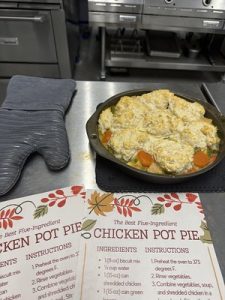
Bear Pantry members make a chicken pot pie.

Exciting things are stirring in the Foods Lab on the top floor of Kampeter.  

Interactive cooking classes, called “teaching kitchens” spark connections between peers and support cooking skills as dietetic graduate students lead hour-long sessions focusing on creating meals from the Bear Pantry. 

Titled “Foodie Fridays”, the idea for this class stemmed from a collaboration between the Bear Pantry and the dietetics department to focus on supporting UN Sustainable Development Goal #2: Zero Hunger. MSU students, faculty, and staff are receiving food from the Bear Pantry but may not know how to cook nutritious, balanced meals with the ingredients. As there was not a resource currently being offered, Stephanie Urich, Clinical Instructor for the School of Health Sciences, and Dr. Alex Johnson, Director of the Center for Community Engagement, decided to fill this gap.  

Over two separate sessions, Monse Velazquez, graduate student in the dietetics program, led fifty Bear Pantry members through the process of cooking a chicken pot pie and a chickpea curry…all from ingredients you can commonly find at food pantries.  

Monse was inspired to focus on canned goods. “Growing up in Paraguay, we didn’t have canned goods like we do here in the U.S… When I moved here, I realized canned goods were very affordable, but I didn’t know how to cook with them, and that was a challenge. Many Bear Pantry members are international students who face this same barrier. Having access to canned goods is helpful, but only if you know what to do with them. I wanted to fill that gap and make pantry foods feel approachable, familiar, and exciting,” notes Monse. 

“Having access to canned goods is helpful, but only if you know what to do with them. I wanted to fill that gap and make pantry foods feel approachable, familiar, and exciting” 

A blend of hands-on cooking experience and nutrition education made up the session. The participants were placed in groups and worked together to create the meal, then Monse led them through creating nutritious, balanced meals with ingredients on hand. 

“One thing I think is really special about this new project is the opportunity it brings our Nutrition & Dietetics students to get real-world, hands-on experience. We’re not just having fun and eating delicious food in the kitchen (although we are doing that!). We’re helping to build food literacy and improve health outcomes in our campus community,” Stephanie remarks. 

Dietetic graduate student Betsy Whitehurst will be continuing the monthly series starting next February. 

That’s not the only way teaching kitchens support the Bear Pantry. 

Dr. Daniela Novotny, Senior Instructor for the School of Health Sciences and her DTN 695 research class led two teaching kitchen sessions focusing on meals from the Bear Pantry in October. With an audience of first-generation college students through the Bears Lead group, the sessions focused on cooking basics, dorm cooking, and snack hacks. Power Bowls with Creamy Avocado Sauce, Bean & Veggie Quesadillas, and Microwave Peach Crisps were all on the menu. 

Being a research class, the group analyzed the data to find that the group felt more confident in the kitchen and built their nutrition knowledge on a statistically significant level.  

Teaching kitchens are showing great promise in supporting the Bear Pantry! 

How to Join Foodie Fridays 

  • You must be a Bear Pantry member to join.  
  • A sign-up form will be emailed to Bear Pantry members in advance. The form will also be posted in the Bear Pantry. 
  • Come and attend a fun cooking session!
  • Spots fill quickly so don’t miss out!  

Filed Under: Nutrition Tagged With: Bear Pantry, cooking class, food and nutrition, Nutrition and Dietetics

Take Action – September is Hunger Action Month

September 11, 2025 by Natalie A. Clayton

September is here—which means pumpkin spice lattes are officially back at Starbucks, but so is Hunger Action Month! 

Hunger Action Month, now in its 18th year, is a national campaign created by Feeding America, the nation’s largest hunger-relief network. Its mission is simple yet powerful: to elevate voices, raise awareness, and drive change to end hunger in America. 

Right here in Springfield, food insecurity affects nearly 17% of our community, according to Feeding America’s 2023 Map the Meal Gap study. Food insecurity happens when individuals don’t have the resources to access enough nutritious food—and hunger is the direct and devastating result. 

Thankfully, several local programs are making a difference both on campus and throughout Springfield: 

  • Bear Pantry – MSU’s campus food pantry.  
  • Ozarks Food Harvest – Springfield’s largest food bank and the Bear Pantry’s main supplier.  
  • Springfield Community Gardens – A network of gardens that increases access to fresh produce across the city. 
  • Crosslines – The area’s largest food pantry, serving nearly 70,000 people each year. 
  • Victory Mission – A faith-based organization providing emergency relief, long-term services, and more than 120 meals a day. 
  • Salvation Army – Offers emergency relief and daily meals through the Front Line Feeding Program at Harbor House. 
  • Well of Life – Located near campus, this pantry distributes food to the community twice a week. 

How YOU Can Take Action This Month 

Hunger Action Month is the perfect time to get involved. Here are a few simple but meaningful ways: 

  • Advocate for change. Use your voice to shine a light on food insecurity. 
  • Volunteer. Your time and service can make a lasting impact. 
  • Host a donation drive. Choose a local organization to support and rally your community to contribute. 

Upcoming Events 

Stay tuned—don’t miss these important opportunities to take action and see what’s coming up on campus! 

  • Family Weekend: September 19th-21st  
    • Missouri State is hosting a food drive to support the Bear Pantry. To contribute, bring items to any of the several donation bins across campus. Map is shown below. 

  • Bear Pantry Food Drive in Hammons Student Center: October 3rd 
    • This food drive, hosted by former softball coach and current academic advisor Beth Perine, is accepting donations as fans gather at the Hammon’s Student Center and the Betty & Bobby Allison South Stadium to watch MSU volleyball, swim, and soccer events. 
  • “Trick-or-Soup” Halloween Food Drive: October 31st  
    • Missouri State’s Mu Phi Epsilon and Student Dietetic Association are teaming up this Halloween for a food drive with a twist—trick-or-treating for canned goods instead of candy. Mu Phi Epsilon has supported the Bear Pantry with this tradition since 2008, and this marks SDA’s second year joining the effort. 

Filed Under: Uncategorized Tagged With: #foodinsecurity, #missouristateuniversity, Bear Pantry, Food, Food Drive, Hunger Action Month

Delta Dental Donation Supports Health and Wellness at the Bear Pantry

May 15, 2025 by Alex Johnson

The Bear Pantry at Missouri State University is expanding its impact, thanks to a generous in-kind donation from Delta Dental to the MSU Foundation. This thoughtful contribution of oral hygiene products—including dental floss, toothpaste, and toothbrushes—will be distributed through the Bear Pantry to support the health and wellness of our campus community.

CCE Student Specialist, McKennzee Newton, displays donated products.

Access to oral care products is a key component of overall wellness but is often overlooked in conversations about basic needs. By providing these essential hygiene items, Delta Dental is helping the Bear Pantry further its mission of reducing barriers and supporting student success.

“We’re grateful for Delta Dental’s commitment to supporting holistic student wellness,” said Alex Johnson, Director of the Center for Community Engagement. “This donation helps us serve our community more fully and ensures that Bear Pantry guests have access to both nutritious food and critical personal care items.”

The Bear Pantry serves all members of the Missouri State University community, including students, faculty, and staff. Together, with the support of partners like Delta Dental and the MSU Foundation, the Bear Pantry is advancing its mission to meet basic needs and build a stronger, healthier campus community.

For more information on how to donate or get involved with the Bear Pantry, visit https://www.missouristate.edu/CCE/bear-pantry.htm.


Tagged With: #citizenbear, Bear Pantry, community, Community Engagement, public affairs

Sustainability Efforts at Bear Pantry

April 1, 2025 by Samantha G. Selsor

Happy April, Bears!

April 22nd is Earth Day, a day recognized for environmental protection efforts, so it is only appropriate to discuss sustainability efforts employed at the Bear Pantry!

Bear Pantry’s Sustainability Practices

  • Reusable Bags
    • Instead of having single use, plastic bags available for Bear Pantry members to use after shopping, we encourage everyone to bring a reusable bag. New members receive an MSU maroon reusable bag upon completion of the membership form!
    • Reusable bag tips:
      • Always keep one with you. Accessibility will encourage use. Whether in your car or folded up in your backpack, having a reusable bag with you is a great practice.
      • Find a heavy-duty brand you like. Durability of bags is important! If the bags are durable, you are more likely to use them. Some stores only provide shoppers with reuseable bags at checkout. Other stores offer a discount for bringing in reusable bags instead of using their single-use bags. A one-time purchase of a reusable bag can save money in the long run!
      • Keep them clean! When handling food products, it is necessary to ensure the bags are clean. For cloth bags, a quick run through the washing maching is enough. For sturdy plastic, a wet paper towel or disinfectant wipe might be all you need.
      • Educate others! Further sustainability efforts by encouraging friends and family to adopt this habit. You could even give them a reusable bag or two.
  • Supporting Local Farms (Community Supported Agriculture)
    • Campus Garden and Amanda Belle’s Farm are both community partners with the Bear Pantry. By supporting local farms through distribution of their product, we are ensuring that we foster community connections and provide students with fresh, seasonal produce.
    • Community Supported Agriculture (or CSA) is where community members pay weekly, monthly, or seasonally for a “share” within a farming operation. This gives farmers the capital to pay for supplies and grow crops, giving the consumer fresh, seasonal, and local produce throughout the growing season.
  • Composting Waste
    • What is composting? According to the Environmental Protection Agency (EPA), composting is “the managed, aerobic (oxygen-required) biological decomposition of organic materials by microorganisms.” Food scraps and yard waste are excellent compost materials. Compost can be added to soil to increase nutrient composition and overall soil health. More information about composting here. At the Bear Pantry, any fresh food products that we recive that are not appropriate for distribution (fruits and vegetables that are decomposing, bread that is moldy, etc.) are composted via a designated compost site.
  • Recycling
    • What is recycling? According to the Environmental Protection Agency (EPA), “recycling is the process of collecting and processing materials that would otherwise be thrown away as trash and turning them into new products.” More information about recycling here. Yard waste, cardboard, plastic, aluminum, tin, and so forth, can all by recycled. Here at the Bear Pantry, we focus on recycling cardboard (since most of our food products come packaged in cardboard boxes) after each delivery.
  • Nutrition Education and Recipes
    • What does nutrition education and recipes have to do with sustainability efforts? A lot! If members are not able to use the food they receive from the pantry, then that is contributing to food waste (which is not sustainable, especially if this food is going into the landfill and not the compost bin). Utilizing resources (such as Nutrition Corner) provided by the Bear Pantry can help decrease food waste. Nutrition Corner focuses on providing members with easy access to recipes tailored to foods provided in the pantry. There are also nutrition education handouts on how to make canned and packaged foods more healthful through adding sources of protein, decreasing sodium intake, and so forth. These recipes are created by MSU nutrition and dietetics students, studying to be Registered Dietitian Nutritionist.
    • Link to Nutrition Corner


Don’t forget to follow us on socials!

Instagram: @mostatebearpantry & @mostatecce

Like us on Facebook: Bear Pantry

YouTube: @mostatebearpantry

LinkTree: https://linktr.ee/bearpantrymostate


Filed Under: Uncategorized Tagged With: Bear Pantry, Community Engagement

Next Page »

Categories

Archives

Meta

  • Log in
  • Entries feed
  • Comments feed
  • WordPress.org
  • Accessibility
  • Disclaimer
  • Disclosures
  • Equal Opportunity Employer and Institution
  • © 2026 Board of Governors, Missouri State University
  • Contact Information