Missouri State University

Skip to content Skip to navigation
a b c d e f g h i j k l m n o p q r s t u v w x y z

Health and Human Services News

  • McQueary College of Health and Human Services

Speech, Language and Hearing Clinic promotes collaboration between programs

May 17, 2021 by Strategic Communication

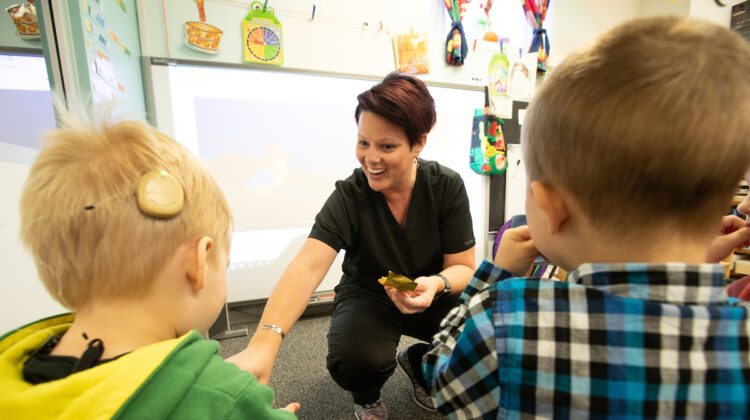
The Speech, Language and Hearing Clinic is a vital resource for the Missouri State campus and the surrounding community. Students and faculty work with patients in three programs: Speech-language pathology, early intervention of the deaf and hard of hearing and audiology. 

Dr. Lauren Jones, Tara Oetting and Dr. Sarah Jones oversee the clinic’s three programs. 

“The collaboration here is amazing,” Oetting said. “I have speech pathologists down the hallway to get information from and to help me learn different things, and audiologists are down the other hallway. The chance to learn from my colleagues, or even students in the other areas, is very rewarding.”  

Jones, Oetting and Jones discuss the collaborative and crucial work done in the clinic in May’s “Health Queries” episode.  
Listen to the episode 


Filed Under: audiology, speech-language pathology Tagged With: Communication Sciences and Disorders, Lauren Jones, Sarah Jones, Speech Language and Hearing Clinic, Tara Oetting

Speech, Language and Hearing Clinic clocks successful summer online

September 3, 2020 by Strategic Communication

March 17, 2020 is a day many MSU students and faculty won’t soon forget. In the middle of spring break, the university moved the remaining semester fully online because of the COVID-19 pandemic.

For the Speech, Language and Hearing Clinic, online instruction meant in-person therapy sessions with clients wasn’t an option.

So, they got to work.

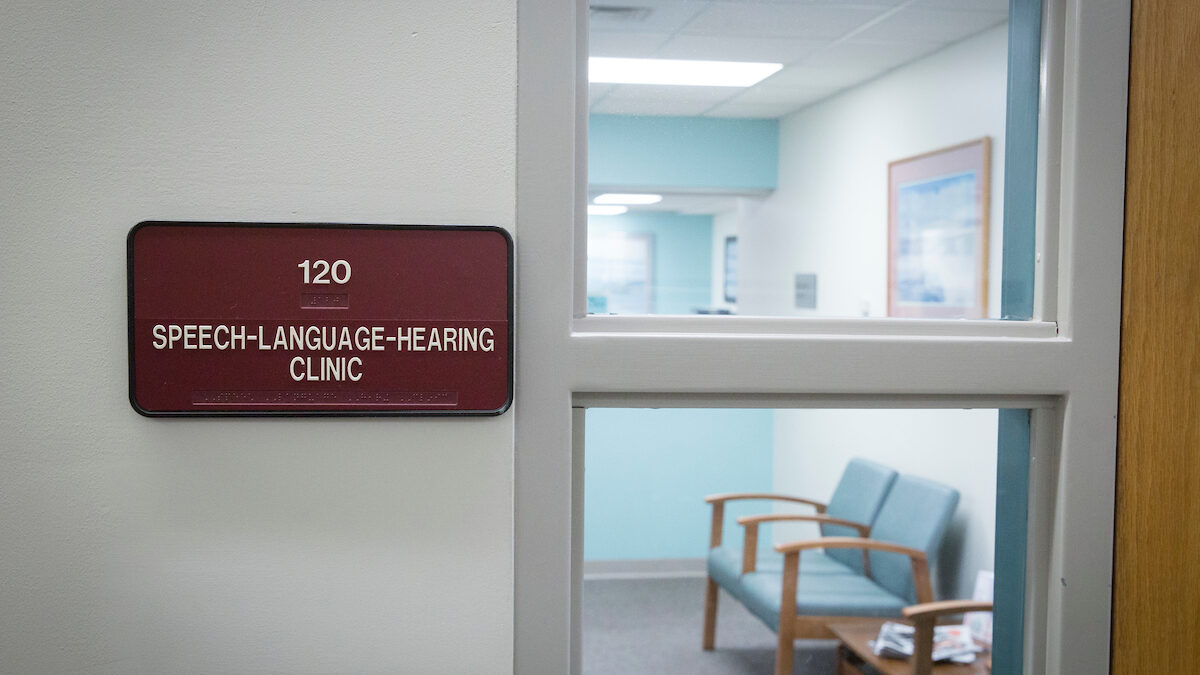
Sign outside door that reads "Speech-language-hearing clinic"
The Communication Sciences and Disorders Clinic in the Professional Building provides evaluation and treatment for all ages in the areas of Speech-Language Pathology, Audiology and early intervention for children who are deaf or hard of hearing.

Finishing spring 2020

Many speech-language pathology (SLP) graduate students clock clinical hours here. Practice in a real environment with actual clients, as opposed to simulated labs, accounts for more than 75% of their hours.

It was imperative, for students and patients, the clinic resumed operation as soon as possible.

“We wanted to be able to provide that community again,” said Lauren Jones, director of the Speech, Language and Hearing Clinic.

For the remainder of the semester, students used their limited simulation allowance to clock clinical hours, while faculty and staff ran the race to restructure the clinic for the summer.

Transitioning online

The move to a fully online clinic was multi-faceted.

The transition included switching student logins to multi-factor authentication to protect patient files accessed from outside the university. It was not an easy task.

“The team in information security helped push that through,” Jones said. “They advocated for us, and that was huge.”

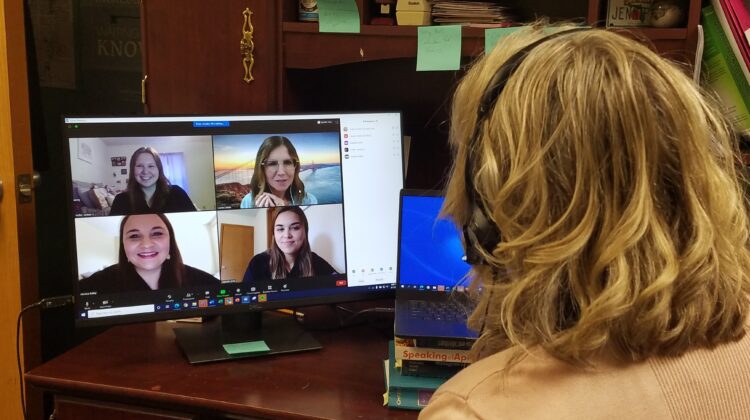
After licensing Zoom accounts, securing information and making it accessible from home, the clinic logged on for teletherapy.

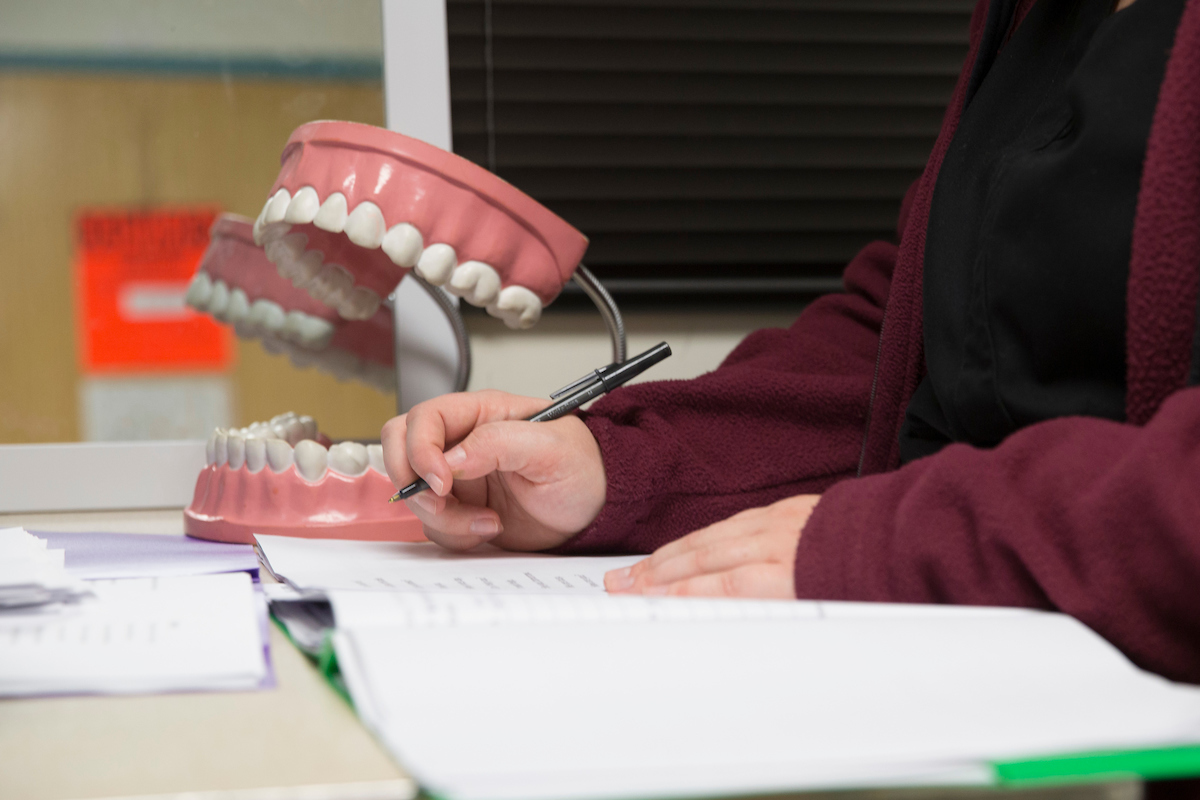
Close up of hands instructing on a piece of paper
Before COVID-19, students in the Speech, Language and Hearing Clinic worked with patients one-on-one.

Summer 2020

For Jennifer Pratt, clinical associate professor of communication sciences and disorders, moving online worried her at first. She works primarily with stroke patients who have difficulty processing new information.

“I couldn’t envision how it was going to work without being right there with them,” Pratt said.

But Pratt’s meetings went better than she hoped.

“The clients adapted. They were comfortable in their homes. They were very productive with their work on the sessions,” Pratt said. “There were so many positive aspects of it, and it opened my eyes to a different way of delivering services and teaching our students.”

Students reinforce the success of the summer semester.

Before moving to teletherapy, students worked with patients one-on-one, with a supervisor watching from another room. On Zoom, they lead sessions in small groups.

Amber Holko, an SLP graduate student, loved the newfound collaboration with her peers.

“It was the most positive and constructive group assignment I’ve ever done,” Holko said. “We all gave 110% because we knew our assignment had a direct effect on our patients.”

Changes for the better

While group therapy is a temporary change for the clinic in the age of COVID-19, some changes may stick around.

Teletherapy is increasing in demand. Jones hopes the clinic can continue to offer the experience to students and patients, even after COVID-19.

“This situation opened our eyes to the importance of meeting the needs of our patients,” Jones said. “When the COVID situation improves, we’ll bring people back on site, but we are looking at offering more hybrid models in the future.”

Overall, the experience and the changes pair often with one word: positive.

“My takeaway from this time is asking, ‘Would we have done this if we hadn’t been forced?’” Pratt said. “It’s exciting to think about our opportunities for the future, and to see something good come out of this.”

Filed Under: MCHHS News Tagged With: Amber Holko, Communication Sciences and Disorders, Jennifer Pratt, Lauren Jones, Speech Language and Hearing Clinic

Categories

Archives

Meta

  • Log in
  • Entries feed
  • Comments feed
  • WordPress.org
  • Accessibility
  • Disclaimer
  • Disclosures
  • Equal Opportunity Employer and Institution
  • © 2026 Board of Governors, Missouri State University
  • Contact Information

Loading Comments...