Missouri State University

Skip to content Skip to navigation
a b c d e f g h i j k l m n o p q r s t u v w x y z

Health and Human Services News

  • McQueary College of Health and Human Services

Exploring the art and science of dementia care

April 28, 2025 by Sewly Khatun

MSU students and faculty at the Netherlands Institute for Neuroscience.

Over the recent spring break, a group of Missouri State University students and faculty traveled to the Netherlands to explore a person-centered approach to aging and dementia care. 

From hands-on lectures to cultural tours, the program blended art, science and human connection – all inspired by the groundbreaking The Hogeweyk® Dementia Village near Amsterdam. 

An eye-opening experience 

The week-long interdisciplinary study abroad program took place from March 15-21. 

Jennifer Pratt, clinical professor of communication sciences and disorders (CSD), and Dr. Traci Garrison, clinical associate professor of occupational therapy (OT), led this program. 

Twelve undergraduate and graduate students from CSD, gerontology, health sciences, nursing and pre-OT participated in the program. They prepared through weekly pre-departure sessions, guided readings and guest lectures. 

The program itinerary blended academic lectures with cultural exploration. Pratt and Garrison expressed sincere gratitude to Missouri State’s office of education abroad and McQueary College of Health and Human Service for supporting and funding this program. 

“We designed this program to show students what’s possible,” said Pratt. “We wanted them to look at dementia not just through a medical lens, but through the lens of quality of life.” 

Students got the chance to visit the internationally recognized The Hogeweyk®. Unlike traditional institutional models, The Hogeweyk® empowers individuals with severe dementia to live as normally as possible in a secure community setting. Residents live in shared homes based on lifestyle interests, with access to grocery stores, cafés and open green spaces. Their focus is on living well, right until the end.

The Dutch model emphasizes that dignity, autonomy and well-being are just as essential as medical treatment – a philosophy that deeply resonated with students.  

“Learning through travel is just something the classroom cannot replicate,” said Pratt. 

A new perspective on care
MSU students explore historic Amsterdam during their education abroad experience.

According to Garrison, this study abroad program emphasized more than treatment.

“It encouraged students to consider how care environments can empower people to live fully, no matter their diagnosis.”

Students also learned from leading experts at the Leyden Academy on Vitality and Aging and Netherlands Institute for Neuroscience about the science behind dementia. At the institute, the group toured a brain bank and explored the latest dementia research, making classroom theories come alive. 

“We studied something we see every day, but in a completely new way. It challenged us to rethink traditional care approaches,” said Natalie Hampsten, a senior CSD major. “It opened my eyes to what care really looks like when you center it around people.” 

Abby Rudd, a senior gerontology major, was struck by The Hogeweyk’s® philosophy.  

“They taught us to focus on possibilities, not disabilities. That mindset changes everything,” she said. 

Besides the learning opportunities, the program offered cultural immersion. Students explored Amsterdam’s history through walking tours and visits to the Anne Frank House, Van Gogh Museum and Rijksmuseum. These experiences contributed historical and emotional depth to their academic exploration, encouraging empathy and reflection. 

“This was my first time studying abroad and visiting the Netherlands and it was amazing!” said Hannah Todd, a speech-language pathology graduate student. “What I enjoyed most was how the program blended Dutch culture with dementia care in such a meaningful way.” 

A focus on compassion and empathy 

For Karly Soden, a Doctor of Nursing Practice student, traveling to a new country, learning with new people and seeing dementia care through a global lens was an unforgettable experience.  

“It shifted my perspective of human connection and its importance in health care,” she said. 

In class or on the streets of Amsterdam, students learned that true care means honoring lives, not just managing symptoms. Their experiences brought theory to life and reshaped their understanding of compassion in practice. 

“Students didn’t just learn about dementia,” said Garrison. “They learned to think differently, lead with empathy and carry those values into their future careers.” 
Explore degree options in MCHHS

Filed Under: MCHHS News, speech-language pathology Tagged With: Communication Sciences and Disorders, Gerontology, Jennifer Pratt, Occupational Therapy, School of Health Sciences, School of Nursing, students, Traci Garrison

Speech, Language and Hearing Clinic clocks successful summer online

September 3, 2020 by Strategic Communication

March 17, 2020 is a day many MSU students and faculty won’t soon forget. In the middle of spring break, the university moved the remaining semester fully online because of the COVID-19 pandemic.

For the Speech, Language and Hearing Clinic, online instruction meant in-person therapy sessions with clients wasn’t an option.

So, they got to work.

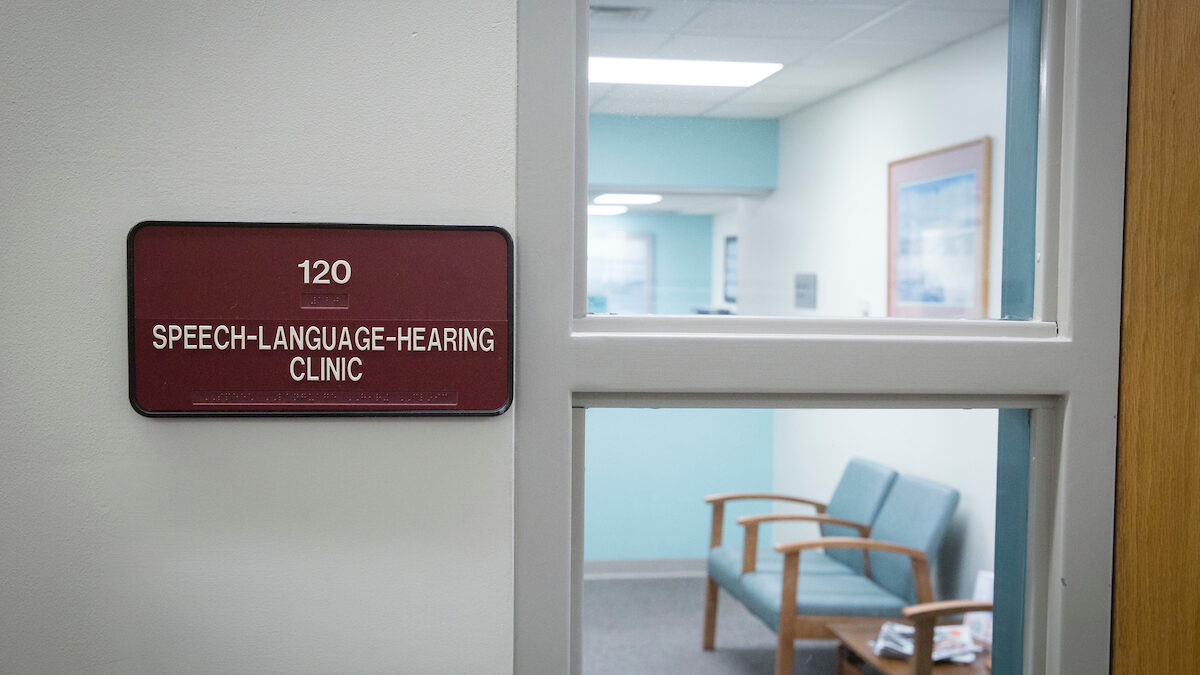
Sign outside door that reads "Speech-language-hearing clinic"
The Communication Sciences and Disorders Clinic in the Professional Building provides evaluation and treatment for all ages in the areas of Speech-Language Pathology, Audiology and early intervention for children who are deaf or hard of hearing.

Finishing spring 2020

Many speech-language pathology (SLP) graduate students clock clinical hours here. Practice in a real environment with actual clients, as opposed to simulated labs, accounts for more than 75% of their hours.

It was imperative, for students and patients, the clinic resumed operation as soon as possible.

“We wanted to be able to provide that community again,” said Lauren Jones, director of the Speech, Language and Hearing Clinic.

For the remainder of the semester, students used their limited simulation allowance to clock clinical hours, while faculty and staff ran the race to restructure the clinic for the summer.

Transitioning online

The move to a fully online clinic was multi-faceted.

The transition included switching student logins to multi-factor authentication to protect patient files accessed from outside the university. It was not an easy task.

“The team in information security helped push that through,” Jones said. “They advocated for us, and that was huge.”

After licensing Zoom accounts, securing information and making it accessible from home, the clinic logged on for teletherapy.

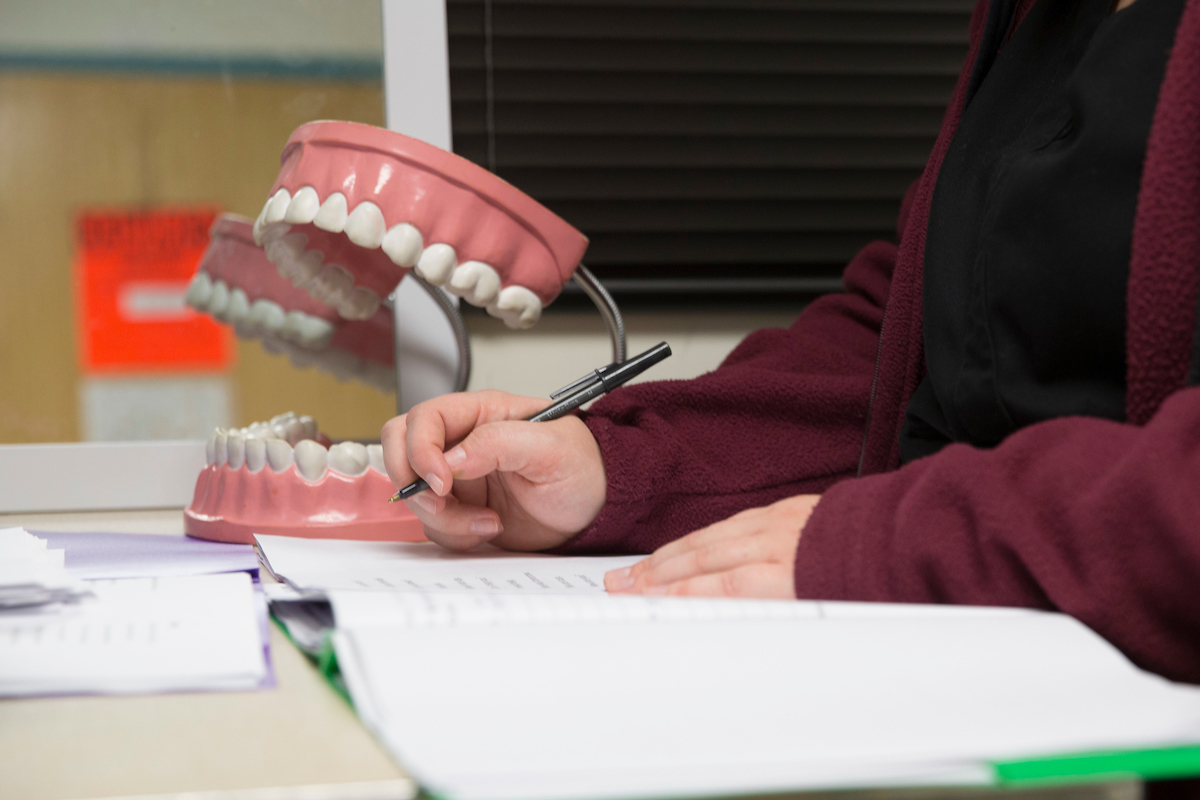
Close up of hands instructing on a piece of paper
Before COVID-19, students in the Speech, Language and Hearing Clinic worked with patients one-on-one.

Summer 2020

For Jennifer Pratt, clinical associate professor of communication sciences and disorders, moving online worried her at first. She works primarily with stroke patients who have difficulty processing new information.

“I couldn’t envision how it was going to work without being right there with them,” Pratt said.

But Pratt’s meetings went better than she hoped.

“The clients adapted. They were comfortable in their homes. They were very productive with their work on the sessions,” Pratt said. “There were so many positive aspects of it, and it opened my eyes to a different way of delivering services and teaching our students.”

Students reinforce the success of the summer semester.

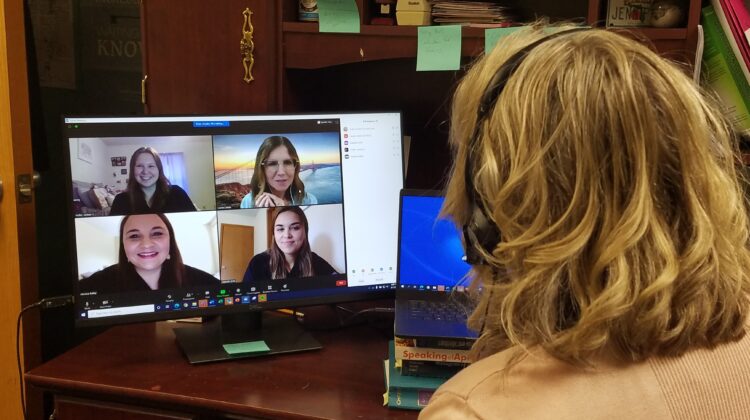
Before moving to teletherapy, students worked with patients one-on-one, with a supervisor watching from another room. On Zoom, they lead sessions in small groups.

Amber Holko, an SLP graduate student, loved the newfound collaboration with her peers.

“It was the most positive and constructive group assignment I’ve ever done,” Holko said. “We all gave 110% because we knew our assignment had a direct effect on our patients.”

Changes for the better

While group therapy is a temporary change for the clinic in the age of COVID-19, some changes may stick around.

Teletherapy is increasing in demand. Jones hopes the clinic can continue to offer the experience to students and patients, even after COVID-19.

“This situation opened our eyes to the importance of meeting the needs of our patients,” Jones said. “When the COVID situation improves, we’ll bring people back on site, but we are looking at offering more hybrid models in the future.”

Overall, the experience and the changes pair often with one word: positive.

“My takeaway from this time is asking, ‘Would we have done this if we hadn’t been forced?’” Pratt said. “It’s exciting to think about our opportunities for the future, and to see something good come out of this.”

Filed Under: MCHHS News Tagged With: Amber Holko, Communication Sciences and Disorders, Jennifer Pratt, Lauren Jones, Speech Language and Hearing Clinic

Categories

Archives

Meta

  • Log in
  • Entries feed
  • Comments feed
  • WordPress.org
  • Accessibility
  • Disclaimer
  • Disclosures
  • Equal Opportunity Employer and Institution
  • © 2026 Board of Governors, Missouri State University
  • Contact Information

Loading Comments...