
Shawnewa Dahozy, a junior biomedical sciences major at Missouri State University, recently completed the Frontline Indigenous Partnerships (FLIP) Medicine Pathways for Advancing Tribal Healthcare (M-PATH) program at Brigham and Women’s Hospital in Boston, Massachusetts.
The highly competitive program consists of a three-week immersive medical exposure experience. Only eight students are accepted into M-PATH each year.
During the program, M-PATH students shadow physicians and practice procedural skills through simulation workshops. They also participate in professional development activities such as panels, presentations and community building exercises.
Dahozy observed several different procedures in multiple medical disciplines during her stay, including emergency medicine, general surgery, ICU, OB/GYN and anesthesia. As a result, Dahozy now hopes to specialize in the emergency medicine and pediatric fields.
“I really enjoyed the fast-paced specialty [of emergency medicine] and having the opportunity to encounter patients from various backgrounds,” she said.
The program’s professional development components proved equally enlightening, she added.
“These sessions were not only educational, but also practical — providing tools I will continue to use throughout medical school and into my professional career,” Dahozy said. “In just three weeks, I saw tangible growth in myself — becoming more confident, focused and ready to take on the next steps in my journey.”
Following the onsite summer session, the M-PATH participants will continue the program virtually for one full year. This engagement includes quarterly group meetings, individual meetings and participation in various discussion topics. The FLIP team also provides extended support to M-PATH students through medical school and beyond, according to Dahozy.
Anthropology minor enhances medical studies
In addition to her biomedical sciences major, Dahozy is pursuing several specialty minors and certificates. These include human life sciences and molecular biology, human genetics and genomics, health services and foundations of pharmaceutical sciences, all at Missouri State, and an online degree in Navajo Studies through Dine College.
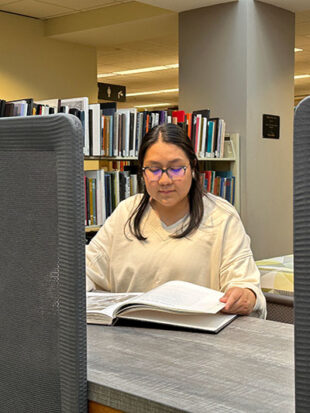
Although a science major, Dahozy is also a student in the Reynolds College of Arts, Social Sciences and Humanities (RCASH). She is minoring in anthropology and has already taken courses with Dr. Elizabeth Sobel and Dr. William Meadows. Sobel and Meadows are both professors in the Department of Sociology, Anthropology and Gerontology.
For Dahozy, studying anthropology is essential to becoming a successful medical professional. She noted that Sobel’s courses have been helpful in demonstrating anthropology’s role in healthcare.
“I will come across people from various backgrounds, whether it be colleagues or patients,” she said. “Anthropology will be a tool that will bridge cultural gaps and foster mutual understanding, which is critical in building trust and delivering effective care.”
Taking anthropology courses has also informed Dahozy about how different cultures hold various beliefs regarding illness and healing.
“In the context of medicine, this has been particularly impactful,” she said. Through her North American Indian Cultures course with Meadows, for example, she developed a “deeper understanding of how traditional healing practices are integrated into Indigenous understandings of health.”
“In Navajo culture, illness is often understood as a result of hozho being disrupted — that is, a person falling out of harmony or balance in terms of physical, mental, spiritual and social well-being,” she explained. “Healing, then, isn’t just about treating symptoms. It’s about restoring balance with nature, community and the spiritual world.”
M-PATH provides vital tools and mentorship for the future
The M-PATH program gives Dahozy the opportunity to learn from medical professionals who are passionate about Native healthcare, she said. For her, this is an important preparatory link between her studies and the medical profession.
“One of the biggest challenges Native students face is a lack of role models in the medical field,” she said. “Many do not believe that a career in medicine is possible for them because they have never seen someone from their own community achieve it. I want to change that narrative.”
In addition to practicing medicine, Dahozy hopes to be a mentor and advocate for Native youth, especially those who express an interest in healthcare careers.
“The M-PATH program will provide me with the tools and mentorship I need to make a lasting impact in my community,” she said. “[It] will allow me to better serve my community in a way that respects cultural traditions while addressing modern challenges.”

With this in mind, Dahozy feels confident that blending Western and traditional medicine will best serve her patients.
“I’m starting to realize how clinical approaches often focus primarily on the physical body, diagnostics and prescriptions,” she said. “While these methods can be effective, these models sometimes overlook the cultural and spiritual dimensions of health that are essential in Indigenous communities.”
Using her education to give back
Coming to Missouri State has played a critical role in her academic and professional growth, Dahozy said.
“My classes have allowed me to connect with like-minded individuals, form study groups and engage in discussions about the medical field,” she said. In addition, she expressed her appreciation for the instruction and support she has received from Sobel and Meadows.
Dahozy grew up in the Navajo and Hopi communities of northwestern Arizona. Now, she hopes to serve those communities as an emergency medicine physician specializing in pediatric care.
“My community is in dire need of specialized physicians, particularly in areas that focus on children’s health,” she said. “Many Native American children grow up without consistent access to medical care, leading to undiagnosed conditions, untreated illnesses and preventable health complications. I want to change this.”
Childhood memories shaped career goals
As a child, Dahozy remembered witnessing the long drives to a hospital that her relatives endured when they fell ill. She also recalled people in her community hesitating to even seek medical attention because of finances or lack of transportation.
“From a young age, I witnessed the struggles my people faced in accessing proper medical care,” she recalled. “I saw family members and community elders suffer from preventable illnesses, only to receive treatment too late due to the lack of nearby medical facilities and specialized physicians.”
These memories and experiences shaped her desire to become a pediatrician and return to her community to provide quality health care, especially for Native American children and teens.
“I witnessed the impact that lack of access to medical care had on my peers,” she said. “I realized healthcare is more than just treating physical ailments. It is about providing support, resources and education to help individuals lead healthier lives.”

“Woman who brings the sun”
Dahozy also hopes to use her position as a doctor to help improve overall healthcare access on reservations.
“This may include advocating for more medical facilities in rural areas, working with public health programs to address issues like diabetes and mental health and collaborating with organizations that focus on Native health disparities,” she said.
From her grandfather’s advice to the significance of her name, Dahozy’s past has shaped her future.
“My name is Shawnewa, which means ‘woman who brings the sun’ in Hopi,” she said. “My grandfather, who became a strong influence in my life, constantly emphasized the importance of education. Before he passed away from cancer, he told me that an education would allow me to help my community in ways that others could not. He believed that it could break the cycle of poverty and hardship through learning, and he encouraged me to dream big.”
“His words have stayed with me,” she added. “They continue to fuel my drive to succeed in the medical field. When I return to my people to help them, I will fulfill the prophecy of my name. I will be Shawnewa, ‘woman who brings the sun’.”
Explore degree options in anthropology
Photo credits: Lynn Lansdown unless otherwise indicated.
Discover more from Reynolds College Blog
Subscribe to get the latest posts sent to your email.