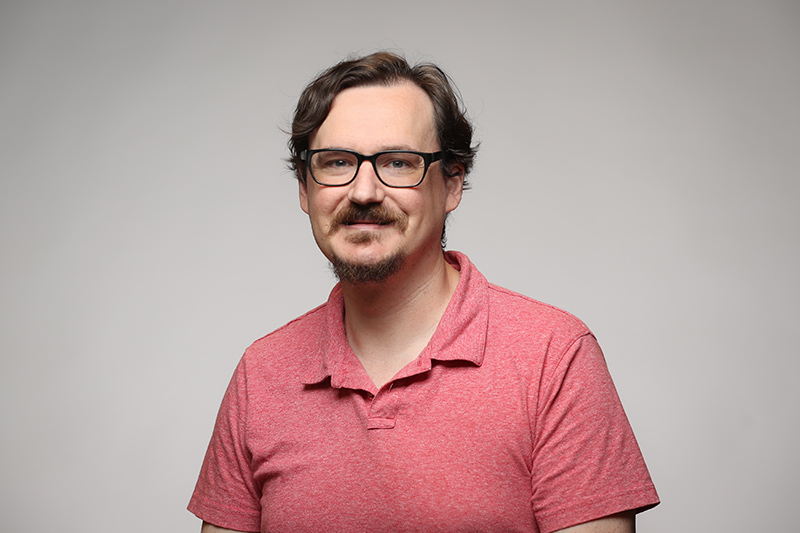
Missouri State University’s Kevin Cupka Head, director of the Bernice S. Warren Center for Archeological Research (CAR) has been honored by the Lincoln School Project of West Plains, Missouri, with its Lincoln School Light Award.
The Lincoln School Project recognized Cupka Head, along with Dr. Bolaji Ogunwo from the University of Lagos, during a dedication ceremony held May 17, 2025, at the Lincoln School. Both individuals received the honor for their preservation efforts and service to the community.
According to the project’s website, the organization does not give out the Light Award annually nor do they accept nominations. Instead, the organization reserves the award for individuals who deserve special recognition because they “reflect a steady light, guiding, uplifting, and inspiring others in meaningful and lasting ways.” These individuals “are living examples of illumination” who bring “dignity to the past and hope to the future.”
Cupka Head said he felt “extremely humbled” to receive the award.
“To have my contributions highlighted through this award is inspiring,” he noted. The award “reaffirms my personal commitment to public history, archaeology and the stewardship of our precious cultural heritage, both tangible and intangible.”
Preservation and recognition projects
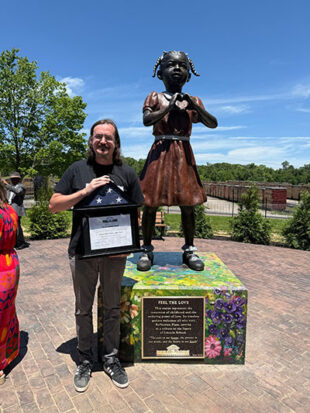
In particular, the Lincoln Project honored Cupka Head for his work on two different projects. One was his work recovering and documenting unmarked graves at the Sadie Brown Cemetery in West Plains. The other project involved his efforts to get the Lincoln School added to the National Register of Historic Places.
Crockett and Tonya Oaks, creators and directors of the Lincoln School Project, first approached Cupka Head to inquire about CAR’s ability to assist with the Sadie Brown Cemetery recovery project. After that, they collaborated on plans for the Lincoln School historic registry project.
“Although we deal more often with archaeological sites, the cultural resources management work that is the bread and butter of CAR frequently involves similar assessments of historic properties,” Cupka Head explained. “I expected my familiarity with the process, the agencies and especially the jargon might be of use.”
Sadie Brown Cemetery project
Cupka Head’s work on the Sadie Brown Cemetery project involved the identification and marking of nearly 100 unmarked graves. As project manager and principal investigator, he coordinated geophysical and remote sensing work to detect the graves. He also assisted with archival research and coordinating mapping and grave marker documentation with the help of community volunteers.
Partnering with Bill Isenberger of Digital Mapping and Graphics, LLC, Cupka Head and the CAR team gathered drone imagery and photogrammetry of the cemetery site. CAR’s geophysical team, led by Brandon Ives and Dustin Thompson, completed a multi-method survey of the cemetery. Several student volunteers helped with the survey.
National Register of Historic Places Project
Cupka Head also worked with the Lincoln School to have it named to the National Register of Historic Places.
He first added more information to initial Eligibility Assessment documentation submitted to the State Historic Preservation Office (SHPO). Once approved by the SHPO, the team continued the complicated nomination process.
“NRHP nominations involve quite a bit of historical research, documentation and form-filling,” Cupka Head said. To ease the process, he helped prepare draft and final nomination submissions. He also traveled with the Oaks delegation to Jefferson City, Missouri, where they presented their case to the Missouri Advisory Council on Historic Preservation.

Importance of historic preservation
It is important that people recognize the value of preserving the past, Cupka Head believes.
“Historic properties can’t preserve themselves,” he said. “But when these places rise to a level of significance — through associations with key events, influential people or simply as surviving remnants of what came before — they become powerful anchors of a community, its sense of place and its social memory.”
Cupka Head hopes to work again with the Oaks on future projects. These include identifying potential sites in and around West Plains to use for public archaeological workshops.
“Working with the Oaks and the amazing community in West Plains has been such an impactful experience,” he said. “Seeing our efforts come to fruition at both the Sadie Brown cemetery and the Lincoln School was a testament to the resilience and determination of the descendant community and their neighbors, as well as — hopefully — a model for similar collaborations throughout the Ozarks.”
Photos provided by Kevin Cupka Head.
Discover more from Reynolds College Blog
Subscribe to get the latest posts sent to your email.