
Two research archaeologists from Missouri State University’s Bernice S. Warren Center for Archaeological Research (CAR) returned from the Amazon in December with information that will advance our understanding of the region’s ancient history.
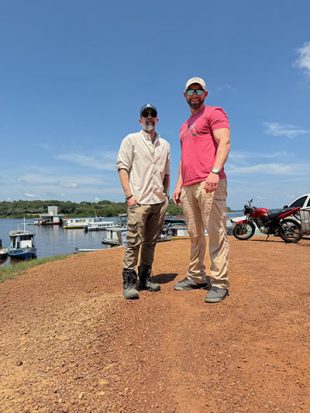
During their expedition to the region Dec. 14-19, Dr. Daniel Pierce and Christopher Bodine discovered evidence of large-scale ancient settlements. In addition, they confirmed the presence of previously undocumented geographical formations.
This information suggests that sophisticated civilizations existed in the Amazon long before the arrival of Christopher Columbus.
From geoglyphs to ancient settlements
Pierce and Bodine launched their Amazon expedition primarily to research previously unreported geoglyphs. Using data they collected from NASA, the pair identified those geoglyphs with LiDAR technology.
“We were especially interested in a specific geoglyph that we had identified in a region hundreds of miles from any other known glyphs,” Pierce explained. “In this regard, we were successful. We were able to locate the glyph in the field and confirm it on the ground in person.”
The pair didn’t just confirm their LiDAR observations, though. They also discovered evidence of a large-scale pre-Columbian settlement deep in the Amazon.
“The specifics of that evidence will all be in our scientific publication,” Pierce said. “We want to keep that information a bit closer to the vest for now to ensure the scientific process is maintained” through the peer review process, he added.
Explorations along the Rio Negro
The expedition was divided into two parts, Pierce said. The duo began their work in the state of Amazonas based in Manaus, a city located at the confluence of the Rio Negro and Amazon rivers. Traveling on the Rio Negro by boat, Pierce and Bodine camped along the river, catching piranha for dinner and sleeping in hammocks in the open.
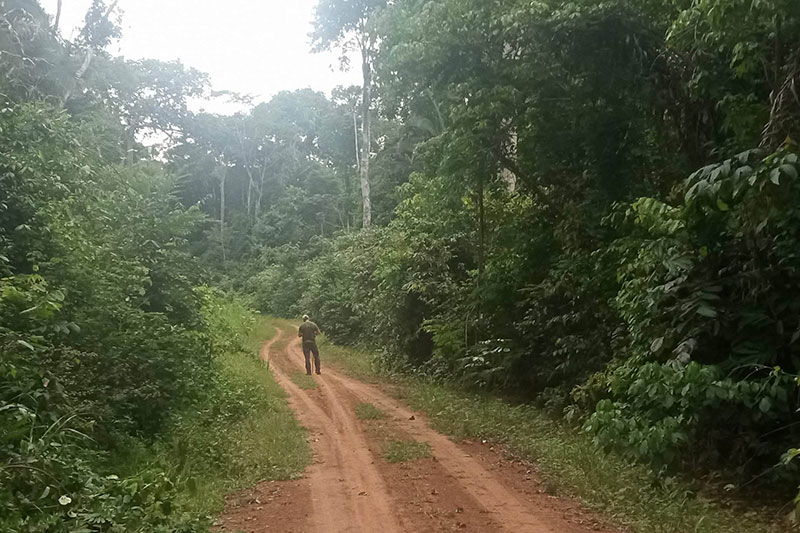
On day three, the pair approached a village located near one of the geoglyphs they were researching. Having gained permission from village leaders to work in the area, they spent the next few days exploring the jungle. While confirming the geoglyph locations, they also located and recorded evidence of a previously unidentified pre-Columbian people who once lived in the area.

Both Pierce and Bodine expressed gratitude for the assistance they received from the local communities during the expedition. They also appreciated learning more about the local environment, from its infrastructure to its culture.
“The local leaders also walked with us through the village and explained the different challenges they faced living in the Amazon, things like access to clean water and electricity,” Bodine said.
A variety of wildlife, endless piranha to eat and Christmas in the Amazon
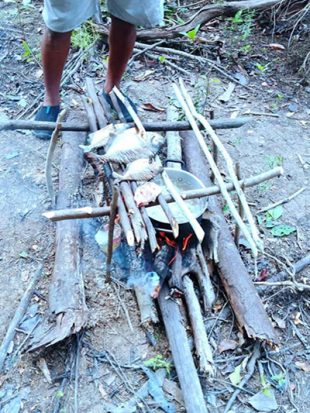
Once they completed this leg of the expedition, Pierce and Bodine traveled again on the Rio Negro back to Manaus. On the way they encountered a variety of wildlife: pink river dolphins, macaws and parrots, the occasional caiman and a few vampire bats. They also continued to enjoy endless piranha to eat.
Back in Manaus, Pierce and Bodine visited local museums to learn more about the area’s archaeology. Their expedition was timed close to the Christmas holidays, giving them an opportunity to experience Christmas in the Amazon, despite an average daily heat index of 115 degrees.
“In Manaus, they were definitely all about Christmas,” Pierce said. “There was a large Christmas market near the historic center, and [they] would have nightly Christmas shows and recitals. We even watched a local children’s Christmas breakdancing recital while having dinner one night. It was all very interesting.”
Drone technology captures data in Acre
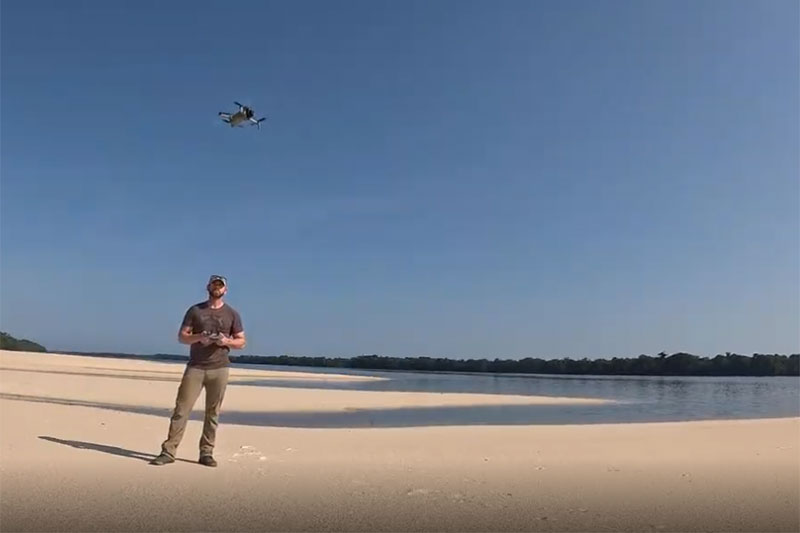
For the second leg of their expedition, Pierce and Bodine flew to Rio Branco, located in the state of Acre near the borders of Bolivia and Peru. Using drone technology, they collected photogrammetry data on known geoglyphs. This included Jaco Sa, perhaps the most famous geoglyph in South America, Pierce said.
The pair will use their new data to create high resolution visualizations beyond what photography can show. The information will also help with accurate location mapping. According to Bodine, they hope to compile a comprehensive archaeological and environmental map of the region. Remote sensing, excavation, ecological data and Indigenous knowledge will provide additional information, he added.
Scientific conclusions to be revealed after peer review process
Even though Pierce and Bodine have provided general information about their expedition to multiple print and television media outlets, they insist on remaining tight-lipped about their scientific findings.
“For now, we are not publicly talking about the scientific results,” Pierce said. “We are writing up our results for scientific publication and want to make sure our conclusions are peer reviewed before we start telling the public about them openly.”
“We know we are being somewhat vague,” he continued. “But these are our interpretations and conclusions, and until we pass the peer review hurdle, we don’t want to go around overselling the expedition in regards to archaeological significance.”
Both archaeologists hope to return to the Amazon in August 2026. Their goal is to collect more data and expand the existing Amazon research project.
Professionally and personally gratifying experience
“We believe the significance of our findings is incredibly important,” Pierce said, adding that he suspects the results, when published, will draw international attention.
“We believe [our research] will provide incredibly valuable insight into the prehistory of South America,” he said.
Bodine said the expedition was professionally gratifying in ways that would be difficult to replicate elsewhere.
“It reminded me why I became an archaeologist in the first place,” he said. “When you are young, you want to go out and find ‘lost cities’ in the jungle, explore the world. The Amazon is a rare place left in the world where you can do that.”
Pierce has broad experience exploring Central America, having conducted research in Guatemala and Mexico. He has also worked extensively in Europe.
His Amazon research, however, feels different.
“This is absolutely the most interesting and potentially significant project I have ever been a part of,” he said. “We are incredibly excited to share the results with the world in the coming months.”
Photo credits: Daniel Pierce and Christopher Bodine.
Discover more from Reynolds College Blog
Subscribe to get the latest posts sent to your email.