

Tepache vessels are known today as elaborately decorated ceramic vessels produced for the tourist trade by the potters of San José de Gracia, a village in the Mexican state of Michoacán. The vessels were first created by the potter Elisa Madrigal Martínez, who began making them in the 1930s after she had moved from Carapan to San José de Gracia; up until that time, the potters … [Read more...] about Tepache Vessel with Three Calla Lilies on Lid: Researched by Sarah Teel

The word most commonly used to describe the occurrence of small, solid, ceramic figurines is “ubiquitous,” as they are found everywhere in Mesoamerica. Throughout the Preclassic/Formative period (1500 BCE-250 CE) archaeological sites, figurines such as the objects in this display have been recovered in large numbers. While the find sites for these five figurines is unknown, a … [Read more...] about Preclassic/Formative Period Mesoamerican Figurines: Researched by Grace Young

The southern central Mexican state of Oaxaca is the home to the Zapotec and Mixtec, indigenous cultures whose artisans have both preserved ancient traditions and have developed vibrant new artforms. Grey plumbate wares have been known since Precolumbian times, and from this ancient tradition developed a prominent form of art known as barro negro, or Oaxacan black pottery. … [Read more...] about Oaxacan Black Pottery: Researched by Emma Schupbach
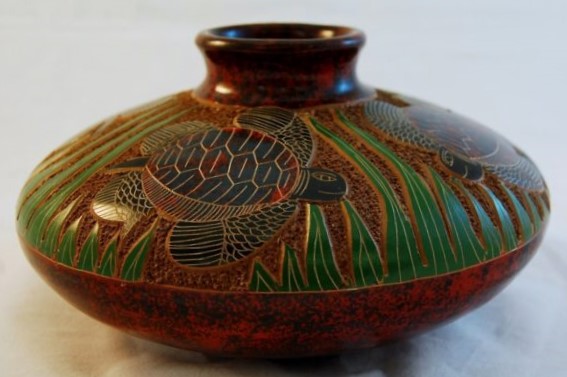
This vessel is an excellent example of the skilled art pottery made by the artisans of San Juan de Oriente, Nicaragua. These vessels strongly illustrate the Mestizo (mixed European and indigenous) heritage of the region; the vessels are made using traditional terra cotta clays, but formed using the imported Spanish method of throwing the vessel on a potter’s wheel. The vessels … [Read more...] about Sgraffito Vessel with Four Swimming Turtles: Researched and Reproduced by Katelynn McGuire