Missouri State University

Skip to content Skip to navigation
a b c d e f g h i j k l m n o p q r s t u v w x y z

Community Engagement Blog

How we do community engagement at Missouri State

Home » Archives for Samantha G. Selsor

Sustainability Efforts at Bear Pantry

April 1, 2025 by Samantha G. Selsor

Happy April, Bears!

April 22nd is Earth Day, a day recognized for environmental protection efforts, so it is only appropriate to discuss sustainability efforts employed at the Bear Pantry!

Bear Pantry’s Sustainability Practices

  • Reusable Bags
    • Instead of having single use, plastic bags available for Bear Pantry members to use after shopping, we encourage everyone to bring a reusable bag. New members receive an MSU maroon reusable bag upon completion of the membership form!
    • Reusable bag tips:
      • Always keep one with you. Accessibility will encourage use. Whether in your car or folded up in your backpack, having a reusable bag with you is a great practice.
      • Find a heavy-duty brand you like. Durability of bags is important! If the bags are durable, you are more likely to use them. Some stores only provide shoppers with reuseable bags at checkout. Other stores offer a discount for bringing in reusable bags instead of using their single-use bags. A one-time purchase of a reusable bag can save money in the long run!
      • Keep them clean! When handling food products, it is necessary to ensure the bags are clean. For cloth bags, a quick run through the washing maching is enough. For sturdy plastic, a wet paper towel or disinfectant wipe might be all you need.
      • Educate others! Further sustainability efforts by encouraging friends and family to adopt this habit. You could even give them a reusable bag or two.
  • Supporting Local Farms (Community Supported Agriculture)
    • Campus Garden and Amanda Belle’s Farm are both community partners with the Bear Pantry. By supporting local farms through distribution of their product, we are ensuring that we foster community connections and provide students with fresh, seasonal produce.
    • Community Supported Agriculture (or CSA) is where community members pay weekly, monthly, or seasonally for a “share” within a farming operation. This gives farmers the capital to pay for supplies and grow crops, giving the consumer fresh, seasonal, and local produce throughout the growing season.
  • Composting Waste
    • What is composting? According to the Environmental Protection Agency (EPA), composting is “the managed, aerobic (oxygen-required) biological decomposition of organic materials by microorganisms.” Food scraps and yard waste are excellent compost materials. Compost can be added to soil to increase nutrient composition and overall soil health. More information about composting here. At the Bear Pantry, any fresh food products that we recive that are not appropriate for distribution (fruits and vegetables that are decomposing, bread that is moldy, etc.) are composted via a designated compost site.
  • Recycling
    • What is recycling? According to the Environmental Protection Agency (EPA), “recycling is the process of collecting and processing materials that would otherwise be thrown away as trash and turning them into new products.” More information about recycling here. Yard waste, cardboard, plastic, aluminum, tin, and so forth, can all by recycled. Here at the Bear Pantry, we focus on recycling cardboard (since most of our food products come packaged in cardboard boxes) after each delivery.
  • Nutrition Education and Recipes
    • What does nutrition education and recipes have to do with sustainability efforts? A lot! If members are not able to use the food they receive from the pantry, then that is contributing to food waste (which is not sustainable, especially if this food is going into the landfill and not the compost bin). Utilizing resources (such as Nutrition Corner) provided by the Bear Pantry can help decrease food waste. Nutrition Corner focuses on providing members with easy access to recipes tailored to foods provided in the pantry. There are also nutrition education handouts on how to make canned and packaged foods more healthful through adding sources of protein, decreasing sodium intake, and so forth. These recipes are created by MSU nutrition and dietetics students, studying to be Registered Dietitian Nutritionist.
    • Link to Nutrition Corner


Don’t forget to follow us on socials!

Instagram: @mostatebearpantry & @mostatecce

Like us on Facebook: Bear Pantry

YouTube: @mostatebearpantry

LinkTree: https://linktr.ee/bearpantrymostate
 

Filed Under: Uncategorized Tagged With: Bear Pantry, Community Engagement

Community Partners

March 3, 2025 by Samantha G. Selsor

Hello everyone and happy March!

The spring semester is going quickly—almost halfway through! In this month’s blog post, we are going to learn about community partners. Bear Pantry benefits from donors and our community partners, including Ozarks Food Harvest, Amanda Belle’s Farm, and the MSU Campus Garden. Let’s take a look at these important organizations and the work they do!

Ozarks Food Harvest

Ozarks Food Harvest (OFH) is a food bank located in Southwest Missouri, serving 270 hunger relief agencies in 28 surrounding counties1. Currently, there are many programs offered through OFH, including2:

  • Weekend Backpack Program
  • After-School Food
  • Summer Food
  • Senior Food Boxes
  • Supplemental Nutrition Assistance Programs (SNAP)
  • Full Circle Gardens

We are supported by OFH through:

  • Weekly deliveries or pick-ups (this is our main source of food)
  • Purchased and donated product (product in orders is split between purchased and donated product, which is the reason our product is ever changing)
  • Impact ($1.93 = 1 pound of food, so our money goes further spending donor dollars at OFH)

Food Bank vs. Food Pantry

What is the difference between a food bank and a food pantry? A food bank has a large supply of food (similar to a bank having a large supply of money). A food pantry distributes portions of that food (similar to getting a withdrawal of money from your bank account and spending that). Ozarks Food Harvest is a food bank and the Bear Pantry is a food pantry!

Springfield Community Gardens

Springfield Community Gardens is a non-profit that has 16 community gardens, 3 urban farms, a community food forest, and test kitchen within the Springfield area3. Amanda Belle’s Farm and the Missouri State University Campus Garden are both part of Springfield Community Gardens.

Amanda Belle’s Farm

In collaboration with Cox Health, Amanda Belle’s Farm sits on a plot of land just between Cox South and Kickapoo High School. The main program offered through Amanda Belle’s is their CSA (or Community Supported Agriculture) boxes. These are available for purchase by Cox Health employees for weekly pickup during the growing season. Community Supported Agriculture is “a community of individuals who pledge support to a farm operation so that the farmland becomes, either legally or inspirit, the community’s farm; with the growers and consumers providing mutual support and sharing the risks and benefits of food production” according to the United State Department of Agriculture (or USDA).4

So, how does the CSA program benefit Bear Pantry? Well, each week, all boxes that have not been claimed by the end of the pick-up window by Cox Health employees are available for Bear Pantry. The amount and type of produce varies weekly and the product from the boxes supplies our Friday “Produce Pop-Ups”. 

Missouri State University Campus Garden

Last, but certainly not least, the MSU Campus Garden is a great supporter of the Bear Pantry, providing fresh produce during the growing season. Campus Garden is supported by the Sustainability Commission through Student Government Association (SGA). It is located just across Grand Street from the main campus (street address is on Normal Street). The garden welcomes volunteers for harvesting during the growing season. More information here: get involved with campus garden!  

Those are a few of our community partners. Donors, along with community partners, are a large reason we are able to serve the campus community. We value all supporters of the Bear Pantry! 


Don’t forget to follow us on social media!  

  • Instagram: @mostatebearpantry & @mostatecce  
  • TikTok: @bearpantry  
  • Like us on Facebook: Bear Pantry   
  • YouTube: @mostatebearpantry   
  • LinkTree: https://linktr.ee/bearpantrymsu   


Resources: 

  1. Ozarks Food Harvest. (n.d.). About us. Ozarks Food Harvest. Retrieved February 24, 2025, from https://ozarksfoodharvest.org/about/.  
  2. Ozarks Food Harvest. (n.d.). Member agencies. Ozarks Food harvest. Retrieved February 24, 2025, from https://ozarksfoodharvest.org/about/our-network/member-agencies/.  
  3. Springfield Community Gardens. (n.d.). Our local community gardens. Springfield Community Gardens. Retrieved February 24, 2025, from https://www.springfieldcommunitygardens.org/gardens. 
  4. U.S. Department of Agriculture. (n.d.). Community supported agriculture. National Agricultural Library. Retrieved February 25, 2025, from https://www.nal.usda.gov/farms-and-agricultural-production-systems/community-supported-agriculture.
  5. Missouri State University. (n.d.). Campus garden. Missouri State University. Retrieved February 25, 2025, from https://www.missouristate.edu/Sustainability/campus-garden.htm. 


Filed Under: donation

Budget Friendly Shopping and Cooking Tips

February 3, 2025 by Samantha G. Selsor


Happy February Bears!

For this month’s blog post, I wanted to focus on some budget friendly shopping (and cooking) tips.

A Dietetic Student’s Top Five Shopping Tips:  

  • Purchase meat in bulk from Sam’s Club or Costco OR meat that is close to expiration 
    • Meat sold in bulk is typically cheaper than purchasing individual packages. For example, a pound of 80/20 (80% lean/20% fat) ground beef from Walmart is $5.86/pound. A pound of 93/7 (93% lean/7% fat) ground beef from Sam’s club is $4.88/pound. The 93/7 ratio is better for you too! While buying meat in bulk is typically more expensive upfront (because you are purchasing more than one package), it is more cost effective overall. Additionally, when you purchase more than one package at a time, it can freeze and last a whole month (if you plan accordingly). 
    • Meat will also be marked down closer to its expiration date at grocery stores like Walmart or Hy-Vee, so you can stock up on  discounted meat and freeze for later use.  
  • Choose frozen fruits and vegetables instead of fresh
    • Nutrition: Frozen fruits and veggies have the same nutrient content as their fresh counterparts. Often, they are picked from the field, processed, and frozen the same day at peak freshness. 
    • Expense: Frozen produce is inexpensive (a Great Value bag of frozen green beans is 98 cents!) and a great way to add a vegetable as a side dish, in a casserole, soups and stews, or fruit to a smoothie or oatmeal.
    • Processing: Frozen produce undergoes minimal processing—most have no additives, preservatives, or seasonings added. This makes them versatile for adding to recipes and more heart healthy (low sodium!). 
    • Expiration: Frozen produce doesn’t expire as quickly as fresh. The worst that could happen is a little freezer burn! This results in less food waste. 
    • Preparation: Most frozen vegetables come in a steamable package, which are easy to throw in the microwave for 4-5 minutes and have perfectly steamed veggies. 
  • Choose store brand instead of name brand
    • Often, name and store brands are the same product, or are produced in the same factory, and just have a different label.  
      • Price difference example: a family sized box of Honey Nut Cheerios is $4.63 and the Great Value equivalent is $2.97. That’s some serious savings!
  • Purchase fresh fruits and vegetables in season (more nutritious and less expensive)
    • Spring: asparagus, avocados, bananas, cruciferous vegetables (broccoli, cabbage), carrots, lemons and limes, and lettuce 
    • Summer: berries (strawberries, blueberries, raspberries, and blackberries), melon (cantaloupe, watermelon, and honeydew), stone fruits (peaches, nectarines, plums), bell peppers, summer squash, tomatoes, zucchini, bananas and avocados, corn, cherries, cucumbers, and green beans  
    • Fall: apples, squash (pumpkin, acorn, spaghetti, butternut), sweet potatoes, potatoes and yams, onions, garlic, ginger, brussel sprouts, and cauliflower  
    • Winter: citrus (clementines, oranges, and grapefruit), pumpkin, winter squash, beets, potatoes and sweet potatoes, and yams
  • Use ready-made/grab-and-go when applicable
    • Steamer rice packets: I like Ben’s Original brand. Ensure these are unseasoned if you are watching sodium intake or food additives. 
    • Steamer potato packets: The Little Potato Co. makes steam packages. These are both convenient and decent serving sizes to decrease food waste. 
    • Individual yogurt cups or yogurt drinks: Chobani Complete drinks are a great option for complete protein that is lactose free. Great Value individual yogurt cups are an easy way to take a high protein snack on the go. Pair with some fruit and granola, nuts, and seeds and you have a satisfying, hunger crushing snack.
    • Cheese sticks or cheese and cracker snacks: Sargento Balanced Breaks are easy options with different cheeses and cracker assortments. (Pro tip: you can also make your own with crackers and blocks of cheese—this takes a little more prep time, but it saves money!) 
    • Pre-chopped fruits and vegetables: Hy-Vee Short Cuts are a great option for pre-chopped fruits and vegetables for those that are short on time, however, these are a bit more expensive. 
    • Seasoning blends: These eliminate the need to buy individual seasonings (which can get expensive). My favorite brands include Siete for tacos, fajitas, etc. or Walmart’s Great Value, which typically have fewer and better ingredients than the name brands. 
    • Rotisserie chickens: A rotisserie chicken is a game changer! They are so versatile and don’t require any cooking. I use these to make chicken noodle soup, quesadillas, casseroles, chicken pot pies, the list goes on… 

A Dietetic Student’s Top Five Cooking Tips: 

1. Plan ahead

At the beginning of each week, plan a few meals that you are comfortable making and know you enjoy. Make a list of all the ingredients you have and need, then shop for groceries. This not only saves you time throughout the week, but also sets you up for success by avoiding take-out and saving money. 

    • Here are a few of my go-to recipes for busy school/work weeks: 
      • Chicken quesadillas  
      • Beef tacos (or taco bowls) 
      • Turkey chili (especially in the fall/winter) and cornbread 
      • Vegetable beef stew and bread 
      • Pasta (so versatile! pesto and chicken or ground turkey and a marinara sauce) 
        • Note: all of these recipes and more are available on Nutrition Corner (available here: https://flic.kr/s/aHBqjBHd3s) 
2. Focus on protein (then carbohydrates, fiber, and healthy fats)

Centering your meals and snacks around protein ensures that you will be creating a balanced, satisfying meal. After you choose a protein, add a carbohydrate (or carbohydrates), fiber, and some healthy fats. 

    • Example meal:  
      • Protein – chicken breasts 
      • Carbohydrates – roasted sweet potatoes cooked in olive oil (healthy fat) and seasoned with salt and pepper 
      • Fiber – black beans 
      • Depending on how the chicken is seasoned, you could make this into a taco bowl and add some sliced avocado and/or shredded cheese and sour cream for some additional fat (and protein!). For the carbohydrate component, you could switch the roasted sweet potato for brown rice, which would also add some additional fiber and whole grains. 
3. Make enough for leftovers
  • A common misconception is that you need to “meal prep” at the beginning of the week to have homecooked meals throughout the week, but you don’t have to spend additional time in the kitchen if you make more for dinners. This takes care of having lunch prepped for school or work—just grab and go!
4. Utilize sheet pans, crock pots, and instant pots
  • There are so many recipes for each of these cooking tools/appliances that make for easy preparation and clean up. (Not as many dishes to clean? Sign me up!) 
5. Cook food thoroughly
  • One of my most used kitchen tools (apart from pots and pans) is my digital thermometer—especially for meat like chicken or beef. Cooking foods thoroughly ensures food safety and mitigates any risk for developing a foodborne illness.  

I hope these shopping and cooking tips are helpful! Whether you are shopping for all your groceries or using the Bear Pantry as a supplemental resource, creating healthy and satisfying meals doesn’t have to be hard!


Don’t forget to follow us on social media!  

Instagram: @mostatebearpantry & @mostatecce  

Like us on Facebook: Bear Pantry   

YouTube: @mostatebearpantry   

LinkTree: https://linktr.ee/bearpantrymsu   

Filed Under: Nutrition, Uncategorized

January Blog Post – Bear Pantry Updates

January 13, 2025 by Samantha G. Selsor

Welcome back, Bears!

I hope you all had a great holiday season and are ready for another amazing semester here at MSU! We have been working hard at the Bear Pantry preparing for a successful semester serving our campus community. This blog post will highlight a few changes in the Bear Pantry as well as upcoming events and volunteer information.

Hope Note Service

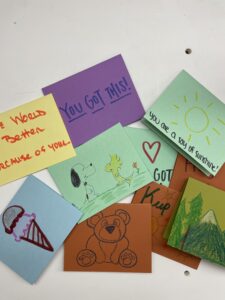
We started the semester with a Hope Note Service Activity at the PSU Staff Retreat. Together, the PSU staff spent time writing notes for Ozarks Food Harvest’s (OFH) Weekend Backpack Program. OFH’s goal is to have 70,000 notes written by volunteers going to elementary students throughout the Southwest Missouri area in the 2024-2025 school year. Additionally, this service activity is available to students and student organizations. In short, check out the section on “volunteering” below for more information.

Spring 2025 Semester Hours
  • Monday: 1pm-5pm
  • Tuesday: 10am-5pm
  • Wednesday: 10am-5pm
  • Thursday: 10am-5pm
  • Friday: Closed (except for Produce Pop-Ups or E-pack distribution)
Bear Pantry Set-Up

Due to increased traffic through the Bear Pantry, we have made modifications to the check-in and check-out stations to better help flow of members and increase the quality of shopping experience. The check-in and check-out processes are the same, however, location has changed.

  • Check-In through the north doors at the desk with an AmeriCorps worker.
  • Check-Out at one of three designated stations using the same checkout form and process.
  • Eggs Distribution Station: the egg distribution station has been set-up to ensure that equitable distribution is achieved for all members throughout the week. If a member needs a carton of eggs, simply ask an AmeriCorps member at the desk in front of the produce/egg station.
  • Product Limits: as of late last semester, the team has decided to implement a general product limit of one of each item per member. For example: one box of spaghetti noodles or one can of soup. There are exceptions to this guideline and those will be posted on a case-by-case basis throughout the pantry. By making this change, we are hopeful that more members will be able to receive food assistance throughout the week.
Upcoming Events
  • January 20, 2025: Martin Luther King Jr. Day – Pantry Closed
  • February 17, 2025: President’s Day – Pantry Closed
  • March 17-21, 2025: Spring Break – Pantry Closed
  • March 25-26, 2025: Giving Day
  • March 31-April 4, 2025: Greek Week
  • April 18, 2025: Good Friday – Pantry Closed
  • May 5-8, 2025: Finals Week – Pantry Open; Check Hours
  • May 9, 2025: Graduation Day – Pantry Closed
Volunteering
  • Monday Restocking: Every Monday, the Bear Pantry gets the weekly order. This is our most consistent volunteering event for students to participate in. Based on delivery or pick-up weeks, the time will change (see below).
    • 1st and 3rd Mondays of the month: pick-up orders; 11am
    • 2nd and 4th Mondays of the month: delivery orders; 8:30am
  • Hydroponics Harvesting: This event varies more depending on growth of the plantings. Check GivePulse regularly to see availability of this event. Most events will take place on Wednesday afternoons.
  • Hope Notes: One of the large programs offered at OFH is the Weekend Backpack Program, which provides elementary school-aged children with supplemental non-perishable goods to last all weekend. Within this program, they include a Hope Note in each of the packs so children have a little note of encouragement each time they receive their food.
    • Contact Samantha Selsor (sgs823@live.missouristate.edu) to inquire about Hope Notes, including the number of students in your group (and any additional information you deem necessary).
    • Schedule a time to come by the Bear Pantry to pick-up supplies (kits as pictured above include colored cardstock, stickers, crayons, markers, and colored pencils).
    • Host your Hope Note making event! (If your group requires meeting space, we can schedule that in the PSU, please include this information in the initial email to Samantha).
    • When you are finished, bring all supplies and completed notes to the Bear Pantry—we will take care of delivery to OFH.
  • All volunteer opportunities are posted on our GivePulse website: https://www.givepulse.com/group/119561-Bear-Pantry


Have a great semester and don’t forget to follow us on social media!  

  • Instagram: @mostatebearpantry & @mostatecce 
  • TikTok: @bearpantry 
  • Like us on Facebook: Bear Pantry  
  • YouTube: @mostatebearpantry  
  • LinkTree: https://linktr.ee/bearpantrymsu   

Filed Under: Uncategorized

December Blog Post – Season of Giving

November 21, 2024 by Samantha G. Selsor

With the holidays come many things: family gatherings, tasty food, gift exchanges, and gratitude for the year that has passed. For some, the holidays are a difficult time for a number of reasons. For those that face food insecurity or financial constraints for the purchase of gifts, there are many local resources available for assistance. For those that do not face those challenges, there are ways to donate time, money, and energy to help those in need. This blog post will outline resources available in the Springfield area. 


Ways to give within the community: 

  1. Salvation Army Red Kettles 

We are all familiar with the Bell Ringers outside of the grocery stores during this season. This is a great resource to give monetary funds OR volunteer time as a Bell Ringer. 

There are several companies that participate in “match” days. For the funds given, these companies will match up to a certain dollar amount. 

  • December 7th: Pinegar Honda and Chevrolet match days 
  • December 16th-23rd: Bass Pro Match Week   

 2.  Village Inn Toy Drive  

Annual Toy Drive hosted at Village Inn (2036 N. Glenstone location only.  

  • December 7th 7am-1pm  
  • Free meal coupons for those that bring a toy or monetary donation 
  • Link for additional information: Village Inn Annual Toy Drive – The Salvation Army Springfield, MO  

 3. Angel Tree  

Donors can purchase gifts and clothes for those in need. Trees can be found at Walmart, Sam’s Club, Battlefield Mall, Bass Pro Shops, Hobby Lobby, and other retail locations. Link here to all locations: Angel Tree Locations.  

  • Distribution days:
    • December 17, 2024, from 9am-3pm 
    • December 18, 2024, 9am-12pm 

 4. Convoy of Hope Gift Catalog 

Bundles are available on Convoy of Hope’s website to assist in one of their initiatives. These bundles include farmers, disaster relief, caring for a child, and helping moms. This would be a great option for someone who is busy and unable to donate time or make it to a specific location to serve those in need because they can be purchased online. 

Link to the gift catalog: Gift Catalog | Convoy of Hope  

 5. Volunteer Opportunities 

If unable to donate monetary funds, there are many organizations that host regular volunteer events to donate time. A few organizations are linked below:

Ozars Food Harvest 

Convoy of Hope 

Bear Pantry 

Safe to Sleep  

Ronald McDonald 

Crosslines (link takes you directly to the Holiday Support section of the website) 


Resources for those in need:  

  1. Salvation Army Holiday Meals 

Community Thanksgiving and Christmas Meals  

  • Community Thanksgiving Lunch
    • 1707 W Chestnut Expressway
    • November 28, 2024 @ 11:30 AM
    • Link: Community Thanksgiving Dinner – The Salvation Army Springfield, MO 
  • Community Christmas Dinner
    • 636 N Boonville
    • December 25, 2024 @ 12:00 PM (noon)
    • Link: Community Christmas Dinner – The Salvation Army Springfield, MO 

2. Victory Mission Community Meals 

  • Friday, November 22nd at 5pm 
    • Freedom City Church 
    • Address: 1477 N Broadway Ave 
  • Tuesday, November 26th at 5pm 
    • Central Assembly  
    • Address: 1301 N Boonville Ave 
  • Wednesday, November 27th at 6pm 
    • Passion Church 
    • Address: 806 N Forest Ave 
  • Thursday, November 28th at 4pm 
    • Springfield Recovery Community Center 
    • Address: 1925 E Bennett St J 
  • Friday, November 29th at 7pm 
    • The Well 
    • 720 E Norton Rd 
  • Link: Victory Mission + Ministry in Springfield, MO   

3. Thanksgiving at the Multicultural House 

Thanksgiving meal offered to students who may not have a place to go for the holiday. Open to all students, no RSVP needed.

  • Thursday, November 28th starting at 1pm
  • Address: 1146 East Cherry Street

These are a few of the many organizations that have meals or volunteer events for everyone in the community get involved. Happy Holidays from your friends at the Bear Pantry! We will see you in 2025!


Don’t forget to follow us on social media! 

Instagram: @mostatebearpantry & @mostatecce 

TikTok: @bearpantry 

Like us on Facebook: Bear Pantry  

YouTube: @mostatebearpantry  

LinkTree: https://linktr.ee/bearpantrymsu  

Filed Under: Uncategorized

Next Page »

Categories

Archives

Meta

  • Log in
  • Entries feed
  • Comments feed
  • WordPress.org
  • Accessibility
  • Disclaimer
  • Disclosures
  • Equal Opportunity Employer and Institution
  • © 2026 Board of Governors, Missouri State University
  • Contact Information