
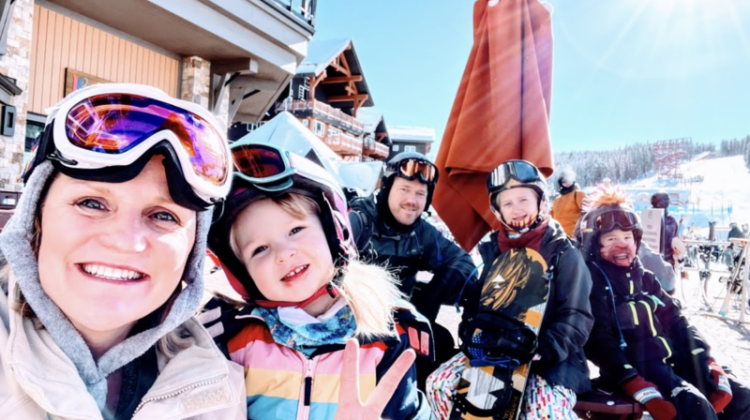
Our featured McQueary College of Health and Human Services (MCHHS) faculty member is Heather Eckhart. She is a clinical assistant professor and Master of Social Work (MSW) practicum coordinator in the School of Mental Health and Behavioral Sciences.
Drawing on her clinical expertise, teaching experience and community outreach, she is preparing students to become ethical, compassionate and effective social workers.
Let’s get to know Eckhart better.
Where are you originally from?
I’m from Joplin, Missouri, where I met my high school sweetheart and now my husband of 20 years.
What brought you to Missouri State University?

I joined Missouri State in July 2024. The strong reputation of the MSW program, along with my passion for mentoring students and preparing them to become clinicians, policy changers and macro-level advocates, made MSU the ideal fit.
Where did you work prior to joining Missouri State?
Before MSU, I served as clinical professor and field education coordinator at Missouri Southern State University. I also taught at Crowder College, ran private practice and worked in community-based mental health. My career includes long-standing partnerships with schools, universities, nonprofits, law enforcement and mental health organizations.
Can you share your academic journey?
I earned my Bachelor and Master of Social Work from the University of Arkansas in 2004 and 2005, respectively. I became a licensed clinical social worker in 2006 and later a certified clinical yoga practitioner in 2020.
What inspired you to pursue a career in social work and higher education?
My early MSW practicum with the homeless and children impacted by trauma inspired my passion for serving marginalized populations and advocating for social justice and equity. Pursuing a career in higher education allows me to equip future social workers to create meaningful change.
Are there current trends in social work you find important or exciting?
Current trends that I find especially important include social justice, childhood trauma, women’s wellness and community mental health. I’m also active in policy advocacy, which led me to take part in Advocacy Day at the Missouri Capitol on March 4 this year. In addition, I stay involved with organizations, such as the National Association for the Advancement of Colored People, the National Alliance on Mental Illness and the National Association of Social Workers in Missouri.
What do you enjoy most about your role?
I enjoy connecting students with practicum opportunities that reflect their passions and mentoring them as they grow into professionals.
What’s your teaching philosophy and how do you engage students in preparing for their practicum experiences?
My teaching is grounded in real-world applications. I draw on my private practice experience and incorporate person-in-environment theory, mindfulness and therapeutic techniques in my teaching.
I’m very clinically minded and incorporate the diagnostic and statistical manual of mental disorders, fifth edition (DSM-V) to help prepare students for ethical and effective practice. I remind them learning isn’t just about knowledge; it’s about staying true to themselves and their passion to create meaningful change.

My favorite quote that deeply connects with my philosophy is by Margaret Mead: “Never doubt that a small group of thoughtful, committed citizens can change the world. Indeed, it is the only thing that ever has.”
What do you like to do outside of work?
I enjoy painting, pottery making, skiing and sharing coffee with friends. I value family time with my husband and our three active children. Whether it’s cheering at basketball games, shuttling kids to and from track practice, gymnastics, RVing and traveling across the country, I find joy in being with my family.
What might surprise people about you?
This year marks my 20th year in the field. I’ve traveled to all 50 states, played rugby in college and raised free-range bunnies. What surprises people most is I provided crisis therapy to first responders after the 2011 Joplin tornado, an experience that deepened my lifelong commitment to trauma recovery and advocacy.