Missouri State University

Skip to content Skip to navigation
a b c d e f g h i j k l m n o p q r s t u v w x y z

Health and Human Services News

  • McQueary College of Health and Human Services

Making connections for better patient care

November 5, 2026 by Ella Reuter

View of a glass and steel building on campus.

Working with people in other fields helps healthcare students prepare to meet patients’ needs better.

Dr. Bonnie Slavych, assistant professor of communication sciences and disorders and speech language pathology at Missouri State University, wants to help students learn how teamwork can improve patient care. She will further this goal through her selection for the Council on Academic Programs in Communication Sciences and Disorders (CAPCSD) Simulation and Interprofessional Experience Community of Practice (CoP) 2026-27 cohort.

“I believe this opportunity will help me learn other people’s experiences, get ideas and ultimately strengthen what our students are learning,” Slavych said.

Working beyond disciplines
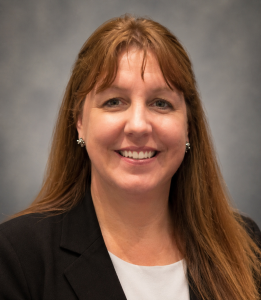
Dr. Bonnie Slavych headshot.
Dr. Bonnie Slavych

Healthcare professionals bring different skills, knowledge and perspectives to patient care. Slavych wants students to understand how these contributions work together to meet patients’ needs.

Through interprofessional education, students learn with and from students in other disciplines. For example, a speech-language student may assess a patient’s swallowing safety, while a dietetics student evaluates a patient’s nutritional needs. By sharing knowledge from their respective disciplines, students gain a more complete understanding of the patient’s needs and how to address them.

Slavych believes students who learn to work well as a team during their studies will carry that approach into their careers.

“If they’re in school and learning a team-based approach, they’ll go into the field expecting a team-based approach,” she said.

Looking at the whole patient

Simulation-based learning allows students to practice teamwork before entering the workforce. They are able to share what they know, consider other perspectives and recognize when to involve another healthcare professional.

Slavych has seen the value of this approach in her own patient care experience. She once worked with an older woman who was losing weight. Although swallowing was the initial concern, the patient’s needs extended beyond it.

The care team also reviewed her medications and relationships with her adult daughters. The case showed how multiple factors can affect a patient’s health and require attention from different healthcare professionals.

“We need to be able to have a shared language, so the needs of the patient are best met,” Slavych said.

Bringing fresh insights back

Through the CAPCSD CoP cohort, Slavych will engage with other educators over the next year to explore ways to use simulation in their programs.

Through Zoom meetings and group discussions, she aims to identify practical strategies to strengthen interprofessional education at Missouri State and prepare students for team-based patient care.

She also plans to share ideas for overcoming barriers to interprofessional education and fostering collaboration.

“How do we think outside the box to make something possible?” she said.

Explore communication sciences and disorders

Filed Under: Faculty Spotlight Tagged With: Bonnie Slavych, Communication Sciences and Disorders, faculty

One CRNA’s determination to save a nurse anesthesiology program

October 27, 2026 by Ella Reuter

Dr. Monika Feeney (center) with residents from the School of Anesthesia at Missouri State University.

Dr. Monika Feeney is the director of the School of Anesthesia.

In 2010, Feeney learned that the then Southwest Missouri School of Anesthesia for Nurse Anesthetists, which she led, was at risk of closing. Determined to keep the program that had been around since 1952 alive, she worked to find a way forward.

In 2013, Missouri State University became the program’s sole owner. Since then, Feeney has helped grow the program, expand clinical opportunities and continue preparing future certified registered nurse anesthetists.

Learn more about Feeney’s story and the program’s journey.

Filed Under: Anesthesia, MCHHS News Tagged With: faculty, Monika Feeney, School of Anesthesia

Creating impact through intentional teaching and research

October 5, 2026 by Ella Reuter

Dr. Keith McShan presents in Timisoara, Romania.

Teaching with purpose makes an impact on students.

Keith McShan, assistant professor in the School of Health Sciences at Missouri State University, is committed to building meaningful relationships and creating positive learning environments.

His experience coaching high school football and basketball in Windsor, Ontario, sparked his interest in sports psychology research. Through working with hundreds of athletes over the years, he saw how relationships between coaches and athletes could influence their experience and performance.

“If you want your athletes to perform and do well, then having quality relationships as a coach does play a huge role,” McShan said.

One area of his research explores The Tandem Method, developed by psychologist Dr. Sophia Jowett. The method teaches coaches how to build strong relationships with their athletes through a 3+1C model that focuses on closeness, commitment, complementarity and co-orientation, or shared understanding.

Investing in professional growth

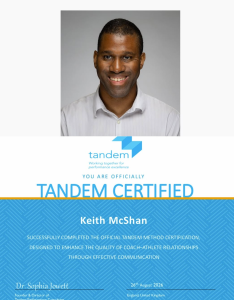
McShan’s Tandem Method certification.

McShan earned his Tandem Method certification this summer at the European Federation of Sport Psychology Congress in Timisoara, Romania, from July 13-17. The exercise science program funded his trip, enabling him to learn directly from Jowett, a leading scholar in coach-athlete relationships, as well as psychologists from 56 different countries.

“It was a great opportunity to learn more about the topic and earn a certification. Now, I can share what I’ve learned with coaches and train them on the value of strong relationships,” McShan said.

The experience also allowed McShan to connect with professionals from around the globe and gain different perspectives on sports and exercise psychology. His certification expands the expertise he brings back to Missouri State and shares with students and other professionals.

Bringing research to the classroom

McShan wants students to understand how relationship-building applies beyond athletics and can influence their future careers, whether they pursue coaching, sports psychology or another related field.

The 3+1C model on relationships provides a framework for understanding these connections:

  • Closeness focuses on respect, trust and mutual appreciation. According to McShan, when people feel connected to those they work with, they may be more willing to put extra effort into their goals.
  • Commitment emphasizes supporting others through challenges and successes. Developing relationships and remaining committed to the people you work with can help build perseverance and motivation.
  • Complementarity means working together and creating opportunities for collaboration.
  • Co-orientation is about finding common ground and understanding shared goals.

These concepts also apply to healthcare professionals, including nurses and occupational therapists. Building trust and understanding what patients and clients want to accomplish can help professionals create stronger relationships.

On campus, McShan also started the Care Bears Lab, a sports psychology lab that focuses on coach-athlete relationships and creating positive and caring environments in sport and exercise.

As he continues building opportunities for students, McShan hopes to expand sports psychology education at Missouri State. Interest in the field is growing, with more students looking to earn a minor, master’s degree or even a PhD.

To make these opportunities possible, McShan desires to bring together several other programs at the university.

“The goal is to work with psychology, counseling, athletics and exercise science to create a path for students who want to study sports psychology at Missouri State,” McShan said.

Leaving a lasting impact

McShan’s research influences the way he approaches teaching. He believes instructors can create classrooms that are welcoming, engaging and intellectually stimulating, giving students meaningful learning experiences where they feel supported and encouraged to participate.

He incorporates games, activities and hands-on learning into his courses. Some examples include playing interactive games using tricycles and scooters and completing case studies. He also makes an effort to build personal connections with students, including attending their extracurricular events and celebrating birthdays in class.

“I hope that when they enter the field, they carry some of these things with them, especially making people feel invited and welcome,” he said.

This year, McShan received a Missouri State Teaching Excellence Award.

For him, recognition reflects the importance of building relationships with students and creating an environment where they want to learn.

“Receiving this award emphasizes that when you put effort into teaching, it has a positive impact on our students,” McShan said.

Learn more about exercise science

Filed Under: exercise and movement science, Faculty Spotlight, MCHHS News Tagged With: Exercise Science, faculty, Keith McShan, research, School of Health Sciences

Turning community data into action

September 21, 2026 by Ella Reuter

With 58% of violent crimes going unreported, according to the U.S. Department of Justice, communities may not have a full picture of why violence happens or where it occurs.

That’s where local efforts to better understand and address violence can make a difference.

This year, Missouri State University’s public health program teamed up with the nonprofit Stronger Together Springfield (STS) and local hospitals to establish the Cardiff Violence Prevention Model pilot project.

Dr. Robert Niezgoda, assistant professor and Master of Public Health program director, first connected with Krista Pyle, STS executive director, in spring 2025. Since then, they have been working on developing this project.

“We had several meetings to discuss the project and connected with other groups at Missouri State, including the Ozarks Public Health Institute and public health faculty,” Niezgoda said.

Last fall, STS received $30,000 from the American Public Health Association to fund the project’s beginning stages.

Bringing the community together

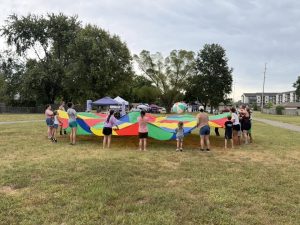
Stronger Together Springfield hosts an outdoor activity for a Springfield neighborhood.
Stronger Together Springfield hosts an activity for a Springfield neighborhood.

Pyle founded STS after spending 20 years in education primarily serving students and families in communities with high levels of economic need. After helping families leave abusive situations, she saw how difficult it could be for them to navigate community resources. That led her to work with local leaders to find solutions.

STS works to build a safer, more connected and resilient Springfield through community partnerships. One part of this work is the Cardiff Violence Prevention Model, which uses anonymous emergency room data on violent injuries from CoxHealth to identify patterns and areas that may need additional support.

The nonprofit recently partnered with its first neighborhood and will spend the next few months listening to residents, businesses and community partners about their experiences and priorities. STS will combine this local knowledge with the hospital data to guide efforts that can help prevent violent injuries and strengthen the community.

For Pyle, the project is deeply personal and connected to her years as an educator.

“I truly feel honored to be a part of this work,” Pyle said, adding that she wants to help ensure her former students “felt safe everywhere in our community, not just at school.”

What is the Cardiff Model?

According to the Centers for Disease Control and Prevention (CDC), the Cardiff Violence Prevention Model “provides a way for communities to gain a clearer picture about where violence is occurring by combining and mapping both hospital and police data on violence.” The model was first developed in Cardiff, Wales, in the late 1990s by professor and surgeon Dr. Jonathan Shepherd, who found that many patients treated for violence-related injuries had not reported the incidents to police.

So, he developed a model for collecting data and collaborating with both law enforcement and the community to predict and prevent violence. The Cardiff Model is more than a way to map and understand violence. It offers a framework for hospitals, law enforcement, public health agencies and community organizations to work together on strategies to prevent it, according to the CDC.

“The Cardiff Model has been shown to be successful with reducing violence. We hope to replicate these results to reduce the incidence of violence in Springfield neighborhoods,” Niezgoda said.

For the Springfield project, local hospitals will gather voluntary, anonymous information about patients who receive care for assault-related injuries. In March, forensic nurses at CoxHealth began collecting and mapping this anonymous data from assault victims treated in Cox’s emergency departments. Mercy Hospital is also planning to join the initiative.

The project will examine patterns, such as where and when violence happens, the age of those involved, the type of violence and how the people involved are connected. This information can help community partners identify areas experiencing higher rates of violence and targeting prevention efforts where they are most needed.

“This will help identify neighborhoods in greatest need of an intervention and inform those efforts,” Niezgoda said.

The Cardiff Model enables communities to make decisions based on data instead of assumptions.

“Using evidence to direct decision making ensures that assumptions and bias aren’t leading the interventions,” Niezgoda said.

Working with confidential data

When STS and local hospitals share data, patient privacy is protected through established protocols and agreements. Individual data points are not shared. Instead, the data committee uses combined or aggregate data to identify trends and create reports for the executive board and community partners.

The printed reports are collected after meetings to ensure information does not leave a meeting. Aggregate data may also be shared with the community during special meetings, but only in ways that protect individual identities.

Analyzing data in the classroom

Once the data committee identifies the most useful information for the project’s board, public health graduate assistants at Missouri State will begin supporting the project.

Before analyzing the data, they will complete confidentiality training and sign non-disclosure agreements. They will work with the data committee to create monthly reports, presentations, annual reports and more detailed analyses.

According to Niezgoda, working with community partners gives students an opportunity to connect what they learn in the classroom to real-world situations. They will also learn the importance of building trust and relationships with communities. Community partners and residents often understand their neighborhoods better than outside researchers.

“Approaching community work with humility is important for students to grasp so that they can clearly understand what’s happening in those neighborhoods,” he added.

Learn more about the public health program

Filed Under: MCHHS News Tagged With: faculty, Ozarks Public Health Institute, public health, Robert Niezgoda

Next Page »

Categories

Archives

Meta

  • Log in
  • Entries feed
  • Comments feed
  • WordPress.org
  • Accessibility
  • Disclaimer
  • Disclosures
  • Equal Opportunity Employer and Institution
  • © 2026 Board of Governors, Missouri State University
  • Contact Information

Loading Comments...