Missouri State University’s Dr. William Meadows, professor of anthropology in the Department of Sociology, Anthropology and Gerontology, continues to enjoy a prolific research and writing career.
The University of Texas Press will issue a second edition of Meadows’ “Comanche Code Talkers of World War II” in the fall of 2026. The second edition contains over 60 pages of new material.
The first edition has sold over 10,000 copies, Meadows noted, and still generates requests for him to speak, conduct research, and advise museums, universities, government entities and Native American communities.
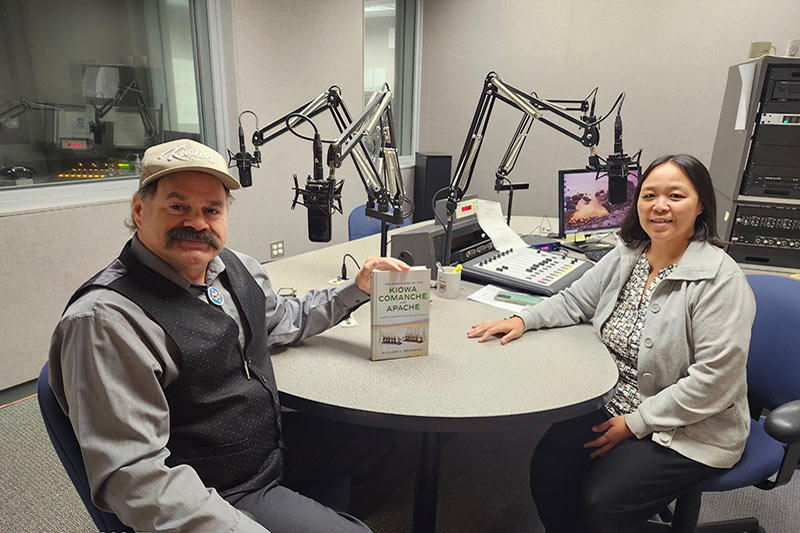
Earlier this year, Meadows published a book on Native American hand game traditions. Missouri State’s Emily Yeap recently conducted a radio interview with Meadows about his research for this book.

Enjoying a busy writing and speaking schedule
Meadows also recently wrote an article for the Sequoyah National Research Center (SNRC), located at the University of Arkansas-Little Rock. In the article, Meadows discusses the center’s renowned collection on Native American World War I veterans. It appears in American Indian Magazine, the official publication of the National Museum of the American Indian (NMAI).
“The Sequoyah National Research Center is a unique and very significant archive of Native American newspapers, journalism, authors, and related works,” Meadows explained. His essay on Native American Code Talkers is part of the Sequoyah center’s “Modern Warriors of World War I” series.
Meadows also wrote an article on Native Code Talkers in World War I for the SNRC. That article will be added to the SRNC website.
On Oct. 2, Germany’s National Public Broadcaster interviewed Meadows for its series, “America’s Wars.” The series traces key U.S. military conflicts and their impact from the Revolution to the present day. “My contributions focused on Native American military service from the Revolutionary War through World War I,” Meadows said.
Additionally, Meadows presented more of his research Oct. 9 at the American Society for Ethnohistory conference in San Antonio, Texas. In his essay “Cutthroat Massacre of 1833: Kiowa and Osage Perspectives,” Meadows examines the factors leading up to the 1833 massacre. He also reviews the site’s geography and history, explores the event’s long-term impact on native and U.S. government policies and discusses its impact on Osage religious practices.
Public outreach includes honoring veterans
One of Meadows’ most enjoyable activities recently has been to nominate colleagues for prestigious honors. He nominated SGM Lanny Asepermy for an honorary doctorate from Missouri State. Asepermy received the honor in May 2025.
Meadows described Asepermy as “very deserving” of the honorary doctorate, noting that his research and publications “would have gained him tenure in a university position.” In addition to his years of service in the U.S. Army, his public service efforts, his research and publications, Asepermy often assisted Missouri State students during ethnographic field schools.
Meanwhile, Meadows also nominated both Lt. Michael Waddle and the Kiowa Code Talkers of World War II for induction into the Oklahoma Military Hall of Fame. Both nominees will be inducted Nov. 1, 2025, Meadows said. Waddle was awarded a Silver Star for his combat actions during the Vietnam War. The Kiowa Code Talkers were part of a U.S. Army unit in Europe during World War II that provided secure communications for the Allies during the conflict.
“I was very happy to be able to undertake these nominations and to garner recognition for these individuals, who have gone unrecognized for so long,” Meadows said. “As Native Americans are often overlooked by much of the country and media, their recognition was very satisfying and a way to give back to the communities that have so long contributed to my research, teaching and service events at MSU.”
Annual powwow scheduled for Nov. 15
Despite his ambitious publishing schedule, Meadows still finds time for public outreach efforts. In particular, he is assisting the American Indian Center of Springfield, Missouri (AICS) with organizing its annual powwow.
This year, the powwow will be held in Greenwood High School’s Allison Event Center Nov. 15 on the Missouri State campus. It is free and open to the public. Mark your calendar.
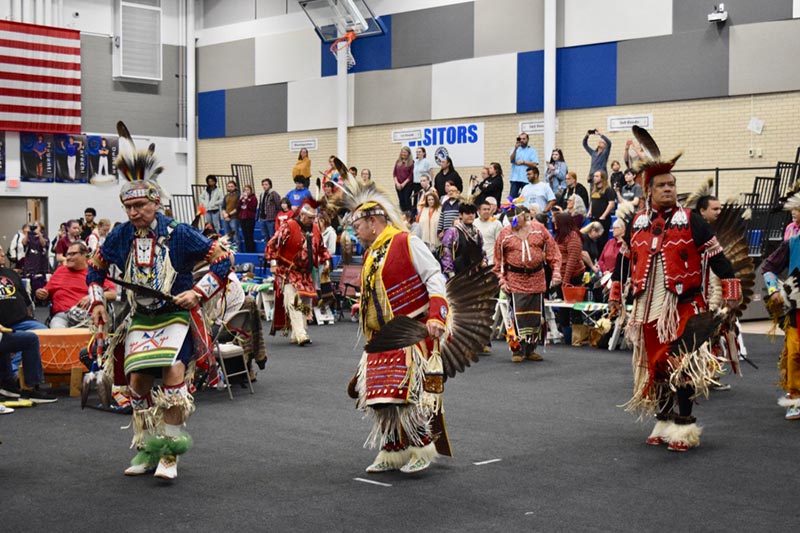
“Powwows are intertribal celebrations of culture, history, song and dance and are held for a variety of purposes,” Meadows explained. “They can be held as annual celebrations of tribes, universities, Native organizations, fund raising events, graduations, birthdays, memorials for someone that has passed, for an outgoing or returning veteran, to honor veterans or individuals, or as events focusing on dance competitions.”
“There will be many Nations represented this year,” Meadows added. “These include the Cherokee, Chippewa, Choctaw, Comanche, Delaware, Hopi, Kiowa, Lakota, Navajo, Ponca, Pottawatomi, Quapaw, Seminole and Yakama.”
Native dance one of several activities to enjoy
Among his duties for the powwow, Meadows makes facility arrangements, supervises staffing, and oversees the floor program of activities. He is excited about the activities scheduled for this year, including the program’s wide range of dancing.
One example is the exhibitions dance. These dances highlight specific categories of dancers along with unique dance and dress style, he explained. In intertribal dances, all the tribes participate, while the two-step is a Native social dance where couples dance together. Other dances include the Gourd Dance, an original Plains warrior dance, and the Round Dance, when audience members often participate.
Powwows also serve as centers of redistribution of foods and goods through gift giving, Meadows said. “Dancers are honored throughout the event, and formal giveaways, where individuals in positions of honor give gifts away for the honor they receive, are also held.”
Experiential learning opportunities for students and community
Meadows noted that holding the powwow in Springfield brings economic and educational benefits to the campus and wider community.
“Powwows bring Native peoples from several states to Springfield, which benefits the local economy. Several MSU classes use [the powwow] for classroom projects and extra credit opportunities,” he said.
In the past, Meadows has incorporated the powwow into his North American Indians Today (ANT 327) course.
“As powwows are the largest, most frequent, widespread Native American event across much of the nation, this is an excellent experiential learning opportunity,” Meadows said. He explained that students can gain experience working the event while interacting with Native Peoples. They observe and participate in activities, record information and write up their field notes for class.
A place for family and friends to gather
More than anything, Meadows believes powwows allow families and friends to gather, visit and celebrate different aspects of their cultures.
“It allows non-Indians and international students opportunities to see and learn about Native American cultures and arts, many of which they have never seen before,” he said. “It showcases Native music, dance, and material arts for the public.”
“This event provides a rare cultural opportunity that many never get to experience.”
Discover more from Reynolds College Blog
Subscribe to get the latest posts sent to your email.