
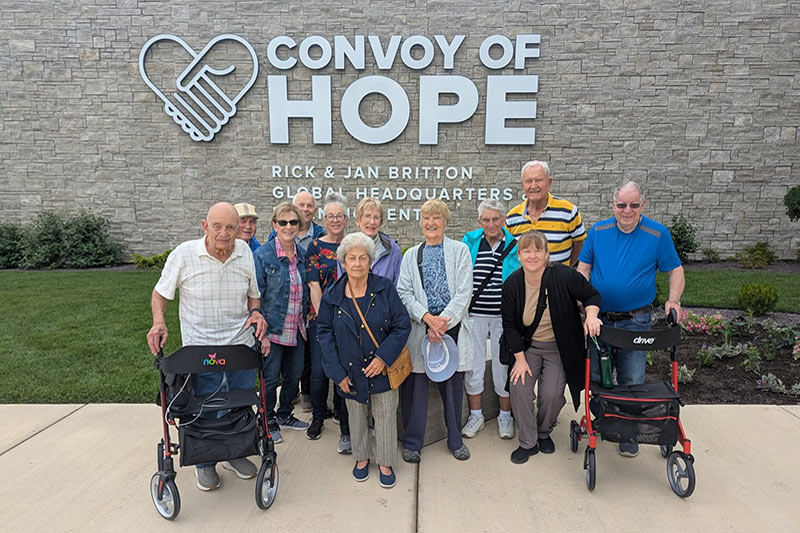
The American population is getting older—quickly.
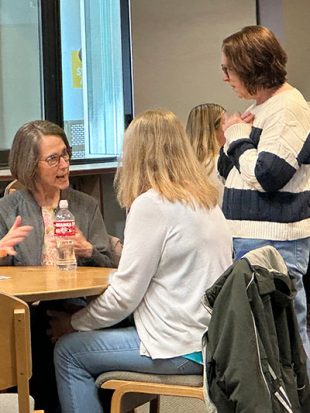
According to the U.S. Census Bureau, older adults will outnumber children in the U.S. by 2034. The number of people in the U.S. age 65 and older is expected to grow to nearly 90 million by 2050.
As coordinator of Missouri State’s gerontology program, Dr. Maureen Templeman, assistant professor in the Department of Sociology, Anthropology and Gerontology, always has statistics on hand. She can quickly illustrate just how broadly a gerontology education can be applied to what economists call the “longevity economy.” The term refers to the goods, services and industries driven by older adults’ needs and spending habits, Templeman said.
A recent AARP statistic, for example, estimates that adults age 50+ contribute $8.3 trillion annually to the U.S. economy. According to Templeman, this trend contradicts the stereotype that older adults are dependent. Instead, they are consumers, workers, caregivers and community members.
And employers are looking for professionals who can address the needs of this growing population.
Workforce training for the “longevity economy”
Templeman wants students to know that gerontology is not a niche field of study. It is a vibrant and growing career option.
“It’s relevant to almost every career path you can imagine,” Templeman said. “We live and work in an aging society.”
In short, gerontology students graduate with skillsets that can be used in any career. These include, but are not limited to, healthcare, social work, law, finance, public policy, education, architecture, communications and technology.
“Really, any field where understanding the needs and experiences of older adults is an asset,” Templeman said.
Andrea Arvig enjoys rewarding career

The typical gerontology career connects in some way to the health and lifestyle of aging populations. Alumna Andrea Arvig’s employment as Life Enrichment Coordinator reflects that trend.
Arvig has worked at Creekside at Elfindale in Springfield, Missouri, for 13 years. She is also an adjunct instructor in the gerontology program. She graduated in 2023 with her gerontology degree.
As a life enrichment coordinator, Arvig plans and coordinates events for approximately 175 residents at Elfindale. “My role focuses on developing purposeful, engaging programming that supports the psychosocial needs of a diverse group of residents,” she said.
Every month, Arvig plans a full calendar of activities and events held both on- and off-site. Often residents, who can choose how and when they want to participate, will have up to six events on a single day. Residents help with the planning, Arvig said, which creates “a strong sense of community ownership and involvement.”
Seeing aging persons as individuals
One of the most valuable lessons Arvig learned from her gerontology studies is to recognize the individual backgrounds, preferences and experiences of older adults.
“I also gained a stronger understanding of the physical, cognitive and social changes that often accompany aging,” she added. “[This] allows me to be more empathetic and intentional in how I design programs and interact with residents.”
Arvig said people’s lives can grow smaller as they and their circumstances change. “Providing opportunities for individuals to be seen for who they have always been, to use the talents they have developed over a lifetime, and to connect with others so they do not feel alone is incredibly meaningful. Helping create those moments of connection and purpose is the most rewarding part of my job.”
Curriculum emphasizes broad application
The gerontology program offers courses that cover a wide range of topics on the aging experience. Many of them are open to all students.
Two examples include Successful Aging (GER 180) and Aging Identities in Art and Media (GER 200). Each reinforces Missouri State’s cultural competence pillar, Templeman added.
Upper level courses cover specialized subjects like Families in Later Life (GER 366). This class convinced Lauren Coroleuski that gerontology was the career for her.
“That class reignited my passion for improving the lives of older adults and helped me realize that gerontology was where I truly belonged,” she said.

Unlearning Ageism project
Recently the gerontology program launched its Unlearning Ageism project. Templeman describes it as an “ambitious experiential initiative.”
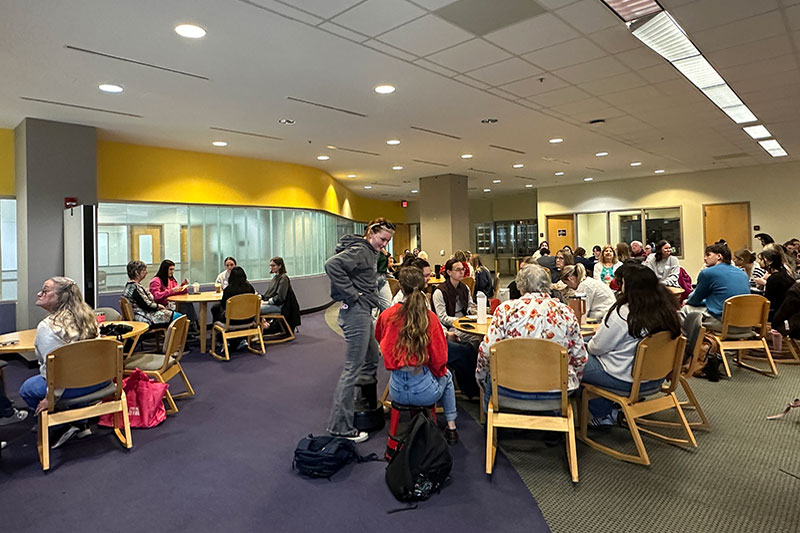
In collaboration with Missouri State’s Early Childhood Education program, Digital Humanities Lab and Ozarks Public Television, the grant-funded effort brings together approximately 90 students and several older adult participants from the university’s MSU 62 program.
With older adults working as equal partners and co-educators, the teams produce age-positive educational materials for early childhood settings. These include videos, instructional guides and activity plans for young children. The materials are free and made available to regional early childhood programs, Templeman said.
“The project is innovative not only in its scope but in its philosophy,” she noted. “Students learn with older adults, not just about them.”
Lauren Coroleuski determined to make a better future
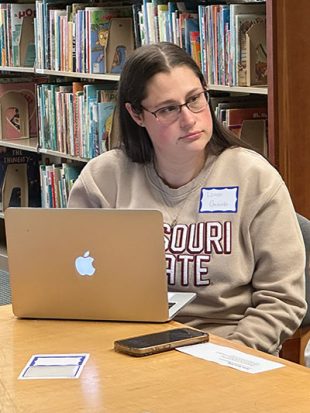
Coroleuski graduated in Fall 2025 with a Bachelor of Science in psychology, a minor in diversity studies and an undergraduate certificate in gerontology. She is now working on a degree in gerontology and was recently accepted into Missouri State’s Master of Public Health program.
“My long term goal is to work in program evaluation and policy focused public health research centered on aging and caregiving,” Coroleuski said. “I am passionate about generating evidence that informs funding decisions, strengthens program implementation, and reduces disparities, especially in rural communities.”
The lack of accessible and sustainable resources for caregivers particularly frustrates Coroleuski.
“I want to help change that,” she said.
Coroleuski is determined to make the aging process a positive experience for all. One reason is that her four daughters are watching.
“My daughters are incredibly proud of me and my educational journey,” she said. “They often encourage me by calling me a ‘warrior’ when I am sleep deprived and remind me to keep going because there are big plans ahead.”
Opening eyes to a universal human experience
Templeman reminds her students that aging is a universal human experience. “We are all aging, we will all face loss, most of us will care for someone we love.”
Seeing students interact with older adults makes Templeman smile.
“I’ve seen something that never gets old – the mutual surprise and delight that comes from genuine intergenerational connection,” she said. “Students who expected the experience to feel like an obligation often describe it as the highlight of their semester.”
Watching students become aware of the realities of aging is “deeply rewarding,” Templeman said. “I still regularly have students tell me that our courses opened their eyes to things they had genuinely never considered before.”
Photo credits: Lynn Lansdown unless otherwise indicated.
Reynolds College blog posts are human researched, written and reviewed unless otherwise indicated.
Discover more from Reynolds College Blog
Subscribe to get the latest posts sent to your email.