
Sports are more than what happens on the field. It can reveal where people come from, where they feel they belong and the challenges they face when building a life somewhere new.
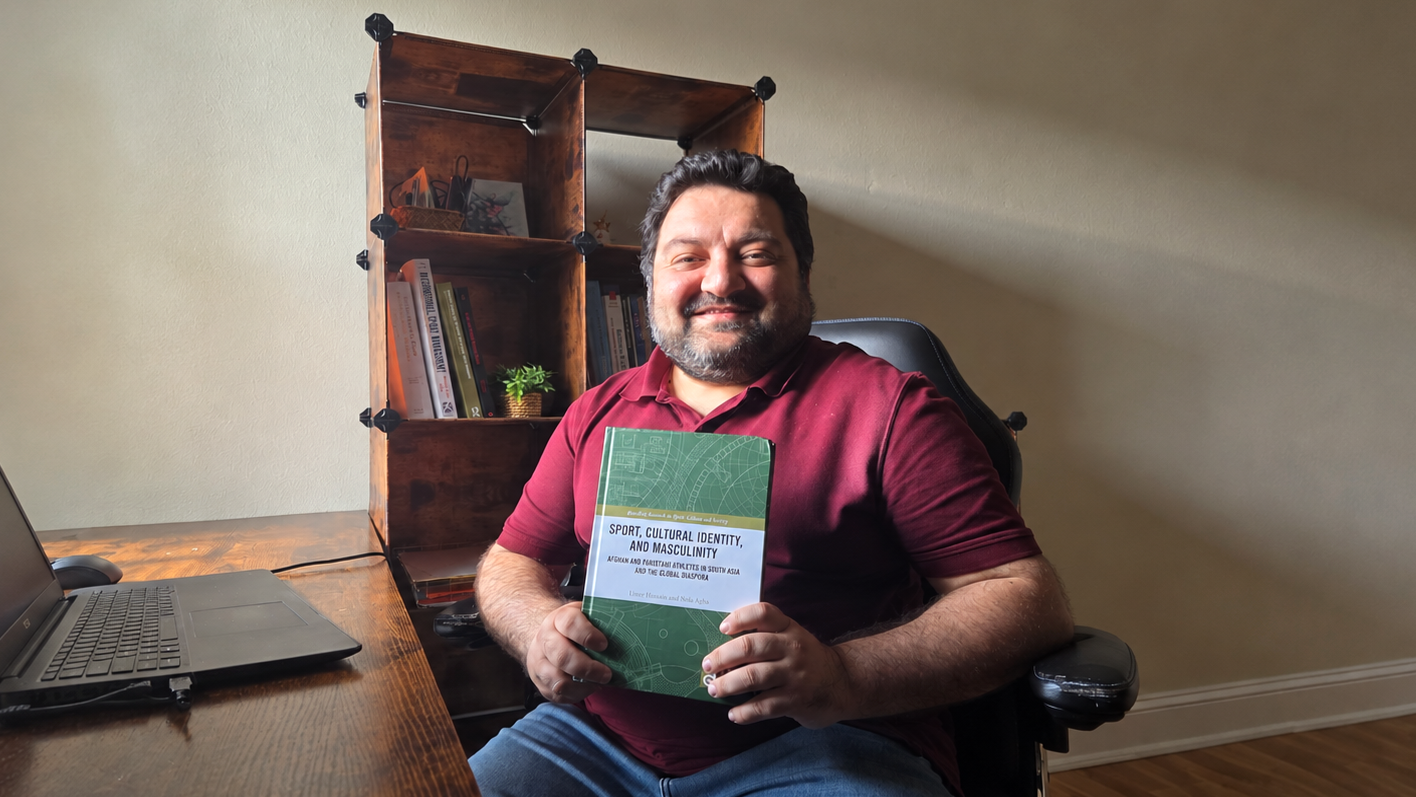
After years of research, Dr. Umer Hussain, assistant professor of management at Missouri State University, finally held a hard copy of his new book, “Sport, Cultural Identity and Masculinity: Afghan and Pakistani Athletes in South Asia and the Global Diaspora.”
Co-authored with Dr. Nola Agha, a professor at the University of San Francisco, the book explores the experiences of Afghan and Pakistani athletes through the lenses of cultural identity, masculinity, migration, and belonging. The project brings together the duo’s research to examine how sports reflect broader social and cultural experiences across South Asia and the global diaspora.
For Hussain, completing a book is not the finish line. It is one part of a much larger effort to understand people, preserve their experiences and contribute something meaningful to knowledge.
“It’s not about me, about authors,” Hussain said. “It’s about the athletes who have participated in the book. Their stories should be told to the world.”
From personal experience to research

The idea did not begin with a book proposal. Before earning his doctorate, Hussain worked with several nonprofit and community organizations, including the American Refugee Committee (now Alight), Pakistan Sweet Homes orphanage and the U.S. Ambassador’s Youth Council Islamabad.
Through this work, he encountered refugees and immigrants, including Afghan athletes and coaches who had come to Pakistan. Those experiences stayed with him.
For immigrants and refugees, sports can offer a way into a new community while preserving connections to the place they once called home. But that relationship is rarely simple.
Hussain’s book examines how migration can reshape an athlete’s sense of identity and belonging. He describes immigrants as sometimes existing in a “state of pendulum,” balancing ties to their roots with the challenge of finding their place in a new culture.
“For some refugees, returning home may not even be possible. That can leave a continuing question: Where do I belong?” Hussain said. “Sports provide one place where that struggle becomes visible.”
Write what matters
The years spent on the book also informed the advice Hussain gives aspiring researchers. He estimates the book contains more than 95,000 words. Sustaining a project of that size requires genuine interest in the subject. For Hussain, the important message of the book is to give voices to people who are not being heard.
“Don’t choose a subject simply because it’s trending. Choose something that matters to you,” he said.
From research to the classroom
Hussain joined Missouri State in 2025 after teaching in Wisconsin and Pennsylvania. He credits the College of Business with giving him room to pursue questions that stretch beyond traditional business research.
“The university has given me flexibility. My college dean and the department head are really supportive about exploring new topics,” he said.
That freedom has also created a bridge between his research and teaching.
Hussain teaches sport management topics and plans to incorporate parts of the book into his courses. Students can use the research to examine sports beyond the United States, from its history across cultures to refugee experiences and the different ways people participate in and consume sports around the world.
Find out more about management
Discover more from College of Business News
Subscribe to get the latest posts sent to your email.