For many international students, moving abroad can feel overwhelming. Leaving home and starting over in a new country test even the most confident person.
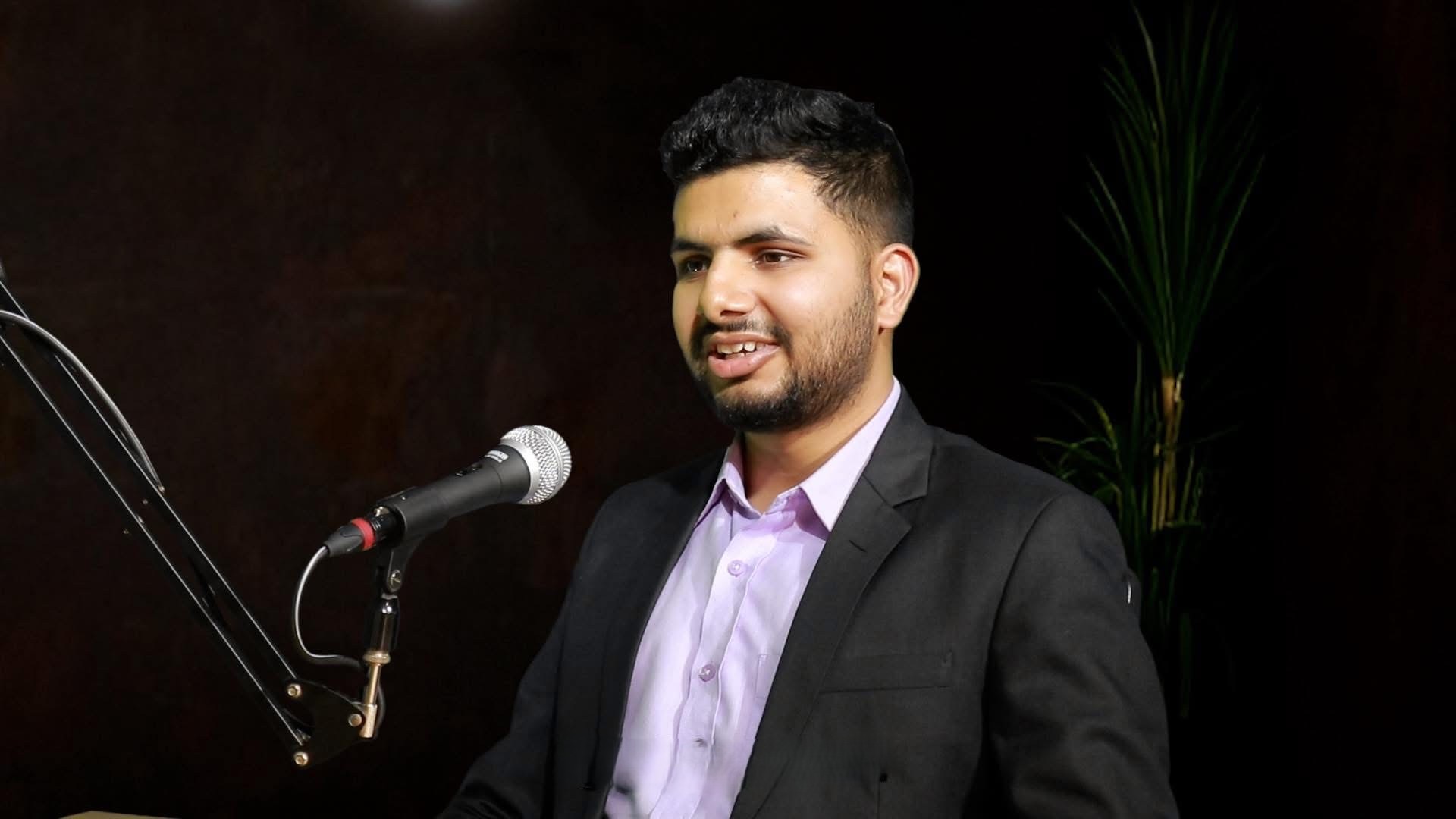
Missouri State University counseling graduate student Madhusudan Ghimire knows this firsthand. His journey shows how resilience can grow from life’s hardest moments.
Though he once felt alone, he learned to turn that experience into a sense purpose, one that began long before Missouri State became part of his story.
Overcoming a tough childhood
Born with a visual impairment in a remote village in western Nepal, Ghimire spent his early years there before his family moved to Kathmandu when he was two. His parents relocated the family so he could attend school and access better opportunities.
But school was not always easy for Ghimire. Inclusive education was limited in Nepal, and his parents had to find a school where he could learn using braille. Even then, he felt lonely.
“I used to experience isolation and had very few friends,” he said. “Most of the time, I was by myself. While other students played soccer or gathered with friends, I often stayed on the sidelines.”
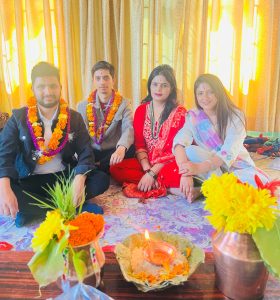
Social activities were difficult and classmates usually did not know how to interact with him. During those years, his siblings became his closest companions. His younger sister especially helped him through moments of loneliness.
One experience in middle school stayed with him for years.
In Nepal, students must ask permission before entering a classroom if a teacher is already inside. One day in seventh grade, Ghimire walked into a classroom without realizing the teacher was there. Because of his visual impairment, he could not see where she was standing among some of the students. The teacher reacted harshly, pulling his hair and forcing him out of the classroom.
“That incident made me think about who I am and what I need to do in my life,” he said.
The moment was painful, but it pushed him to reflect on his future.
Finding a voice through literature and radio
During those difficult years, Ghimire found comfort in listening to radio programs featuring poetry, storytelling and literature.
“Radio programs inspired me to begin writing and literature became an important part of my life, helping me express myself and fill emotional gaps,” he said. “Those broadcasts became a quiet escape when I felt isolated.”
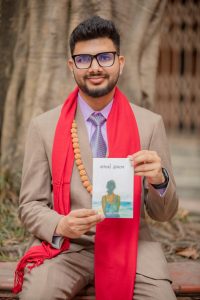
Reading soon became a passion as well. In high school, he immersed himself in Nepali literature and once read more than 150 novels in a single year. Writing helped him process emotions and express experiences that were difficult to share in other ways. In 2024, he published his first poetry collection, “Mayako Aayatan” (Volume of Love).
He also hosted a poetry-focused radio program for more than three years during his undergraduate studies in Nepal. Listeners often wrote to him about their personal struggles and emotional challenges.
“People would share their feelings with me. Sometimes they just needed someone to listen,” he said.
Those conversations gradually sparked his interest in mental health.
Global experiences that shaped his path
Technology also opened new doors for Ghimire. His older brother introduced him to screen reading software that enables blind users to navigate computers through audio feedback.
“I was amazed when the computer started reading the screen,” he said. “I quickly learned how assistive technology worked and began helping others install accessibility tools.”
However, not everyone believed in his potential. After he struggled early in class, his computer teacher made him take economics as an elective instead of computer studies. For Ghimire, the experience shook his confidence and affected his self-esteem.
Despite the setback, he continued learning. Even with limited resources, he explored technology outside the classroom, driven by his interest in computers. That passion eventually led him to represent Nepal on the international stage.
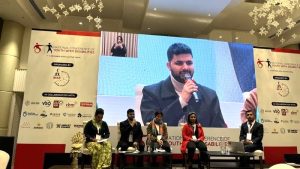
In 2017, he traveled to Hanoi, Vietnam, to compete in the Global IT Challenge for Youth with Disabilities. It was also his first time traveling abroad.
“Before 2017, I had never traveled outside my country or even taken a plane. The first time I flew, it was to leave Nepal. I still remember how big that felt for me,” he said.
After Vietnam, he attended similar events in India and South Korea before COVID-19. Those experiences built his confidence and strengthened his commitment to support young people with disabilities worldwide.
Journey to Mo State
Ghimire first came to Missouri State in spring 2023 through the Global Undergraduate Exchange Program. It is a Fulbright-supported initiative that brings international students to the United States for a semester of study. Only two students from Nepal were selected that year and Ghimire was one of them.
After returning to Nepal, he finished his undergraduate degree in psychology. His work took a new direction in 2024, when he served as a psychosocial counselor in integrated schools through the United Kingdom-funded Nepal Earthquake Recovery project in partnership with the Blind Youth Association. Then, in 2025, he received the Fulbright Innovation Fund Award to launch a YouTube podcast on mental health and disability awareness. The 10-episode series focused on mental health and personal stories.
This spring, he returned to Missouri State to pursue a master’s degree in counseling. He also works as a graduate assistant in Global Education and Engagement, where he helps exchange students adjust to campus life and supports digital accessibility initiatives.
“Missouri State University is committed to creating a supportive and accessible environment for every student,” said Daezia Smith, leadership programs specialist in Global Education and Engagement. “In our office, Madhusudan helps us to recognize where our materials could be more accessible so we can better serve and reach a wider population.”
According to Ghimire, Missouri State resources have played a key role in his success. The Disability Resource Center provides accommodations, such as accessible materials and extended testing time.
“My supervisor, Kevin James, has been very supportive since the day I arrived here,” he said. “The office provided a mobility and orientation instructor, who helped me learn how to navigate campus, my house and offices using BearLine routes.”
Experience in the counseling program
So far, Ghimire has had a positive experience in his program and he appreciates the helpful faculty. As a new student, he is still adjusting to campus life and building friendships. Some parts of the counseling training can be challenging, especially lab sessions where students practice counseling with classmates.
“Sometimes the cultural differences make it difficult because people talk about family or personal issues in ways that feel new to me,” he said. “But it’s helping me learn how support should reflect culture, background and lived experience.”
As he thinks about his future, Ghimire hopes to combine counseling, disability advocacy and literature in his work. His earlier isolation and challenges now fuel his purpose: helping people facing emotional struggles feel heard, supported and less alone.
Learn more about the counseling graduate program
Discover more from Health and Human Services News
Subscribe to get the latest posts sent to your email.
I met Ghimire during orientation (NISO) and introduced myself. We met again after a month, and he remembered me including my home country. That was really touching and it now makes sense to me reading his story. He is passionate about people; his story is really inspiring.