Missouri State University

Skip to content Skip to navigation
a b c d e f g h i j k l m n o p q r s t u v w x y z

Health and Human Services News

  • McQueary College of Health and Human Services

A journey beyond limits

March 10, 2026 by Sewly Khatun

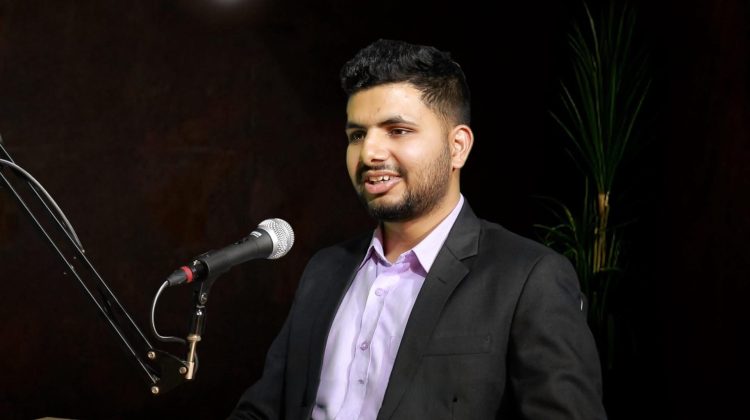
Madhusudan Ghimire

For many international students, moving abroad can feel overwhelming. Leaving home and starting over in a new country test even the most confident person.   

Missouri State University counseling graduate student Madhusudan Ghimire knows this firsthand. His journey shows how resilience can grow from life’s hardest moments.  

Though he once felt alone, he learned to turn that experience into a sense purpose, one that began long before Missouri State became part of his story. 

Overcoming a tough childhood 

Born with a visual impairment in a remote village in western Nepal, Ghimire spent his early years there before his family moved to Kathmandu when he was two. His parents relocated the family so he could attend school and access better opportunities. 

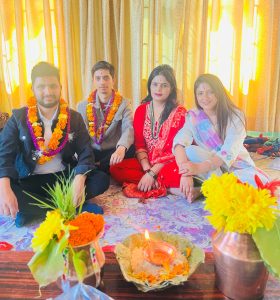
Ghimire with his sisters and cousins at a family program.
Ghimire (left) with his sisters and cousins at a family program.

But school was not always easy for Ghimire. Inclusive education was limited in Nepal, and his parents had to find a school where he could learn using braille. Even then, he felt lonely. 

“I used to experience isolation and had very few friends,” he said. “Most of the time, I was by myself. While other students played soccer or gathered with friends, I often stayed on the sidelines.” 

Social activities were difficult and classmates usually did not know how to interact with him. During those years, his siblings became his closest companions. His younger sister especially helped him through moments of loneliness.  

One experience in middle school stayed with him for years.  

In Nepal, students must ask permission before entering a classroom if a teacher is already inside. One day in seventh grade, Ghimire walked into a classroom without realizing the teacher was there. Because of his visual impairment, he could not see where she was standing among some of the students. The teacher reacted harshly, pulling his hair and forcing him out of the classroom.   

“That incident made me think about who I am and what I need to do in my life,” he said.  

The moment was painful, but it pushed him to reflect on his future. 

Finding a voice through literature and radio 

Madhusudan Ghimire
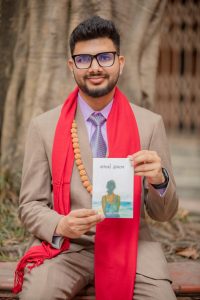
Ghimire’s first poetry book, “Mayako Aayatan.”

During those difficult years, Ghimire found comfort in listening to radio programs featuring poetry, storytelling and literature.  

“Radio programs inspired me to begin writing and literature became an important part of my life, helping me express myself and fill emotional gaps,” he said. “Those broadcasts became a quiet escape when I felt isolated.”  

Reading soon became a passion as well. In high school, he immersed himself in Nepali literature and once read more than 150 novels in a single year. Writing helped him process emotions and express experiences that were difficult to share in other ways. In 2024, he published his first poetry collection, “Mayako Aayatan” (Volume of Love).  

He also hosted a poetry-focused radio program for more than three years during his undergraduate studies in Nepal. Listeners often wrote to him about their personal struggles and emotional challenges.  

“People would share their feelings with me. Sometimes they just needed someone to listen,” he said. 

Those conversations gradually sparked his interest in mental health. 

Global experiences that shaped his path 

Technology also opened new doors for Ghimire. His older brother introduced him to screen reading software that enables blind users to navigate computers through audio feedback.   

“I was amazed when the computer started reading the screen,” he said. “I quickly learned how assistive technology worked and began helping others install accessibility tools.”  

However, not everyone believed in his potential. After he struggled early in class, his computer teacher made him take economics as an elective instead of computer studies. For Ghimire, the experience shook his confidence and affected his self-esteem.   

Despite the setback, he continued learning. Even with limited resources, he explored technology outside the classroom, driven by his interest in computers. That passion eventually led him to represent Nepal on the international stage.   

In 2017, he traveled to Hanoi, Vietnam, to compete in the Global IT Challenge for Youth with Disabilities. It was also his first time traveling abroad.  

“Before 2017, I had never traveled outside my country or even taken a plane. The first time I flew, it was to leave Nepal. I still remember how big that felt for me,” he said. 

After Vietnam, he attended similar events in India and South Korea before COVID-19. Those experiences built his confidence and strengthened his commitment to support young people with disabilities worldwide.

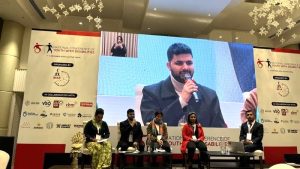
Madhusudan Ghimire speaks as a panelist on SRHR and access to mental health services at the National Conference of Youth with Disabilities.
Ghimire speaks as a panelist on access to mental health services at the National Conference of Youth with Disabilities.

Journey to Mo State 

Ghimire first came to Missouri State in spring 2023 through the Global Undergraduate Exchange Program. It is a Fulbright-supported initiative that brings international students to the United States for a semester of study. Only two students from Nepal were selected that year and Ghimire was one of them. 

After returning to Nepal, he finished his undergraduate degree in psychology. His work took a new direction in 2024, when he served as a psychosocial counselor in integrated schools through the United Kingdom-funded Nepal Earthquake Recovery project in partnership with the Blind Youth Association. Then, in 2025, he received the Fulbright Innovation Fund Award to launch a YouTube podcast on mental health and disability awareness. The 10-episode series focused on mental health and personal stories.  

This spring, he returned to Missouri State to pursue a master’s degree in counseling. He also works as a graduate assistant in Global Education and Engagement, where he helps exchange students adjust to campus life and supports digital accessibility initiatives. 

“Missouri State University is committed to creating a supportive and accessible environment for every student,” said Daezia Smith, leadership programs specialist in Global Education and Engagement. “In our office, Madhusudan helps us to recognize where our materials could be more accessible so we can better serve and reach a wider population.” 

According to Ghimire, Missouri State resources have played a key role in his success. The Disability Resource Center provides accommodations, such as accessible materials and extended testing time.  

“My supervisor, Kevin James, has been very supportive since the day I arrived here,” he said. “The office provided a mobility and orientation instructor, who helped me learn how to navigate campus, my house and offices using BearLine routes.” 

Experience in the counseling program 

So far, Ghimire has had a positive experience in his program and he appreciates the helpful faculty. As a new student, he is still adjusting to campus life and building friendships. Some parts of the counseling training can be challenging, especially lab sessions where students practice counseling with classmates. 

“Sometimes the cultural differences make it difficult because people talk about family or personal issues in ways that feel new to me,” he said. “But it’s helping me learn how support should reflect culture, background and lived experience.” 

As he thinks about his future, Ghimire hopes to combine counseling, disability advocacy and literature in his work. His earlier isolation and challenges now fuel his purpose: helping people facing emotional struggles feel heard, supported and less alone. 

Learn more about the counseling graduate program

Filed Under: Student spotlights Tagged With: Counseling, School of Mental Health and Behavioral Sciences, students

Ozarks Public Health Institute marks 25 years of impact

February 17, 2026 by Sewly Khatun

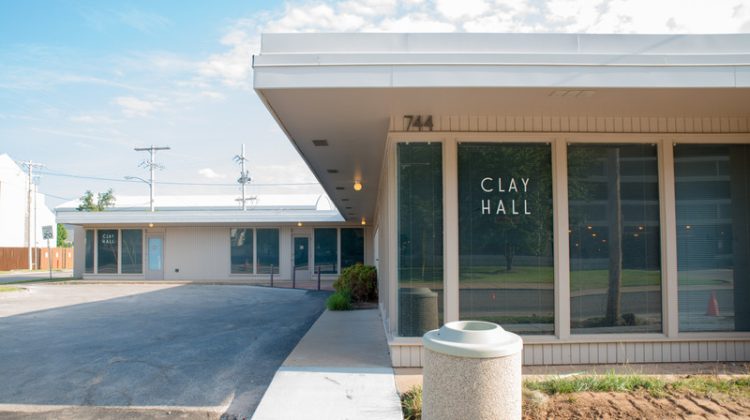
OPHI is housed in Clay Hall at Missouri State University.

Public health is not just a service in Missouri. It is a shared commitment among residents, health care providers, community partners and educational institutions, working together to improve health outcomes across the state. 

The Ozarks Public Health Institute (OPHI) at Missouri State University brings university expertise into communities. It focuses on practical solutions that address real public health needs beyond policy discussions. 

Created to address public health needs 

Over two decades ago, President John Keiser of what was then Southwest Missouri State University formed a committee with representatives from every college to establish an institute focused on health prevention funding.  

As discussions progressed, the work aligned under public health, with a focus on preventing disease, prolonging life and promoting health. For this reason, the committee named the institute OPHI to address pressing public health challenges in Missouri. 

On Feb. 16, 2001, the university’s Board of Governors officially approved OPHI and appointed Dr. Dalen Duitsman as its director.  

Since then, OPHI has followed a grassroots approach, bringing together local government and academic partners to support better health outcomes across Missouri communities. 

“For 25 years, the OPHI has shown what’s possible when a university commits to partnering with communities, said Dr. Mark Smith, dean of McQueary College of Health and Human Services. “Under Dr. Duitsman’s steady and visionary leadership, OPHI has built partnerships with local agencies, advanced prevention efforts and prepared the next generation of professionals.” 

A statewide track record 

OPHI has a strong history of supporting Missouri’s public health system through local, regional and statewide projects. 

For example, OPHI managed a multi-year Missouri Department of Health and Senior Services (DHSS) project that supported nearly 60 local agencies and partners working to reduce health disparities in their communities. 

OPHI’s tobacco prevention work is another long-term effort.  It helped advance smoke-free laws in Nixa and Springfield. It also supported Missouri State’s move to become a smoke-free campus in 2012. 

The institute has also played a key role in emergency preparedness. It served as a primary evaluator during Missouri’s statewide full-scale emergency response exercise, contributing to exercise design, implementation and after-action reporting. 

As it marks 25 years of service, OPHI continues to expand its work. Current efforts include strengthening resources tied to Missouri’s Foundational Public Health Services Model. OPHI is also building a statewide database and mapping tool for sexual violence prevention and response, while partnering with DHSS to improve communication with local public health agencies. 

 In addition, the institute is supporting rural health departments as they pursue accreditation through quality improvement, strategic planning, performance management and community health assessment. 

Student engagement and the next chapter 

OPHI carries out its mission through community partnerships, applied research and workforce development. A key part of that work is student engagement. Faculty, staff and graduate assistants (GAs) from across the university contribute to OPHI projects. 

Over the years, OPHI has employed many GAs from the public health program. More recently, it has expanded student involvement to include counseling, sustainability, project management, marketing, English and digital film and television production. These students contribute directly to public health projects while gaining practical field experience. 

Looking ahead, OPHI will continue to work in public affairs, rural health, health communication and workforce development to respond to emerging public health needs across Missouri. 

“As we look to the future, OPHI’s foundation of collaboration, innovation and service ensures its impact will continue to shape healthier communities across our state for decades to come,” Smith said.  

Explore OPHI

Filed Under: MCHHS News Tagged With: Counseling, Mark Smith, Ozarks Public Health Institute, public health

Staff spotlight: Lauren Hembree

February 3, 2026 by Ella Reuter

The O'Reilly Clinical Health Sciences Center.
Lauren Hembree headshot.
Lauren Hembree

Our featured staff member is Lauren Hembree, clinic director for counseling services at the Collaborative Care Clinic.

She was previously director of the Center City Counseling Clinic, which became part of the Collaborative Care Clinic this spring.

Let’s get to know more about her.

Where are you originally from?

I was born and raised in Springfield. I attended school in Rogersville but have been a Springfieldian my entire life.

What brought you to Missouri State University and how long have you been here?

I came to Missouri State for graduate school and then stuck around. I began the counseling program in January 2021 and graduated in May 2023. While in the program, I worked as a graduate assistant and later began serving as interim clinic director for Center City Counseling Clinic in December 2023. In 2025, I transitioned into my current role as the full-time clinic director for counseling services at what is now the Collaborative Care Clinic.

Where else have you worked before joining Missouri State?

Before returning to school, I worked for several years as a paralegal in medical malpractice and insurance defense (as a kid, though, my dream job was to be a sandwich maker at Blimpie). In addition to my role at MSU, I also have a small private practice, Bright Spot Counseling, where I work with neurodivergent teens and young adults.

What’s your educational background?

I earned my bachelor’s degree in English in 2015 and completed my master’s degree in clinical mental health counseling from Missouri State in 2023.

How has the Center City Counseling Clinic served the campus and larger community?

For many years, Center City Counseling Clinic has provided accessible counseling services to the Springfield community, as well as MSU employees, students and alumni. Sessions range from $0 to $20, as we never want finances to be a barrier to receiving care. We’re excited to join the Collaborative Care Clinic this semester and expand our outreach and impact across campus and the greater Springfield community.

What do you do in your role at MCHHS?

As the clinic director for counseling services at the Collaborative Care Clinic, I support students as they navigate their first field experiences while also ensuring clients feel safe and supported. I vividly remember how nervous I was starting practicum as a student, so helping our students feel prepared, empowered and encouraged is a top priority.

Lauren Hembree enjoys time with an animal.

Why did you choose your area of work?

I chose this field because — cliché alert! — I truly want to help people. While working in law, I realized the work conflicted with my values and who I am as a person. During the pandemic, I had time to reflect, which ultimately led me to pursue becoming a Licensed Professional Counselor. When the opportunity arose to return to MSU as director for the clinic where I saw my first clients, I jumped at the chance to combine my strengths in organization and logistics with my passion for helping others.

What do you enjoy most about working at MCHHS?

The people. As a graduate student, my professors and peers rallied around me during a difficult time in my personal life. Now, many of those professors are colleagues, and I’m grateful to work alongside supportive administrators who are genuinely present and available. The students are an absolute joy — I love getting into thoughtful conversations about everything from existentialism to Taylor Swift.

What do you do for fun or leisure?

I enjoy watching reality TV, currently obsessed with “Survivor” and “Vanderpump Rules,” reading fantasy novels and celebrity memoirs, and spending time with my partner, my dog Crickette (a lazy-eyed Shih Tzu) and friends.

What’s your favorite winter activity?

My ideal winter day is chilly and gray, curled up on the couch with a good book and my dog— bonus points if it’s snowing!

Learn more about the Center City Counseling Clinic

Filed Under: Staff spotlights Tagged With: Counseling, staff, staff spotlight

Bringing clinical services together under one roof

January 28, 2026 by Sewly Khatun

A patient undergoes hearing testing during a clinic visit.

This spring, the McQueary College of Health and Human Services (MCHHS) opened a new Collaborative Care Clinic in Ann Kampeter Health Sciences Hall on Jan. 26.

It unites several existing services in a single, renovated facility designed to support both education and community service. The grand opening celebration will take place Feb. 20. 

Collaboration and student learning 

The clinic strengthens interprofessional education while continuing to deliver affordable health services to the public. 

“This new facility allows us to bring services together in one collaborative space while expanding supervised, hands-on learning opportunities for our students,” said MCHHS Associate Dean Dr. Letitia White-Minnis. “At the same time, it reinforces our role as a community partner by providing high-quality, accessible care.” 

The renovated space spans about 17,000 square feet and occupies more than half of Kampeter Hall’s first floor. It repurposes the former Speech-Language-Hearing Clinic space and adds additional first-floor space to expand the footprint, creating a shared, modern clinical facility. 

A one-stop clinic 

The clinic will offer: 

  • Counseling services  
  • Speech-language pathology diagnostics and treatment  
  • Hearing and balance testing  
  • Hearing aids and learning diagnostic services 
  • Psychological and learning diagnostic services 

Each service operates in a dedicated clinical area with a shared patient waiting room, centralized check-in and coordinated staffing. 

“By bringing everything into one location with shared systems and staff, we’ve made care easier to access for students, faculty and the broader Springfield community,” said Ian Alaimo, director of information technology and operations for MCHHS.

Graduate students from speech-language pathology, counseling, audiology and psychology will provide services under direct faculty supervision. The clinic is open from 8 a.m.-5 p.m. on Mondays and Fridays and 8 a.m.-8 p.m. Tuesdays, Wednesdays and Thursdays to individuals of all ages and is available to both the campus and the larger community.   

Learn more about the Collaborative Care Clinic

Filed Under: audiology, MCHHS News, speech-language pathology Tagged With: Counseling, Ian Alaimo, Letitia White-Minnis, Speech Language and Hearing Clinic

Next Page »

Categories

Archives

Meta

  • Log in
  • Entries feed
  • Comments feed
  • WordPress.org
  • Accessibility
  • Disclaimer
  • Disclosures
  • Equal Opportunity Employer and Institution
  • © 2026 Board of Governors, Missouri State University
  • Contact Information

Loading Comments...