

Anchorage, Alaska, is more than its stunning views and wildlife. Over 200 Alaskan Natives call it home, making it one of the most diverse cities in the United States.
From June 25 to July 6, 14 Missouri State University students majoring in social work, psychology, dietetics and nursing had the opportunity to explore this city.
Students learned about culture, social policy and holistic health. Leading the trip were Kelly Dudley, clinical assistant professor of social work in the School of Mental Health and Behavioral Sciences and Stephanie Mitchell Urich, clinical instructor of nutrition and dietetics in the School of Health Sciences.
“One of the biggest things I wanted students to understand is that food and nutrition security is about so much more than whether food is available. Land, water, resources, history, policy, conflict and culture can shape people’s ability to access and use foods,” Urich said.
Why Alaska
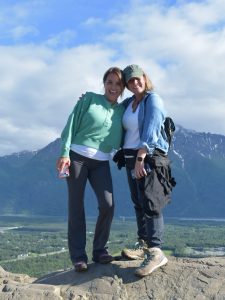
Dudley and Urich were both part of the university’s Education Abroad Faculty Fellows inaugural cohort. They wanted to collaborate on this experience because they had so much fun together.
“We both also understand and value holistic health,” Dudley said. “When we connected with Dr. Rei Shimizu, a social work professor at the University of Alaska in Anchorage, who studies food insecurity, we knew it was a match made in heaven.”
When choosing a destination for this trip, Alaska was an easy choice for the duo.
“We both highly respect Dr. Shimizu. We also hoped that Alaska may be a more accessible alternative for students who may not choose to go to the other side of the world,” Dudley said.
Varied experiences
The itinerary included museum visits, foraging walks, nature experiential therapy, cooking classes, train rides and day cruises. The group also volunteered in community gardens and at the Alaska Food Bank.
For social work student Pamela Houser, volunteering with other students from various fields was her favorite part of the trip.
“This experience showed how physical, mental and spiritual well-being are linked to fundamental needs like food, especially in a region with a short growing season where sustainable living demands a strong focus on nutrition,” she said.
A highlight was meeting with leaders at the Alaska Native Tribal Health Consortium (ANTHC) and touring the connected hospital. ANTHC is a nonprofit Tribal health organization designed to meet the health needs of Alaska Natives and American Indian people throughout Alaska. Through this visit, Dudley, Urich and the students saw how ANTHC integrates Alaska Native culture into its healthcare services.
During this trip, students also learned about Indigenous culture, such as the history, resiliency and interdependent nature of the Alaskan Natives.
“Alaskan Natives have faced a great deal of historical trauma and environmental challenges. Yet they continue to show a beautiful example of strength and resiliency that honors their culture, the land and each other,” Dudley said.
In addition, the students learned the impact of social policy on people groups, as well as how non-Native Alaskans may have a different set of values, lived experiences and perspectives than those in the lower 48 (what Alaskans call the rest of the country).
“Regardless of what profession we’re in, all of these things help us to understand so many things in more holistic ways that we may not have considered before,” Dudley said.
More than just a trip
She hopes students leave this experience with a deeper respect for culture; a greater understanding of how interconnected we are; and an appreciation for how their actions affect others.
According to Houser, she came away with a stronger understanding of the importance of a person’s history, culture and belief systems in social work.
Dudley also hopes students realize they are a valuable part of a community and can do hard things.
“Traveling together challenged them to be patient, flexible, take risks and show up for one another,” Dudley said. “Watching them build community, hold space for each other and push themselves to grow was one of the most meaningful parts of the experience.”
Learn more about education abroad
Discover more from Health and Human Services News
Subscribe to get the latest posts sent to your email.
Leave a Reply