

Teaching with purpose makes an impact on students.
Keith McShan, assistant professor in the School of Health Sciences at Missouri State University, is committed to building meaningful relationships and creating positive learning environments.
His experience coaching high school football and basketball in Windsor, Ontario, sparked his interest in sports psychology research. Through working with hundreds of athletes over the years, he saw how relationships between coaches and athletes could influence their experience and performance.
“If you want your athletes to perform and do well, then having quality relationships as a coach does play a huge role,” McShan said.
One area of his research explores The Tandem Method, developed by psychologist Dr. Sophia Jowett. The method teaches coaches how to build strong relationships with their athletes through a 3+1C model that focuses on closeness, commitment, complementarity and co-orientation, or shared understanding.
Investing in professional growth
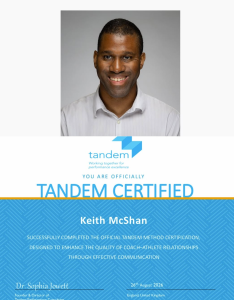
McShan earned his Tandem Method certification this summer at the European Federation of Sport Psychology Congress in Timisoara, Romania, from July 13-17. The exercise science program funded his trip, enabling him to learn directly from Jowett, a leading scholar in coach-athlete relationships, as well as psychologists from 56 different countries.
“It was a great opportunity to learn more about the topic and earn a certification. Now, I can share what I’ve learned with coaches and train them on the value of strong relationships,” McShan said.
The experience also allowed McShan to connect with professionals from around the globe and gain different perspectives on sports and exercise psychology. His certification expands the expertise he brings back to Missouri State and shares with students and other professionals.
Bringing research to the classroom
McShan wants students to understand how relationship-building applies beyond athletics and can influence their future careers, whether they pursue coaching, sports psychology or another related field.
The 3+1C model on relationships provides a framework for understanding these connections:
- Closeness focuses on respect, trust and mutual appreciation. According to McShan, when people feel connected to those they work with, they may be more willing to put extra effort into their goals.
- Commitment emphasizes supporting others through challenges and successes. Developing relationships and remaining committed to the people you work with can help build perseverance and motivation.
- Complementarity means working together and creating opportunities for collaboration.
- Co-orientation is about finding common ground and understanding shared goals.
These concepts also apply to healthcare professionals, including nurses and occupational therapists. Building trust and understanding what patients and clients want to accomplish can help professionals create stronger relationships.
On campus, McShan also started the Care Bears Lab, a sports psychology lab that focuses on coach-athlete relationships and creating positive and caring environments in sport and exercise.
As he continues building opportunities for students, McShan hopes to expand sports psychology education at Missouri State. Interest in the field is growing, with more students looking to earn a minor, master’s degree or even a PhD.
To make these opportunities possible, McShan desires to bring together several other programs at the university.
“The goal is to work with psychology, counseling, athletics and exercise science to create a path for students who want to study sports psychology at Missouri State,” McShan said.
Leaving a lasting impact
McShan’s research influences the way he approaches teaching. He believes instructors can create classrooms that are welcoming, engaging and intellectually stimulating, giving students meaningful learning experiences where they feel supported and encouraged to participate.
He incorporates games, activities and hands-on learning into his courses. Some examples include playing interactive games using tricycles and scooters and completing case studies. He also makes an effort to build personal connections with students, including attending their extracurricular events and celebrating birthdays in class.
“I hope that when they enter the field, they carry some of these things with them, especially making people feel invited and welcome,” he said.
This year, McShan received a Missouri State Teaching Excellence Award.
For him, recognition reflects the importance of building relationships with students and creating an environment where they want to learn.
“Receiving this award emphasizes that when you put effort into teaching, it has a positive impact on our students,” McShan said.