
Missouri State University

Skip to content Skip to navigation
a b c d e f g h i j k l m n o p q r s t u v w x y z

Health and Human Services News

  • McQueary College of Health and Human Services

Faculty spotlight: Tarah Trokey

March 2, 2026 by Ella Reuter

Tarah Trokey

Our featured McQueary College of Health and Human Services (MCHHS) faculty member is Tarah Trokey. She is an assistant professor in the School of Health Care Professions at Missouri State University and an alumna.

Let’s get to know more about her.

Where are you originally from?

The good ol’ 417 – Springfield, Missouri.

What brought you to Missouri State University and how long have you been here?

My beginnings with Missouri State began long ago in 2005 when I tore my ACL as a high school athlete. I had an awesome athletic trainer who diagnosed my injury. He also educated me on what an ATC (certified athletic trainer) is and showed me the impact trainers have on athletic injuries and their role in the health care team. That athletic trainer was Dr. Allan Liggett, EdD, ATC, who also teaches here at Missouri State as a clinical professor.

I then toured the athletic training program in Kampeter (which will always be the Professional Building to me) and I came to Missouri State as a student. I fell in love with the field of sports medicine! I ended up completing a bachelor’s in athletic training, followed by a post-professional master’s in sports medicine and athletic training. After practicing as an ATC for several years, I was drawn to the physician assistant studies (PA) program here and yet again, I found myself a student at Missouri State. After becoming a PA in 2017, I moved to Oregon. I lived and practiced as a PA there for five years. I returned back to the Springfield area and was practicing urgent care and sports medicine when a colleague told me about a teaching opportunity here. I got the position and I’ve been a full-time professor in PA studies for a little over a year.

Where else have you worked before joining Missouri State?

I worked for several years as an ATC before attending PA school at Mercy Sports Medicine. As a PA, I’ve practiced in Oregon, Washington and Missouri in primary care, urgent care and sports medicine and I still practice clinically in university health at Magers Health and Wellness Center on campus.

What inspired you to pursue your field of study and work in higher education?

Two primary events changed my life, prompting me to seek a career in medicine.

  • My brother’s journey with thyroid cancer in middle school
  • My own recovery journey after sustaining a knee injury to my ACL as a young athlete

As far as higher education, I’ve always loved school and talking about medicine. I love to dissect complex medical cases and learn anything new. Now, I get to continue practicing medicine and help other people develop into PAs. What a gift!

How has your role as a PA – and now as an educator – evolved since you first started your career?

I believe both have expanded exponentially. I’m fascinated by each patient and their uniqueness. I’m fascinated by medicine. I believe my role as a PA and an educator go hand in hand. It’s really about meeting both the patient and each student where they’re at. Both are an art that will never be perfected, but always a work in progress.

I’m seeking new and innovative ways to open the learner’s minds and to collaborate here on campus. We don’t have to do things the way it has always been done or fit into a particular mold. Being a photocopy is truly boring. We need to be different if we expect any changes in the health care industry in years to come, and I believe young people will hold the answers to that! I’m just honored to be a part of each student’s journey. Every day, I leave work feeling challenged and inspired to help scholars (and myself) to strive for greatness.

What courses do you teach in MCHHS?

In PA studies, the rest of the faculty and I often co-teach for the best learner experience. PA school curriculum is designed like a mini medical school model and highly rigorous. I’m involved in both the clinical year and didactic year. I teach in Clinical Practice Issues Seminar, Problem-Based Learning, Clinical Assessment I and II, Clinical Medicine I and II, Clinical Problem-Solving Seminar and other duties.

How does continuing to practice clinically influence the way you teach PA students?

Practicing clinically is the essence of how I keep the fire burning for teaching. Without practicing, there’s no way to remain relevant and challenge myself and students as well. One must walk the walk if you want to talk the talk.

How do you see the PA profession growing/changing in the next few years, and how should students prepare for that future?

As seen across many health care disciplines, obtaining a higher-level degree continues to grow as many doctoral PA programs are becoming accredited and being advertised nationwide. The PA profession continues to hold a master’s level degree as the terminal degree, but it’ll be interesting to see if that remains in years to come.

Clinically, autonomy with PAs continues to grow, and the expectation of the new graduate PA continues to increase in demand. As the profession continues to be competitive, obtaining

Trokey on a run.
Trokey on a run.

postgraduate fellowship experience or additional certifications beyond the required national certification exam may continue to rise as more PAs enter the job landscape. One of the ways the Missouri State PA program is fostering success for future graduates is adding the skill of POCUS (point of care ultrasound) to our curriculum, which can be lifesaving and easily performed on patients at the bedside.

What are you looking forward to most this spring?

The PA program just welcomed 34 new students who began the two-year PA school journey in January. They’re now learning how to perform a full head toe physical exam. I’m most excited to see each of them flourish and grow into professionals who may one day care for myself or a family member.

What do you do for fun or leisure?

Anything active like yoga, running, lifting and rock climbing! Oh, and I love a hot coffee any time.
Learn more about the physician assistant program

Filed Under: Faculty Spotlight, Physician Assistant Tagged With: Faculty spotlight, Physician Assistant Studies, School of Health Care Professions, Tarah Trokey

Faculty spotlight: Dr. Molly Lancaster

February 18, 2026 by Ella Reuter

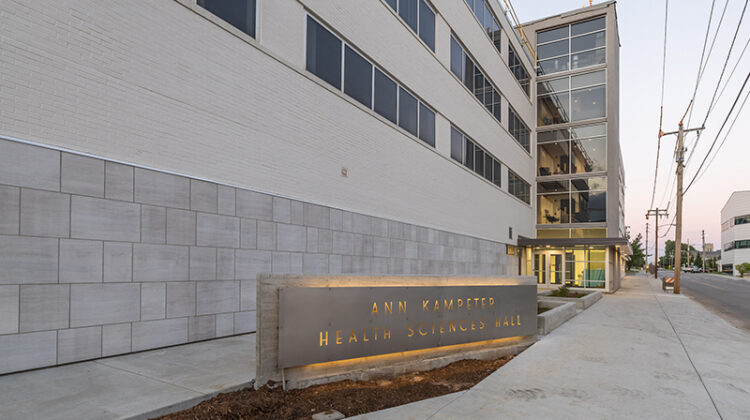
Exterior of Ann Kampeter Health Sciences Hall.
Dr. Molly Lancaster
Dr. Molly Lancaster

Our featured McQueary College of Health and Human Services faculty member is Dr. Molly Lancaster. She is an assistant professor in the School of Health Sciences.

Let’s get to know more about her.

Where are you originally from?

I was born in California but grew up in Missouri. I attended kindergarten in rural Shell Knob, and then Crane for first grade before moving to St. Louis, where I also attended college. I spent my childhood summers on Table Rock Lake with my grandfather about an hour south of our campus. I attended graduate school in California and spent 15 years in Los Angeles before returning to Missouri.

What brought you to Missouri State University and how long have you been here?

I was drawn to Missouri State for its commitment to student-centered learning. It’s amazing to be at a teaching focused institution and in close proximity to my childhood upbringing in the Ozarks. In fall 2024, I returned to the region to share what I learned in California and apply my prevention science training to advance health equity across rural communities in Missouri.

Where else have you worked before joining Missouri State?

I have over 10 years of teaching experience and have worked in public health practice across California and globally before returning to Missouri. I taught at Santa Monica College, California State University-Dominguez Hills and the University of Southern California. I also worked as a public health researcher and practitioner at an HIV clinic in Hollywood, as well as the University of California Davis Medical Center. I have extensive consulting experience in grant writing, strategic management consulting and change management in private sector and public serving spaces. I’ve also worked as a health educator in Uganda, Gabon and the United States.

What’s your educational background?

I completed my Associates of Arts degree from St. Louis Community College-Meramec before transferring to Fontbonne University to complete my bachelor’s in psychology with a minor in biology. I completed my PhD in Preventive Medicine from Keck School of Medicine at the University of Southern California, where I was a TL1 Fellow in Translational Science with a certificate in clinical, biomedical and translational investigations. I’m also a master certified health education specialist with over 13 years of experience in both domestic and global health education.

What inspired you to pursue your field of study and higher education?

My family was a huge inspiration to me. My mother and grandmother were both nurses, and originally, I was planning to pursue a Doctor of Medicine career. However, I realized that I wanted to pursue research and focus on the prevention of disease and illness. This led me to pursue a doctorate in preventive medicine and health behavior research.

What topics or research questions are you most passionate about in your field?

My research agenda focuses on rural health and what I call “Servant Research” – research in service to underserved communities. Traditional academic research often centers on the researcher’s questions and career needs; Servant Research flips that script by asking communities what they need and building research agendas around those priorities. It’s about showing up, listening and putting our skills to work for the people we study alongside rather than just about.

I’m passionate about community-based participatory research, drowning prevention on Table Rock Lake and democratizing access to research skills both within and beyond traditional academic walls. For example, my current Safe Waters project grew directly from conversations with community members about a problem they identified – preventable drownings in our local waterways. We’ve built a Community Advisory Board, so residents have real decision-making power in how the research unfolds. I just received a $15,000 grant for this project from the Open Research Community Accelerator.

I also coordinate an All of Us Research agenda, which aligns perfectly with my equity-focused approach. Through the National Institutes of Health, All of Us is building one of the most diverse health databases in history, ensuring that medical research finally reflects the full spectrum of who we are, not just the populations traditionally studied. It’s exciting to share that resource with students and our community.

This year, I’m also developing a Rural Health Toolkit to empower rural communities to advance health equity from within, because lasting change happens when communities have the tools to lead their own solutions.

What courses do you teach?

I teach PBH 754 Health Policy Seminar; a data-science class called PBH 735 Software Applications and Data Sources in Public Health; and PBH 783 International Health and Infectious Disease – all within the Master of Public Health (MPH) program. I lecture frequently in the biology department for classes related to immunology, microbiology and pathogenic microbiology.

What do you enjoy most about working with MCHHS students?

Our students are ambitious and highly intelligent students. Our MPH program in particular has a large international student population, and students bring a diverse set of viewpoints to the classroom. I enjoy deploying active learning and flipped classroom environments, where students learn through discussion, hands-on activities and critical thinking through experiential learning. The students across McQueary exemplify the values of our public affairs centered institution, which is exactly aligned with my professional goals of health equity within public health specifically.

What’s your teaching philosophy?

I believe students learn best when they are active participants in their education rather than passive recipients of information. In the classroom, I work to strengthen feedback loops with students, refine my use of technology and ensure that every course I teach connects public health theory to the lived realities of the communities we serve.

What do you do for fun or leisure?

I’m an avid gardener and permaculture enthusiast. I’m a member of my local gardening club and enjoy growing native perennials, as well as fruits trees and organic vegetables. This year, I want to cultivate more cut flowers to bring the outdoors inside during the growing season. I also plan to incorporate a new water feature into my garden this year to enhance the sensory experience of sound along with garden sights.

What might surprise people about you?

I’m a neurodivergent scholar. While I’m energized by teaching, I’m really an introvert at heart who enjoys quiet time and reflection to recharge as well. My experience as a neurodivergent scholar informs my commitment to creating learning environments where all students can thrive.

Learn more about the Master of Public Health

Filed Under: Faculty Spotlight Tagged With: Faculty spotlight, Molly Lancaster, public health, School of Health Sciences

Categories

Archives

Meta

  • Log in
  • Entries feed
  • Comments feed
  • WordPress.org
  • Accessibility
  • Disclaimer
  • Disclosures
  • Equal Opportunity Employer and Institution
  • © 2026 Board of Governors, Missouri State University
  • Contact Information

Loading Comments...