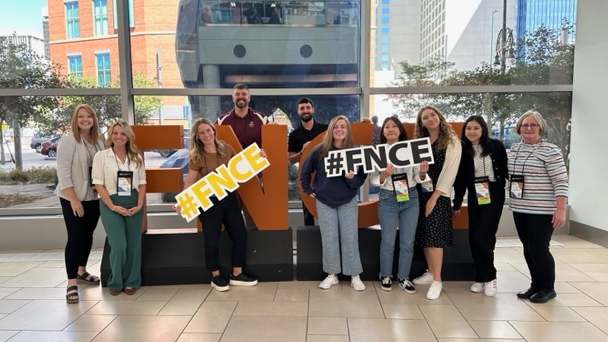
During the spring semester, several groups of students from McQueary College of Health and Human Services (MCHHS) strengthened their education through community engagement.
Students from several programs applied their classroom knowledge in local schools, clinics and even abroad. They partnered with faculty and staff to serve communities and share vital expertise. Through every effort, they lived out Missouri State’s public affairs mission.
Teaching children about healthy eating
Natalie Allen, clinical associate professor of nutrition and dietetics, led an outreach program that shared nutrition lessons in a fun way.

Between Feb. 27 and April 3, Allen and her 17 nutrition and dietetics students brought lessons on healthy eating to young learners at Field Elementary School in Springfield and Republic Early Childhood Center. Over 85 children, ranging from preschoolers to fifth graders, participated in interactive and age-appropriate activities.
“This project gave me a new appreciation for community nutrition,” said senior Brielle Wilhelm. “Seeing the kids’ excitement made it all worthwhile.”
Students designed each lesson from scratch, aligning with Missouri learning standards for health and physical education. The focus was on nutrition, wellness and healthy habits. Hands-on activities included planting seeds, sorting food groups and exploring food labels.
“Our students developed their skills in public speaking, creativity and compassion,” Allen said. “They taught nutrition in engaging and purposeful ways. That’s what lasting service-learning looks like.”
Immersing in care and culture
Jaime Gnau, clinical assistant professor of nutrition and dietetics, led two meaningful community engagement efforts – one local and one international.
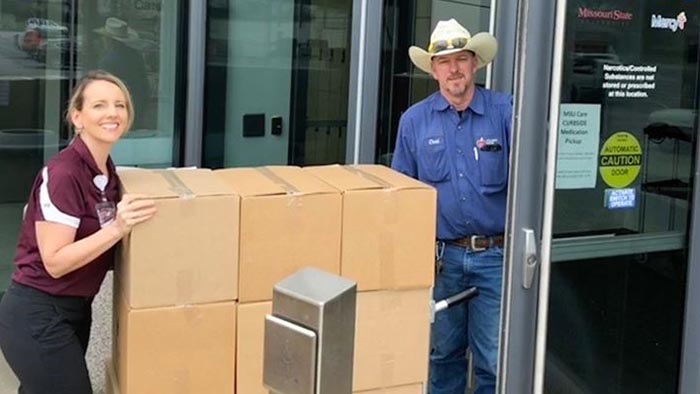
From Jan. 22 to May 3, she guided her nutrition and dietetics graduate students as they served patients at the MSU Care Clinic.

Students provided one-on-one nutrition counseling, hosted food demonstrations and created take-home wellness packets. Their efforts reached about 80 patients, many of whom were low-income and uninsured. They also collaborated with pharmacy and physician assistant studies students to deliver well-rounded, team-based care.
“I was most engaged when another student and I led a nutrition session for a patient from another culture,” said graduate student Samantha Selsor. “Professor Gnau offered support, stepped in to guide us when needed and helped us learn by doing.”
From May 21-29, Gnau led an education abroad program in Naples, Italy. Eleven MCHHS students participated in cooking workshops, farm visits, food system tours and cultural experiences.
They also explored the health benefits of the Mediterranean diet centered on fresh, seasonal and minimally processed foods. The experience helped foster cultural humility and awareness of global food practices.
Gnau notes that both local and international experiences broaden students’ understanding of how culture, foodways and dietary patterns intersect.
“These opportunities help future health professionals build cross-cultural competence and better serve diverse communities,” she said.
Building leadership through food and sustainability

Stephanie Urich, clinical instructor in nutrition and dietetics, guided students through impactful community initiatives. One of them was a teaching kitchen, led by five faculty members and student volunteers, reaching more than 30 students on campus.
“The program provides leadership opportunities for students while improving food access and nutrition literacy,” Urich said.
“My involvement with teaching kitchens encouraged me in my profession as I saw students take away nutrition lessons from just an hour-long session,” said graduate student Madison Kaufman. “Students bonded over preparing a meal while learning what the food does for their bodies.”
Students visited SGC Foodservice, a Springfield-based company serving institutions since 1865. At SGC, they saw the challenges of school nutrition, such as meeting menu guidelines on a $4 daily budget.
Students also joined a sustainable food systems group on campus to learn about reusable supplies and applied for funding to install a composter. Besides that, they partnered with the Community Partnership of the Ozarks Food Collaborative to explore shared solutions for food access.
Inspiring rural health careers
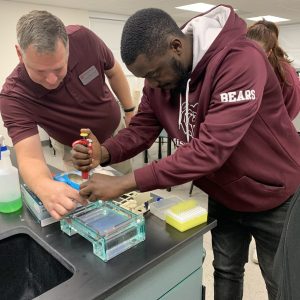
Trisha Riggs, director of Southwest Missouri Area Health Education Center (AHEC), led hands-on recruitment programming to engage high school students in health care exploration.
AHEC students delivered skill-based workshops in Fordland, Monett, Nevada and Buffalo, covering suturing, phlebotomy, microbiology, public health and dissection. These sessions took place during the school day and reached 183 high school students.
In addition, 20 graduate-level AHEC scholars joined a weekend panel speaker event focused on caring for individuals with special needs. These events were scheduled on evenings or weekends to accommodate the scholars’ work and academic commitments.
“Most of our programs aim to increase students’ interest in health care careers or support learning beyond the classroom,” Riggs said.