Missouri State University

Skip to content Skip to navigation
a b c d e f g h i j k l m n o p q r s t u v w x y z

Health and Human Services News

  • McQueary College of Health and Human Services

A decade of caring for underserved communities

October 22, 2025 by Sewly Khatun

Celebrating 10 years of the MSU Care partnership

On Oct. 15, the Missouri State University Care Clinic celebrated its 10th anniversary with leaders from Mercy and community members.  

The clinic opened in 2015 on campus to provide free health services and medications for underserved and uninsured patients. Since then, it has served more than 33,000 patients through a wide range of services, expanding primary care access for Springfield neighbors.  

Milestone grounded in community care 

Connie Sayre has served at the clinic since day one. 

“I love that we’re here to care for our patients and that Missouri State and Mercy have teamed up to make sure our most vulnerable patients have access to care,” she said. 

The clinic provides primary care, vaccines, pharmacy counseling, nutrition guidance, lab tests and electrocardiograms. It also offers in-clinic procedures, such as wound care, suture removal, ear irrigation and nebulizer support. 

Many visitors cannot afford traditional primary care or have delayed care; some are homeless or lack transportation.   

“Our goal is to provide a medical home for our patients who often don’t fit into the traditional health care model,” said Clinic Manager Justin Gassel.  

In September 2024, services expanded to include Medicaid patients. The clinic currently sees an average of 210 patients per month. 

A successful training site and collaborative network

Dr. Mark Smith (at the podium) delivers his remarks.

Staffed by providers from Missouri State and Mercy, the clinic also serves as a training site for students in the university’s physician assistant, pharmacy, dietetics and nursing programs. 

In addition to primary care services, the clinic provides essential resources, including hygiene kits, groceries and winter clothing. These items are made possible through organizations like Community Partnership of the Ozarks, Convoy of Hope, Mercy Health Foundation and Ozarks Food Harvest. 

“Hosting the MSU Care Clinic is an honor that exemplifies Missouri State’s public affairs mission in action,” said Dr. Mark Smith, dean of the McQueary College of Health and Human Services. 

“This clinic gives our students invaluable hands-on experience while equipping them with the knowledge and skills to serve others as future health care professionals. At the same time, our community’s neediest members benefit from quality, accessible care, demonstrating that lasting impact happens when education, compassion and community partnerships work hand in hand.” 

Check out the MSU Care Clinic

Filed Under: MCHHS Events Tagged With: Mark Smith, MSU Care, Nutrition and Dietetics, pharmacy, Physician Assistant Studies, School of Nursing

Cooking up confidence

October 21, 2025 by Ella Reuter

The Teaching Kitchen helpers.

Launched this spring, the Bears Lead Teaching Kitchen program invites Missouri State University students in the Bears Lead program to discover the joy of cooking.

Designed and led by Dr. Daniela Novotny, registered dietitian and senior instructor in the School of Health Sciences, the program blends hands-on culinary lessons with practical nutrition education.

“Since many college students face barriers with eating a nourishing diet, our goal was to build cooking confidence and food literacy while supporting healthier habits,” Novotny said.

The start of Teaching Kitchen

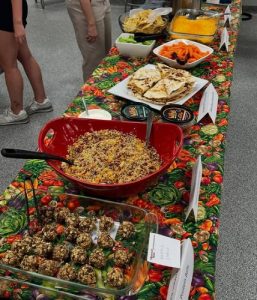
The food students learned to cook at the Teaching Kitchen.

The idea for the Bears Lead Teaching Kitchen began after a member from the office of access and success programs invited Novotny to adapt her popular Employee Wellness Cooking Talks sessions for Bears Lead students.

Bears Lead is a two-year transition program designed to help first-generation students adjust to campus life and develop academic and personal skills.

The first Teaching Kitchen took place on April 23, with 15 students participating.

“When you make a meal with others, there is a sense of shared space and camaraderie,” Novotny said. “Getting to eat the food we made together felt nostalgic, and it was definitely a highlight of the evening.”

Novotny said her favorite part of the pilot session was watching Bears Lead students gain confidence in making meals. She also enjoyed having her nutrition and dietetics students step into leadership roles, guiding participants and adapting to the surprises that can come with any cooking class.

“Our results, from a pre- and post-survey, showed that students gained confidence in cooking and improved their nutrition knowledge,” she said.

More sessions

Following the pilot’s success, Novotny was invited to organize a two-part series this fall for Bears Lead. Assisting her are students enrolled in her DTN 695 Research in Nutrition and Dietetics, part of Missouri State’s new accelerated master’s in nutrition and dietetics. By helping to implement and evaluate the program, these students are putting their classroom knowledge into practice – developing teaching skills, leading sessions and collecting and analyzing research results.

The first session for fall took place on Oct. 1 with 22 students for a lesson themed “Cooking Basics for Life.” Participants learned how to read recipes, measure ingredients accurately and plan a balanced, affordable meal using minimal kitchen equipment.

“The students in Bears Lead are amazing – so friendly, eager to learn and engaged. I loved seeing their excitement for trying new things and being open to skills they may have been nervous about before, like using a knife or immersion blender,” Novotny said.

Donated mugs from Bears Ink.

The second session themed, “Dorm Cooking and Snack Hacks” took place on Oct. 30. Students learned how to prepare nutritious, low-cost meals using a microwave and simple ingredients available from the Missouri State Bear Pantry or local grocery stores.

Novotny’s biggest takeaway from this experience is how vital cooking programs are for today’s students.

“Cooking and nutrition literacy are lifelong tools,” she said. “We need more programs like this because students today are often surrounded by misinformation about food, and many have not been taught how to cook for themselves.”

The program has received support from:

  • The Bears Ink, the Entrepreneurship Lab in Missouri State’s management department, which donated mugs
  • Missouri Academy of Nutrition and Dietetics (MOAND), which provided grant funding to Novotny for the food and supplies for the fall sessions

A valuable learning opportunity

The partnership with Bears Lead has also been a meaningful learning experience for Novotny’s nutrition and dietetics students.

“What a neat opportunity for them to develop lesson plans, lead a class and get valuable teaching and practical experience,” she said.

Among the students was senior Clara Gust, the nutrition and dietetics foods lab assistant, who often volunteers at teaching kitchens and cooking classes.

“I did the grocery shopping and helped to set up for sessions,” she said. “During the session, I guided Bears Lead students if they were struggling with the recipes.”

Graduate students Amy Harrington and Lauren Brumfield appreciated the opportunity to lead the session and assist with data collection for the research component.

“With Dr. Novotny’s support, we chose the recipes, designed the format of the class, demonstrated the recipes and taught the nutrition education section of the class,” Harrington said.

As she explores various paths within dietetics, the teaching kitchen experience deepened her understanding of how people connect with food and learning.

“I learned how people relate to food and cooking and how to present information in ways that are both interesting and empowering,” she added.

What’s next?

Novotny and five of her colleagues have teamed up to create the MSU Teaching Kitchen Collaborative.

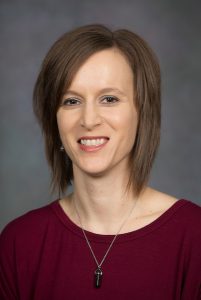
Daniela Novotny headshot.
Daniela Novotny

“Our goal is to offer more of these programs to campus and community groups,” she said. “Teaching kitchens help people build lifelong confidence in the kitchen and learn to make healthy, affordable and tasty meals.”

The collaborative already has several exciting projects in progress. One of them is with MSU Care, a Mercy-affiliated clinic on campus and another is with the Bear Pantry. Novotny also looks forward to expanding the Bears Lead Teaching Kitchen in the years ahead.

Winning an award

Novotny’s leadership with the Bears Lead Teaching Kitchen program has not gone unnoticed. MOAND President Takako Tagami nominated her for the Missouri Council for Activity and Nutrition (MOCAN) Healthcare Professional Award, and she was selected as one of this year’s winners.

On Oct. 30, she traveled to Jefferson City to be recognized alongside other honorees.

“While there, I presented about the project,” Novotny said. “It was exciting because the audience included doctors, nurses, health educators and other professionals. The more they learn about teaching kitchens and what dietitians can bring to the table, the more they’ll see the value in partnering with us.”

Explore the Master of Science in Nutrition and Dietetics

Filed Under: MCHHS News Tagged With: Daniela Novotny, faculty, Nutrition and Dietetics, School of Health Sciences, students

Bringing Costa Rica’s lessons back to campus

September 4, 2025 by Sewly Khatun

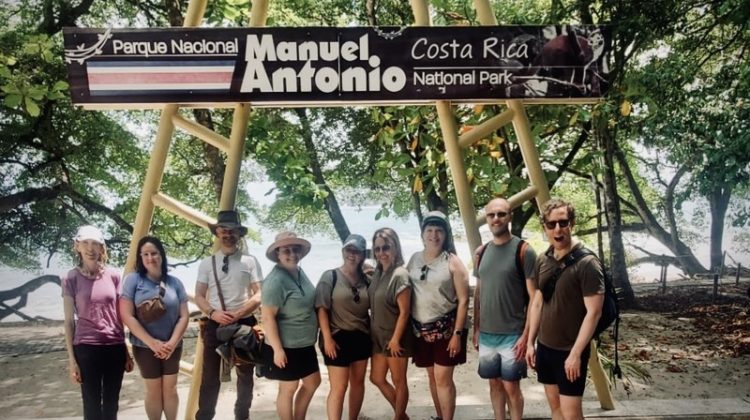
Kelly Dudley and Stephanie Mitchell Urich (center) with other Missouri State University faculty members at the Costa Rica National Park.

This summer, a group of faculty members from across Missouri State University traveled to Costa Rica as part of the inaugural Education Abroad Faculty Fellows program. 

Among them were Stephanie Mitchell Urich, clinical instructor in the School of Health Sciences, and Kelly Dudley, clinical assistant professor in the School of Mental Health and Behavioral Sciences. 

For both, the trip was a chance to learn and connect. They saw how culture, food and sustainability work together and how small actions can make a big difference. 

The program helps faculty in creating and leading education abroad opportunities for students. 

Learning by experience 

Faculty engaged in learning activities throughout the trip from May 19-23. They took part in market visits, rainforest hikes, a cooking class and a coffee roaster tour, as well as spent time with Indigenous leaders. 

Even with a busy schedule, each faculty member found personal meaning. For Dudley, the experience added a fresh perspective on Costa Rica, where she had lived as a child and visited many times since. 

“Being able to go as a ‘student’ allowed me the space to learn things I never knew about a place I already loved,” she said. 

Shared experiences also deepened the duo’s understanding of culture and community. For both faculty, one of the most memorable moments was spending time with the Boruca tribe, learning their mask painting and farming traditions. 

“Sustainability is about thoughtfulness and making choices that benefit others,” said Urich. “Costa Rica showed me that even small habits, like avoiding disposables or supporting mindful vendors, can have lasting impact.” 

Bringing global lessons back home 

Urich notes the connection between global challenges and local action has become more personal thanks to this experience. 

“We often use the phrase ‘think global, act local’ and that feels truer to me now,” she said. “Hunger is an overwhelming issue, but collective efforts matter. Acting locally for the greater good always counts.” 

While Urich brought the lessons into her classroom, Dudley reflected on Costa Rica’s cultural values. She emphasized the country’s “pura vida” culture, meaning “the good life.”  

She described it as a powerful reminder of well-being rooted in community. With universal health care, sustainable energy and strong social values, Costa Rica fosters resilience and lowers stress. 

“There’s so much we can learn from the way they build relationships and care for one another,” Dudley said. “Those lessons aren’t staying in Costa Rica. They’re shaping what comes next, starting with a new program.” 

Looking ahead 

Together, Urich and Dudley are planning a joint Education Abroad program to Alaska in May 2026, partnering nutrition and dietetics with social work. 

“This trip will immerse students in Indigenous culture, provide learning opportunities around nature therapy, social justice and food insecurity, as well as some adventures in the final frontier,” Dudley said. 

“In Alaska, students will explore how food systems impact health across the globe and step forward as health care professionals ready to lead stronger communities,” Urich added. 

Explore degree options at MCHHS

Filed Under: MCHHS News Tagged With: faculty, Kelly Dudley, Nutrition and Dietetics, School of Health Sciences, School of Mental Health and Behavioral Sciences, Social Work, Stephanie Urich

Putting learning into action

July 23, 2025 by Sewly Khatun

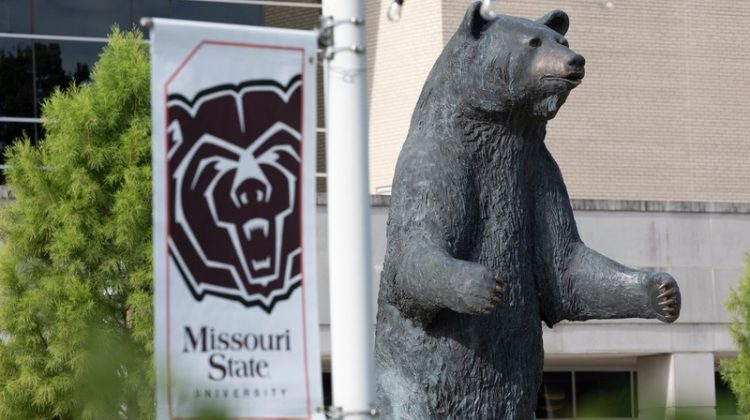
Bear Statue with Missouri State University Flag.

During the spring semester, several groups of students from McQueary College of Health and Human Services (MCHHS) strengthened their education through community engagement. 

Students from several programs applied their classroom knowledge in local schools, clinics and even abroad. They partnered with faculty and staff to serve communities and share vital expertise. Through every effort, they lived out Missouri State’s public affairs mission. 

Teaching children about healthy eating

Natalie Allen, clinical associate professor of nutrition and dietetics, led an outreach program that shared nutrition lessons in a fun way.

Natalie Allen and Boomer engage with kids through playful learning.

Between Feb. 27 and April 3, Allen and her 17 nutrition and dietetics students brought lessons on healthy eating to young learners at Field Elementary School in Springfield and Republic Early Childhood Center. Over 85 children, ranging from preschoolers to fifth graders, participated in interactive and age-appropriate activities. 

“This project gave me a new appreciation for community nutrition,” said senior Brielle Wilhelm. “Seeing the kids’ excitement made it all worthwhile.” 

Students designed each lesson from scratch, aligning with Missouri learning standards for health and physical education. The focus was on nutrition, wellness and healthy habits. Hands-on activities included planting seeds, sorting food groups and exploring food labels. 

“Our students developed their skills in public speaking, creativity and compassion,” Allen said. “They taught nutrition in engaging and purposeful ways. That’s what lasting service-learning looks like.” 

Immersing in care and culture

Jaime Gnau, clinical assistant professor of nutrition and dietetics, led two meaningful community engagement efforts – one local and one international.  

From Jan. 22 to May 3, she guided her nutrition and dietetics graduate students as they served patients at the MSU Care Clinic.  

3. Professor Jaime Gnau (center) enjoys local cuisine with students during their study abroad in Italy.

Students provided one-on-one nutrition counseling, hosted food demonstrations and created take-home wellness packets. Their efforts reached about 80 patients, many of whom were low-income and uninsured. They also collaborated with pharmacy and physician assistant studies students to deliver well-rounded, team-based care. 

“I was most engaged when another student and I led a nutrition session for a patient from another culture,” said graduate student Samantha Selsor. “Professor Gnau offered support, stepped in to guide us when needed and helped us learn by doing.” 

From May 21-29, Gnau led an education abroad program in Naples, Italy. Eleven MCHHS students participated in cooking workshops, farm visits, food system tours and cultural experiences. 

They also explored the health benefits of the Mediterranean diet centered on fresh, seasonal and minimally processed foods. The experience helped foster cultural humility and awareness of global food practices. 

Gnau notes that both local and international experiences broaden students’ understanding of how culture, foodways and dietary patterns intersect.  

“These opportunities help future health professionals build cross-cultural competence and better serve diverse communities,” she said. 

Building leadership through food and sustainability

Nutrition and dietetics graduate students share the power of protein during a Teaching Kitchen session.

Stephanie Urich, clinical instructor in nutrition and dietetics, guided students through impactful community initiatives. One of them was a teaching kitchen, led by five faculty members and student volunteers, reaching more than 30 students on campus.

“The program provides leadership opportunities for students while improving food access and nutrition literacy,” Urich said.

“My involvement with teaching kitchens encouraged me in my profession as I saw students take away nutrition lessons from just an hour-long session,” said graduate student Madison Kaufman. “Students bonded over preparing a meal while learning what the food does for their bodies.” 

Students visited SGC Foodservice, a Springfield-based company serving institutions since 1865. At SGC, they saw the challenges of school nutrition, such as meeting menu guidelines on a $4 daily budget.  

Students also joined a sustainable food systems group on campus to learn about reusable supplies and applied for funding to install a composter. Besides that, they partnered with the Community Partnership of the Ozarks Food Collaborative to explore shared solutions for food access. 

Inspiring rural health careers 

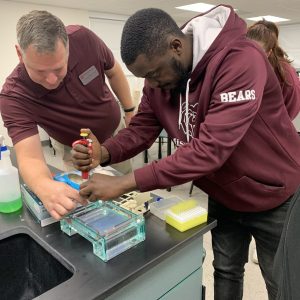
Biomedical Sciences students engage in hands-on AHEC workshop
Biomedical Sciences students engage in hands-on AHEC workshop.

Trisha Riggs, director of Southwest Missouri Area Health Education Center (AHEC), led hands-on recruitment programming to engage high school students in health care exploration. 

AHEC students delivered skill-based workshops in Fordland, Monett, Nevada and Buffalo, covering suturing, phlebotomy, microbiology, public health and dissection. These sessions took place during the school day and reached 183 high school students. 

In addition, 20 graduate-level AHEC scholars joined a weekend panel speaker event focused on caring for individuals with special needs. These events were scheduled on evenings or weekends to accommodate the scholars’ work and academic commitments. 

“Most of our programs aim to increase students’ interest in health care careers or support learning beyond the classroom,” Riggs said.  

Explore MCHHS

Filed Under: MCHHS News Tagged With: faculty, Jaime Gnau, Natalie Allen, Nutrition and Dietetics, School of Health Sciences, Southwest Missouri Area Health Education Center, Stephanie Urich, students, Trisha Riggs

« Previous Page
Next Page »

Categories

Archives

Meta

  • Log in
  • Entries feed
  • Comments feed
  • WordPress.org
  • Accessibility
  • Disclaimer
  • Disclosures
  • Equal Opportunity Employer and Institution
  • © 2026 Board of Governors, Missouri State University
  • Contact Information

Loading Comments...