Missouri State University

Skip to content Skip to navigation
a b c d e f g h i j k l m n o p q r s t u v w x y z

Health and Human Services News

  • McQueary College of Health and Human Services

Opening doors to global learning

April 9, 2026 by Sewly Khatun

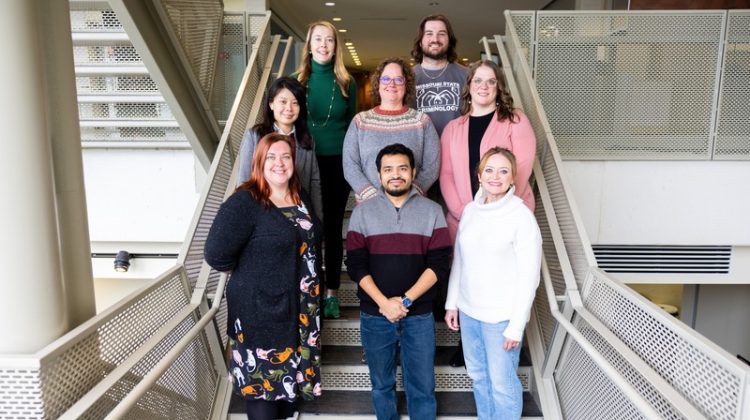
The 2026 Education Abroad Faculty Fellows: Dr. Sarah Panzer, Dr. Asif Ishtiaque, Dr. Leslie Echols (front row, left to right); Dr. Nancy Kageyama, Alison Alaimo, Kristen Thornton (middle row, left to right); Dr. Amanda Benedict-Chambers, Dr. Robert Geibler (back row, left to right).

Global learning often starts in a new place and grows through experience, curiosity, reflection and connection.  

That spirit drives Missouri State University’s Education Abroad Faculty Fellows Program.  

Two faculty members from the McQueary College of Health and Human Services (MCHHS) were among eight faculty members selected for the 2026 cohort: Dr. Leslie Echols, professor of psychology in the School of Mental Health and Behavioral Sciences, and Alison Alaimo, clinical assistant professor in the School of Nursing. The group includes representation from each of the university’s colleges.

This initiative supports faculty in developing, implementing and leading faculty-directed education abroad programs. It offers a dynamic learning opportunity for faculty members to enhance their global engagement, foster cultural immersion and create meaningful educational experiences for students. 

A chance to expand students’ learning 

For both faculty members, the selection is more than a professional milestone. It creates new opportunities for MCHHS students to explore how culture, systems and daily life impact health and well-being through a global lens.
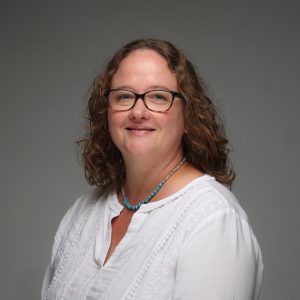
Alison Alaimo
Alison Alaimo

According to Alaimo, this program supports the kind of learning she values most. 

In nursing, experiential learning helps students grow through labs, clinicals and simulations. Alaimo sees education abroad as a natural extension of that approach.  

“Education abroad aligns with my personal educational philosophy, considering the importance of experiential learning,” Alaimo said. “This type of learning develops critical thinking skills and deepens understanding.” 

While Echols shares that excitement, she also feels a deep sense of responsibility. For her, the program is a chance to learn the process up close before taking students abroad. 

“I’m grateful for the opportunity to see how a great program is run before leading a group of students on my own,” Echols said. 

For several years, she hoped to offer psychology students an education abroad experience. Participation in the Education Abroad Faculty Fellows Program will give her the confidence to move forward. 

Why it matters for students 

Dr. Leslie Echols headshot
Dr. Leslie Echols

Both faculty members view education abroad as more than travel. It is a chance to broaden perspectives, deepen understanding and prepare students for a changing world. 

“The students we’re training now will become the health care leaders shaping policy in the future,” Alaimo said. “Hopefully, seeing how health care works in another place will influence them to make it more affordable and accessible in the United States.” 

Echols believes experiences like education abroad enable psychology students to step outside their usual way of thinking and explore different ways of approaching problems. 

“When you go abroad or even if you just go to another town or region, you get outside of whatever your norm is,” Echols said. “You see people doing things differently than you do.” 

That kind of perspective matters in every field connected to human care. It helps students become more reflective, adaptable and globally aware.  

What the program entails  

Now in its second year, the Education Abroad Faculty Fellows Program includes: 

  • A series of interactive workshops designed to connect fellows with essential education abroad resources and equip them with the knowledge and skills needed to develop impactful global learning experiences 
  • An eight-day travel experience to Barcelona, Spain, that is focused on sustainability. 

At a recent sustainability workshop, Echols realized the concept was broader than she had imagined. She was especially struck by the 17 themes aligned with the United Nations Sustainable Development Goals, highlighting not just environmental resources but also human well-being, including mental health.

“We’re thrilled to support these faculty members in their journey to create global learning experiences that not only enrich students’ academic careers but also foster greater global awareness and responsibility,” said  Elizabeth Strong, director of the office of education abroad. “Through the Fellows Program, we aim to empower faculty to create programs that have a lasting impact on students’ education and personal growth.” 

Explore MCHHS

Filed Under: Faculty Spotlight, MCHHS News Tagged With: Alison Alaimo, faculty, Leslie Echols, Psychology, School of Mental Health and Behavioral Sciences, School of Nursing

Guiding research across MCHHS

March 23, 2026 by Sewly Khatun

Psychology undergraduate and graduate students showcase their research at the Student Research Symposium.

New knowledge often starts with simple questions. At Missouri State University, research events turn those questions into new ideas and discoveries. 

The McQueary College of Health and Human Services (MCHHS) will host its 30th Annual Student Research Symposium on April 16. This yearly event challenges undergraduate and graduate students to present scholarly work across disciplines. 

Dr. Leslie Echols, professor of psychology in the School of Mental Health and Behavioral Sciences and current MCHHS research fellow, helps lead the college’s research efforts. 

“It’s been a valuable opportunity for faculty from one program to learn about what someone from another program is doing,” she said. “We can all learn from each other and the different experiences we’ve had.” 

Strengthening faculty research 

Dr. Leslie Echols
Dr. Leslie Echols

Echols joined Missouri State in 2014 after completing a postdoctoral appointment at the University of California, Los Angeles. Since then, she has centered her teaching, scholarship and service around research. 

In fall 2025, she was appointed the MCHHS research fellow, a role focused on expanding research support across the college. She works with fellow faculty members, helping them navigate research processes and connect with available resources. One of her first initiatives was developing a centralized SharePoint hub where faculty can access information about funding opportunities, research tools and institutional guidance. 

Echols also hosts monthly research “brown bag” sessions, informal gatherings that allow faculty to discuss emerging topics and exchange ideas. The upcoming brown bag session topics are related to creating a sustainable research pipeline and setting summer scholarship goals. 

“These sessions give colleagues a chance to learn from each other,” Echols said. “We have faculty doing interesting work across the college and creating space for those discussions often leads to new partnerships.” 

In addition, she provides individual consultations to faculty who are preparing grant applications, designing studies, completing the Institutional Review Board approval process and navigating university research procedures. 

Engaging students in research 

Beyond faculty support, Echols also works to expand opportunities for student involvement in research activities. Through mentorship and collaboration, she encourages faculty to include students in research design, data collection and analysis. 

“I think one of our biggest strengths is how MCHHS faculty bring students into the research process,” Echols said. “Those experiences are incredibly valuable, especially for students considering graduate school.” 

She believes hands-on research allows students to explore complex questions, develop analytical skills and gain a deeper understanding of their discipline. When students work alongside faculty researchers, learning extends beyond the classroom and benefits everyone.  

Developing school-based interventions 

Alongside her leadership role within the college, Echols continues to lead several research projects through internal and external partnerships.  

One study she is currently working on is a school-based intervention program designed for students with hostile attribution bias. 

“Hostile attribution bias occurs when students interpret negative social events as intentional attacks, even when they may be accidental,” she said. “This pattern can lead to reactive behavior, social conflict and increased vulnerability to bullying.” 

To address this, Echols and her research team are developing screening tools to identify students who may need support and lesson plans that help them respond more constructively to peer interactions. They plan to pilot the intervention program in Springfield-area schools this spring, an important step in moving the research into real-world practice. 

Looking ahead to Research Week 

Research efforts across the college will take center stage during the upcoming Student Research Symposium. It is scheduled from 3-5 p.m. in the Plaster Student Union Grand Ballroom. 

The event allows students from different MCHHS programs to share their research through poster presentations and academic discussions. These projects reflect the work they have conducted over the past year. 

For Echols, the symposium represents one of the most meaningful moments of the academic year because it highlights research and collaboration across programs.  

She is also helping coordinate several Research Week activities, including two faculty panel discussions.  

“Both sessions offer faculty practical ways to strengthen their research and scholarly work. It’s very timely and relevant to where we are right now,” Echols said. 

One panel, “Using AI in Your Research,” is scheduled for April 13 from 3:30-5 p.m. in the O’Reilly Clinical Health Sciences Center, Room 100. The second, “Leveraging Teaching to Increase Research Productivity,” will be held April 14 from 12:30-2 p.m. in Kampeter Hall, Room 238. 

Explore MCHHS

Filed Under: MCHHS Events, MCHHS News Tagged With: faculty, Leslie Echols, Psychology, research, School of Mental Health and Behavioral Sciences, Student Success

Faculty spotlight: Drs. Sara Wilson and Kristen Thompson

October 27, 2025 by Sewly Khatun

Missouri State University Campus Photo

The McQueary College of Health and Human Services (MCHHS) is proud to feature Dr. Sara Wilson and Dr. Kristen Thompson, assistant professors in the School of Mental Health and Behavioral Sciences. 

Together, they are shaping future clinical psychologists through Missouri State University’s Doctor of Psychology (PsyD) program, focusing on trauma-informed care and resilience.  

Let’s get to know them better. 

Dr. Sara Wilson
Dr. Sara Wilson

Where are you originally from? 

Wilson: I’m from Springfield, Missouri.
Thompson: I grew up in St. Charles, Missouri. 

What brought you to Missouri State and how long have you been here? 

Wilson: I’ve worked in clinical psychology for nearly 15 years and have been drawn to teaching, supervision and clinical training. I joined Missouri State in fall 2024 after seeing the PsyD program as the perfect way to combine my passions for practice, education and mentorship.

Thompson: I’m a proud Missouri State alum and was excited to return as a faculty member. After working for years as a clinician and administrator in community mental health, I wanted a change. Teaching and training were always my favorite parts of my roles. When I saw that the PsyD program needed faculty to help develop the program, I knew it was the perfect fit. 

Can you share your academic journey? 

Wilson: I earned a bachelor’s degree in psychology from Missouri State in 2007. I completed my master’s degree in 2010 and my Doctor of Clinical Psychology degree in 2012 at Forest Institute. 

Thompson: I earned my bachelor’s degree in psychology with a minor in criminology from Missouri State in 2009 and my PhD in Clinical Psychology from Northern Illinois University in 2016. 

What inspired you to pursue a career in clinical psychology? 

Wilson: I’ve always been fascinated by how people think, feel and make meaning of their experiences. Clinical psychology drew me in because it combines science, compassion and the opportunity to help others heal and grow through adversity. 

Thompson: My path to clinical psychology evolved during my undergraduate years as I explored several careers. I eventually figured out that clinical psychology offered the perfect combination for me: the intellectual challenge of understanding why people think, feel and behave as they do, paired with the opportunity to apply that knowledge in working directly with others. 

Where did you work prior to Missouri State? 

Wilson: I worked as system director of clinical education at Burrell Behavioral Health, leading trauma-informed care initiatives, clinical training and consultation across the system. 

Thompson: I worked at Burrell Behavioral Health for seven years as director of pediatric integration and co-founder of the Youth Focus Clinic. 

What excites you most about being part of the PsyD program at Missouri State?

Dr. Kristen Thompson

Wilson: It’s exciting to be part of building a strong, high-quality program alongside such dedicated psychologists. Most of all, I’m inspired by our students — the chance to mentor, support and learn with them is what truly brought me to Missouri State. 

Thompson: Working with students is easily the best part. My professors deeply influenced who I am and how I’ve moved through my career. I’m grateful to have the opportunity to pass on that mentorship by helping students grow personally and professionally. 

How do you engage doctoral students in the classroom? 

Wilson: I want learning to feel meaningful and connected for my students. I strive to create a supportive space where students can show up authentically, take risks and see how what they learn applies to real clinical work. 

Thompson: I don’t think it’s possible for graduate students to learn every theory or technique, so I focus on teaching them how to evaluate research on their own and develop skills in new areas. We analyze research studies, discuss central themes and mechanisms of action and make connections across theories and treatments. We do role plays and give feedback, not to master a specific skill, but rather to master the skill of mastering skills. I want them leaving my classes thinking, ‘I may not know everything about this approach, but I know how to learn it, evaluate it critically and figure out if it’s right for this situation.’ 

What research areas or clinical interests do you focus on? 

Wilson: My clinical and research focus is trauma and trauma-informed care. With Dr. Thompson, I co-lead the Resilience and Connection Collective, guiding projects with real-world impact, from ROTC training to ACEs (Adverse Childhood Experiences) research and community initiatives. 

Thompson: Like Dr. Wilson, I focus on early adversity and trauma-informed strategies. One project that I’m especially excited about is our development of a trauma-informed leadership training with Lt. Col. Kyle Reeves and the ROTC program. 

Outside of work, what’s your favorite way to spend your time? 

Wilson: I love spending time with my family and pets, being outdoors, listening to music and reading. Those moments help me recharge and stay grounded. 

Thompson: Traveling with my family and exploring national parks. We’ve visited 11 so far and plan to reach number 12 soon! 

What might surprise people about you? 

Wilson: Despite striving to be warm and reflective in my work, I can be fiercely competitive, especially during board games or trivia nights. 

Thompson: I’m a mom to four and a pediatric psychologist, yet I’m really not a fan of cartoons. I’m not a Disney lover and I especially don’t like adult cartoons. Comedies, yes. Kids books, absolutely. I can’t really put my finger on it, but I’ve always felt this way.

Learn more about Doctor of Psychology

Filed Under: Faculty Spotlight, MCHHS News Tagged With: faculty, Kristen Thompson, Psychology, PsyD, Sara Wilson, School of Mental Health and Behavioral Sciences

Three years strong: PsyD program on track for accreditation

October 6, 2025 by Sewly Khatun

Missouri State University

Missouri State University launched its Doctor of Psychology (PsyD) program in 2023 to prepare more clinical psychologists for Missouri and beyond.  

The need was clear: train more practitioners to respond to growing mental health demands.   

“Our goal is to prepare practitioners who are ready to go out and serve their community,” said Dr. Hannah Jayne Harris, PsyD program director and instructor in the School of Mental Health and Behavioral Sciences. 

Now in its third year, the program, a partnership between Missouri State and Burrell Behavioral Health, is gaining momentum and moving toward national accreditation. 

Program structure and milestones 

Dr. Hannah Jayne Harris

The PsyD program trains students to become licensed clinical psychologists. Unlike a PhD in Psychology, it emphasizes clinical practice over research. 

Students spend four years on campus completing coursework, practicum training and dissertation work, followed by a one-year internship anywhere in the country. 

Faculty begin guiding students in dissertation planning early in their second year through workshops and writing retreats.  

“The structure helps students feel supported instead of overwhelmed by the research process,” Harris said.  

The program started with a cohort of eight students in 2023, growing to 10 the following year and 12 in the third. There are 30 students now. 

The faculty revised the curriculum in 2024, creating 109-credit hours with core courses, electives, research work and extensive clinical training. 

That same year, the program earned “intent to apply” status with the American Psychological Association (APA), an early step toward accreditation. The next big goal is full APA accreditation, which will allow Missouri State to attract a more diverse pool of applicants, including international students. 

Practical training from the onset 

Hands-on training is central to the PsyD program. All first-year students are guaranteed practicum placement at Burrell, where they work under supervision in a wide variety of cases.  

“This experience is a huge benefit,” Harris said. 

From the second year onward, placements expand further into the community. Current sites include the Arc of the Ozarks, the Bureau of Prisons Federal Medical Center and Greene County Jail. On campus, students also serve at the Learning Diagnostic Clinic, where they provide affordable testing for children and Missouri State students who need accommodation. 

Together, these placements expose students to diverse populations, build both clinical and community skills and meet vital needs for families who cannot otherwise access services. 

A growing impact 

Although the program is relatively new, many of its students describe it as challenging and rewarding.  

Second-year student Hannah Ruthenburg joined the program to gain the skills needed to diagnose and treat patients directly.  

“I aim to become a licensed clinical psychologist and conduct evaluations and therapy,” she said. “I’m especially interested in working with law enforcement and in prisons, where there’s a need for more mental health professionals.” 

Her experience reflects what the program hopes to achieve for every student: prepare them to meet critical mental health needs in diverse settings. 

“We want to train students who embrace Missouri State’s public affairs mission,” Harris said. “This commitment guides both the faculty and students as the program continues to grow.”  

Learn more about Doctor of Psychology

Filed Under: MCHHS News Tagged With: faculty, Hannah Jayne Harris, Psychology, PsyD, School of Mental Health and Behavioral Sciences

« Previous Page
Next Page »

Categories

Archives

Meta

  • Log in
  • Entries feed
  • Comments feed
  • WordPress.org
  • Accessibility
  • Disclaimer
  • Disclosures
  • Equal Opportunity Employer and Institution
  • © 2026 Board of Governors, Missouri State University
  • Contact Information

Loading Comments...