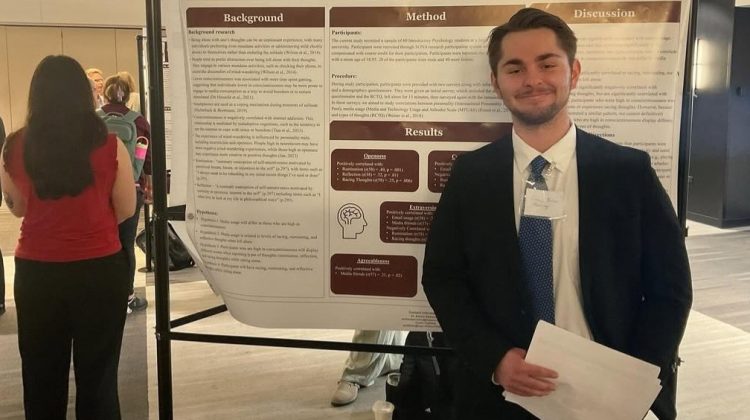

Blayne Stemple believes the best care happens when professionals work together.
As a fourth-year student in the Doctor of Psychology program at Missouri State University, he is building on years of professional experience to advance his career helping children and families.
Originally from Springdale, Arkansas, Stemple earned his bachelor’s degree in psychology from the University of Arkansas. His work as a registered behavior technician, providing applied behavior analysis services to people with autism, encouraged him to further his education.
He earned a master’s degree in special education with an emphasis in applied behavior analysis from the University of Washington in Seattle. He also became a board-certified behavior analyst (BCBA) in August 2018.
After returning to Arkansas, he continued working as a behavior analyst. He sought to expand the services he could provide and take on more clinical responsibilities.
“I wanted to find a program that would allow me to get my doctorate in clinical psychology so I could be a licensed psychologist,” Stemple said.
Missouri State was a good fit, with its proximity to family and alignment with his career goals.
Learning through experience
He is part of the program’s first cohort, which began in fall 2023. As one of the first students in the program, he has experienced changes and challenges as it continues to grow.
Still, he values the people he has met and the chance to learn from others.
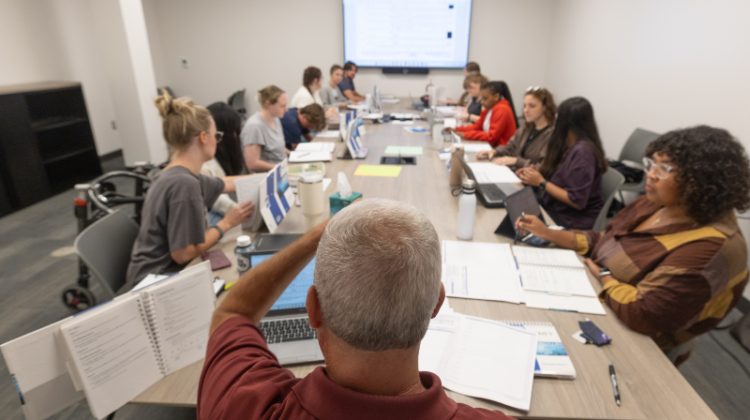
One of the most rewarding parts of graduate school has been learning alongside students and faculty with different educational and professional backgrounds.
He also credits his professors and mentors with helping him grow. The program has given him more opportunities to take ownership of his development while receiving guidance from experienced professionals.
He especially appreciates the support of Dr. Tanya Whipple, senior instructor in the School of Mental Health and Behavioral Sciences.
“All that experience professionally helped me really know what I want to do as a career moving forward,” Stemple said.
His clinical training as part of the program has allowed him to work in several settings across the Springfield area.
At Burrell Behavioral Health (now Centerstone), he provided outpatient mental health therapy to clients of different ages. He has also completed a rotation at Mercy Clinic Neuropsychology, where he got to conduct neuropsychological assessments with children.
He currently trains at Jordan Valley Health, where he provides outpatient psychological evaluations and therapy. Much of his work focuses on children, with some experience serving clients across the lifespan.
Each setting has strengthened his knowledge and skills for the next stage of his career.
The value of collaboration
Stemple’s time at Seattle Children’s Hospital from 2017-2020 as a BCBA continues to guide his approach to psychology. While there, he worked with professionals from several disciplines. He experienced first-hand how combining their expertise led to more comprehensive patient care.
“Seeing how effective care can be when professionals from different disciplines all bring their knowledge and skills to the table changed how I approach my work,” Stemple said.
The experience showed him the value of collaboration and working toward a shared goal.
He hopes to apply that approach into his future career. After completing his doctorate, he desires to work in a specialized hospital program or an integrated community health setting. His goal is to provide care for children and their families.
As a professional, Stemple aims to do his part to reduce the stigma surrounding mental health services, so more people feel comfortable seeking help. He believes treatment should meet people where they are because everyone’s needs are different.
“Psychology can play an important role in improving a person’s overall well-being,” he said. “Making services accessible helps people get the support they need.”
Advice aspiring psychologists
For students considering a career in psychology, Stemple encourages them to gain experience before deciding on a long-term career path.
His own journey included: earning an associate degree, stepping away from school to work, then returning to complete his bachelor’s and master’s degrees before pursuing his doctorate.
Looking back, he values the time he spent working in the field between degrees.
He advises students to explore different work settings, learn about the populations they may serve and understand the roles available to them.
These experiences can help students find a career path that fits their interests and goals.