Missouri State University

Skip to content Skip to navigation
a b c d e f g h i j k l m n o p q r s t u v w x y z

Health and Human Services News

  • McQueary College of Health and Human Services

Faculty spotlight: Drs. Sara Wilson and Kristen Thompson

October 27, 2025 by Sewly Khatun

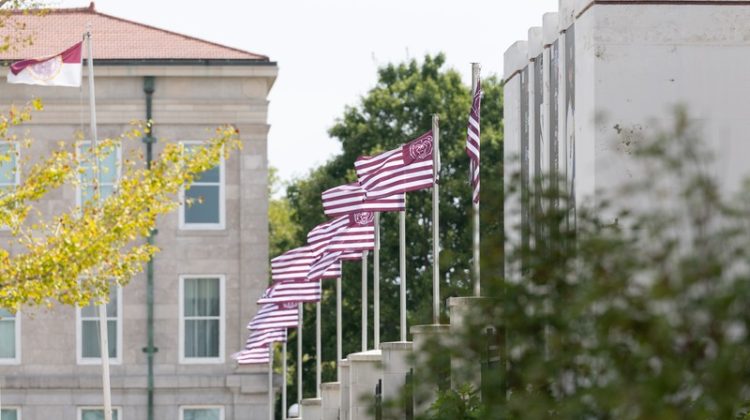
Missouri State University Campus Photo

The McQueary College of Health and Human Services (MCHHS) is proud to feature Dr. Sara Wilson and Dr. Kristen Thompson, assistant professors in the School of Mental Health and Behavioral Sciences. 

Together, they are shaping future clinical psychologists through Missouri State University’s Doctor of Psychology (PsyD) program, focusing on trauma-informed care and resilience.  

Let’s get to know them better. 

Dr. Sara Wilson
Dr. Sara Wilson

Where are you originally from? 

Wilson: I’m from Springfield, Missouri.
Thompson: I grew up in St. Charles, Missouri. 

What brought you to Missouri State and how long have you been here? 

Wilson: I’ve worked in clinical psychology for nearly 15 years and have been drawn to teaching, supervision and clinical training. I joined Missouri State in fall 2024 after seeing the PsyD program as the perfect way to combine my passions for practice, education and mentorship.

Thompson: I’m a proud Missouri State alum and was excited to return as a faculty member. After working for years as a clinician and administrator in community mental health, I wanted a change. Teaching and training were always my favorite parts of my roles. When I saw that the PsyD program needed faculty to help develop the program, I knew it was the perfect fit. 

Can you share your academic journey? 

Wilson: I earned a bachelor’s degree in psychology from Missouri State in 2007. I completed my master’s degree in 2010 and my Doctor of Clinical Psychology degree in 2012 at Forest Institute. 

Thompson: I earned my bachelor’s degree in psychology with a minor in criminology from Missouri State in 2009 and my PhD in Clinical Psychology from Northern Illinois University in 2016. 

What inspired you to pursue a career in clinical psychology? 

Wilson: I’ve always been fascinated by how people think, feel and make meaning of their experiences. Clinical psychology drew me in because it combines science, compassion and the opportunity to help others heal and grow through adversity. 

Thompson: My path to clinical psychology evolved during my undergraduate years as I explored several careers. I eventually figured out that clinical psychology offered the perfect combination for me: the intellectual challenge of understanding why people think, feel and behave as they do, paired with the opportunity to apply that knowledge in working directly with others. 

Where did you work prior to Missouri State? 

Wilson: I worked as system director of clinical education at Burrell Behavioral Health, leading trauma-informed care initiatives, clinical training and consultation across the system. 

Thompson: I worked at Burrell Behavioral Health for seven years as director of pediatric integration and co-founder of the Youth Focus Clinic. 

What excites you most about being part of the PsyD program at Missouri State?

Dr. Kristen Thompson

Wilson: It’s exciting to be part of building a strong, high-quality program alongside such dedicated psychologists. Most of all, I’m inspired by our students — the chance to mentor, support and learn with them is what truly brought me to Missouri State. 

Thompson: Working with students is easily the best part. My professors deeply influenced who I am and how I’ve moved through my career. I’m grateful to have the opportunity to pass on that mentorship by helping students grow personally and professionally. 

How do you engage doctoral students in the classroom? 

Wilson: I want learning to feel meaningful and connected for my students. I strive to create a supportive space where students can show up authentically, take risks and see how what they learn applies to real clinical work. 

Thompson: I don’t think it’s possible for graduate students to learn every theory or technique, so I focus on teaching them how to evaluate research on their own and develop skills in new areas. We analyze research studies, discuss central themes and mechanisms of action and make connections across theories and treatments. We do role plays and give feedback, not to master a specific skill, but rather to master the skill of mastering skills. I want them leaving my classes thinking, ‘I may not know everything about this approach, but I know how to learn it, evaluate it critically and figure out if it’s right for this situation.’ 

What research areas or clinical interests do you focus on? 

Wilson: My clinical and research focus is trauma and trauma-informed care. With Dr. Thompson, I co-lead the Resilience and Connection Collective, guiding projects with real-world impact, from ROTC training to ACEs (Adverse Childhood Experiences) research and community initiatives. 

Thompson: Like Dr. Wilson, I focus on early adversity and trauma-informed strategies. One project that I’m especially excited about is our development of a trauma-informed leadership training with Lt. Col. Kyle Reeves and the ROTC program. 

Outside of work, what’s your favorite way to spend your time? 

Wilson: I love spending time with my family and pets, being outdoors, listening to music and reading. Those moments help me recharge and stay grounded. 

Thompson: Traveling with my family and exploring national parks. We’ve visited 11 so far and plan to reach number 12 soon! 

What might surprise people about you? 

Wilson: Despite striving to be warm and reflective in my work, I can be fiercely competitive, especially during board games or trivia nights. 

Thompson: I’m a mom to four and a pediatric psychologist, yet I’m really not a fan of cartoons. I’m not a Disney lover and I especially don’t like adult cartoons. Comedies, yes. Kids books, absolutely. I can’t really put my finger on it, but I’ve always felt this way.
Learn more about Doctor of Psychology

Filed Under: Faculty Spotlight, MCHHS News Tagged With: faculty, Kristen Thompson, Psychology, PsyD, Sara Wilson, School of Mental Health and Behavioral Sciences

Three years strong: PsyD program on track for accreditation

October 6, 2025 by Sewly Khatun

Missouri State University

Missouri State University launched its Doctor of Psychology (PsyD) program in 2023 to prepare more clinical psychologists for Missouri and beyond.  

The need was clear: train more practitioners to respond to growing mental health demands.   

“Our goal is to prepare practitioners who are ready to go out and serve their community,” said Dr. Hannah Jayne Harris, PsyD program director and instructor in the School of Mental Health and Behavioral Sciences. 

Now in its third year, the program, a partnership between Missouri State and Burrell Behavioral Health, is gaining momentum and moving toward national accreditation. 

Program structure and milestones 

Dr. Hannah Jayne Harris

The PsyD program trains students to become licensed clinical psychologists. Unlike a PhD in Psychology, it emphasizes clinical practice over research. 

Students spend four years on campus completing coursework, practicum training and dissertation work, followed by a one-year internship anywhere in the country. 

Faculty begin guiding students in dissertation planning early in their second year through workshops and writing retreats.  

“The structure helps students feel supported instead of overwhelmed by the research process,” Harris said.  

The program started with a cohort of eight students in 2023, growing to 10 the following year and 12 in the third. There are 30 students now. 

The faculty revised the curriculum in 2024, creating 109-credit hours with core courses, electives, research work and extensive clinical training. 

That same year, the program earned “intent to apply” status with the American Psychological Association (APA), an early step toward accreditation. The next big goal is full APA accreditation, which will allow Missouri State to attract a more diverse pool of applicants, including international students. 

Practical training from the onset 

Hands-on training is central to the PsyD program. All first-year students are guaranteed practicum placement at Burrell, where they work under supervision in a wide variety of cases.  

“This experience is a huge benefit,” Harris said. 

From the second year onward, placements expand further into the community. Current sites include the Arc of the Ozarks, the Bureau of Prisons Federal Medical Center and Greene County Jail. On campus, students also serve at the Learning Diagnostic Clinic, where they provide affordable testing for children and Missouri State students who need accommodation. 

Together, these placements expose students to diverse populations, build both clinical and community skills and meet vital needs for families who cannot otherwise access services. 

A growing impact 

Although the program is relatively new, many of its students describe it as challenging and rewarding.  

Second-year student Hannah Ruthenburg joined the program to gain the skills needed to diagnose and treat patients directly.  

“I aim to become a licensed clinical psychologist and conduct evaluations and therapy,” she said. “I’m especially interested in working with law enforcement and in prisons, where there’s a need for more mental health professionals.” 

Her experience reflects what the program hopes to achieve for every student: prepare them to meet critical mental health needs in diverse settings. 

“We want to train students who embrace Missouri State’s public affairs mission,” Harris said. “This commitment guides both the faculty and students as the program continues to grow.”  

Learn more about Doctor of Psychology

Filed Under: MCHHS News Tagged With: faculty, Hannah Jayne Harris, Psychology, PsyD, School of Mental Health and Behavioral Sciences

New PsyD program halfway through its first semester 

October 27, 2023 by Strategic Communication

MCHHS members, Burrell members, and Clif Smart pose for a group photo

The Doctor of Psychology (PsyD) program was born out of a partnership between Missouri State University and Burrell Behavioral Health, which was announced in early 2022. 

Dr. Dana Paliliunas, associate professor in the School of Mental Health and Behavioral Sciences and PsyD program director, could not be more thrilled to finally have the first cohort on campus. 

“We’ve been planning for years now, so having students on campus is so exciting; we get to see it all come to fruition rather than just planning what it’s going to be,” Paliliunas said. 

About the PsyD faculty and staff 

Leading the way is Dr. Paul Deal, school director and the psychology department head.  

Paliliunas and several other core faculty members in the department of psychology have been building the program and brainstorming for about three years. 

Other members of leadership include:  

  • Dr. Ann Rost, director of clinical training. 
  • Dr. Brad Powers, director of clinical training. 

Current updates and goals 

All energy is going toward creating a great experience for current students, building a strong sense of community and purpose within the cohort and checking in with students as they begin the journey to their five-year degree. 

“Every year what we’ll do is figure out what we did this year that we can do better the next,” Paliliunas said. 

The first PsyD graduate student committee is officially formed. This committee comprises student-elected representatives to work with program leadership and ensure students’ voices are heard. 

“We’re doing everything with this cohort for the first time. There’s a lot of planning, preparing and organizing, but now also putting things into action,” said Paliliunas. 

The current goal is to seek accreditation within the next few years. 

Accreditation is a long process involving a lot of paperwork, transferring everything being done in the program to a package that is shared with the American Psychological Association — the accrediting body. The entire process will likely take at least a full year to complete. 

Information for students 

New cohorts for the program will be added in rotation every fall, with application deadlines for the next year due Dec. 15, 2023. The review and interview process will take place in the spring. 

Learn more about the psychology program 

Tagged With: Dana Paliliunas, McQueary College of Health and Human Services, Psychology, PsyD

Categories

Archives

Meta

  • Log in
  • Entries feed
  • Comments feed
  • WordPress.org
  • Accessibility
  • Disclaimer
  • Disclosures
  • Equal Opportunity Employer and Institution
  • © 2026 Board of Governors, Missouri State University
  • Contact Information

Loading Comments...