For more than 20 years, the Community Focus Report has given Springfield a reliable glance at tracking housing, education, public safety, arts and more.
Last spring, Missouri State University’s Ozarks Public Health Institute (OPHI) began taking that effort a step further. The report is moving from a biannual publication into a continuous, community-driven program people can use year-round.
The next report is expected to be released in fall 2026. Upcoming editions will include several new features to help communities understand progress, compare data and identify issues that affect multiple areas.
“Community Focus is designed to be the bridge between what the data shows and what the community decides to do about it,” said Traci Nash, OPHI community focus facilitator.
More than a report
This cycle covers 13 topic areas and adds food and faith for the first time. The report remains community-authored, meaning practitioners, local experts and people with lived experience help inform what gets measured and what the findings mean.
According to Nash, the report underwent some structural changes this cycle. These include measurable objectives, which make it easier to track real progress, not just problems. The report also includes a peer community framework to compare Springfield to similarly sized cities in meaningful ways.
“The most important change is the shift from a publication cycle to a continuous program,” Nash said. “Instead of waiting two years for new findings, community partners can now track live indicators anytime through the Community Focus dashboard.”
Tracking what matters
A grant of more than $500,000 from the Missouri Foundation for Health made this transition possible. The funding helped OPHI build the infrastructure needed for this next phase.
The first phase focused on stabilizing data systems, creating dashboards and building a strong analytical foundation. That work is now largely complete.
Now, the work is moving deeper into community engagement. The second phase focuses on analysis, interpretation and stronger collaboration with partners who use the data in real time.
Nash spends most of her time in community meetings, where she gets “a bird’s-eye view of data in action.”
Nash notes the funding allowed OPHI to bring in dedicated research expertise. In March, John Schupbach joined the team as community indicators research analyst.
“Having that analytical partnership is already changing what is possible,” Nash said. “Students are also a meaningful part of this work too. Graduate assistants have supported data infrastructure, student engagement tracking and research on complete neighborhoods.”
Turning evidence into action
She added, “Community Focus data is already making a difference across the Springfield region. The report appears in grant applications, strategic plans and board conversations, helping organizations align priorities around a shared source of evidence.”
When organizations point to the same trusted source of regional data, it becomes easier to align priorities and make a stronger case for resources.
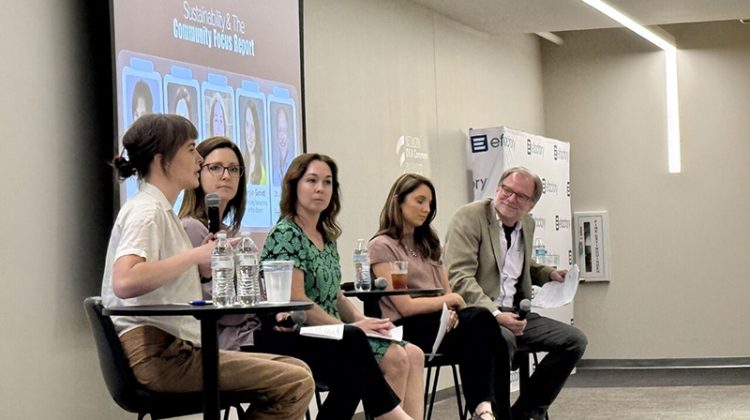
On April 27, Nash moderated a panel called “Sustainability and the Community Focus Report” at the Research that Shows Up” event hosted by the efactory. It highlighted how research at Missouri State can support organizations making community decisions.
“Our job is to organize the evidence and make sure the findings are accessible, so people can act on what they already know,” she said.
“We’re a public institution with a mission to invest our resources into the community for positive changes. OPHI will continue building analytical capacity, deepening relationships with community collaboratives and making the data as accessible as possible.”