Missouri State University

Skip to content Skip to navigation
a b c d e f g h i j k l m n o p q r s t u v w x y z

Health and Human Services News

  • McQueary College of Health and Human Services

Springfield’s data becomes a compass

May 11, 2026 by Sewly Khatun

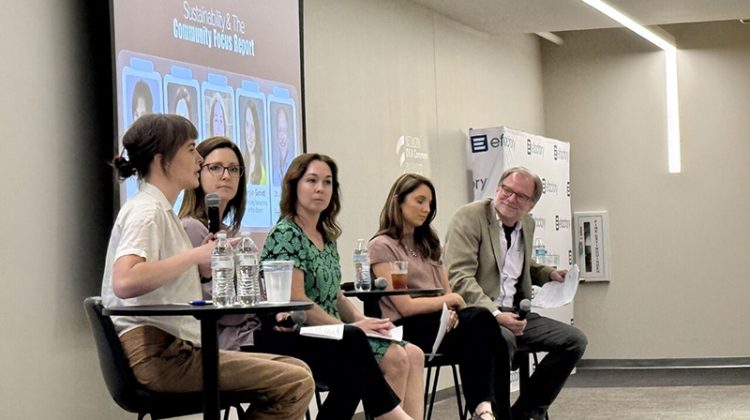
Traci Nash, OPHI community focus facilitator (far left), moderates a panel called “Sustainability and the Community Focus Report" on April 27.

For more than 20 years, the Community Focus Report has given Springfield a reliable glance at tracking housing, education, public safety, arts and more.

Last spring, Missouri State University’s Ozarks Public Health Institute (OPHI) began taking that effort a step further. The report is moving from a biannual publication into a continuous, community-driven program people can use year-round.

The next report is expected to be released in fall 2026. Upcoming editions will include several new features to help communities understand progress, compare data and identify issues that affect multiple areas.

“Community Focus is designed to be the bridge between what the data shows and what the community decides to do about it,” said Traci Nash, OPHI community focus facilitator.

More than a report

This cycle covers 13 topic areas and adds food and faith for the first time. The report remains community-authored, meaning practitioners, local experts and people with lived experience help inform what gets measured and what the findings mean.

According to Nash, the report underwent some structural changes this cycle. These include measurable objectives, which make it easier to track real progress, not just problems. The report also includes a peer community framework to compare Springfield to similarly sized cities in meaningful ways.

“The most important change is the shift from a publication cycle to a continuous program,” Nash said. “Instead of waiting two years for new findings, community partners can now track live indicators anytime through the Community Focus dashboard.”

Tracking what matters

A grant of more than $500,000 from the Missouri Foundation for Health made this transition possible. The funding helped OPHI build the infrastructure needed for this next phase.

The first phase focused on stabilizing data systems, creating dashboards and building a strong analytical foundation. That work is now largely complete.

Now, the work is moving deeper into community engagement.  The second phase focuses on analysis, interpretation and stronger collaboration with partners who use the data in real time.

Nash spends most of her time in community meetings, where she gets “a bird’s-eye view of data in action.”

Nash notes the funding allowed OPHI to bring in dedicated research expertise. In March, John Schupbach joined the team as community indicators research analyst.

“Having that analytical partnership is already changing what is possible,” Nash said.  “Students are also a meaningful part of this work too. Graduate assistants have supported data infrastructure, student engagement tracking and research on complete neighborhoods.”

Turning evidence into action

She added, “Community Focus data is already making a difference across the Springfield region. The report appears in grant applications, strategic plans and board conversations, helping organizations align priorities around a shared source of evidence.”

When organizations point to the same trusted source of regional data, it becomes easier to align priorities and make a stronger case for resources.

On April 27, Nash moderated a panel called “Sustainability and the Community Focus Report” at the Research that Shows Up” event hosted by the efactory. It highlighted how research at Missouri State can support organizations making community decisions.

“Our job is to organize the evidence and make sure the findings are accessible, so people can act on what they already know,” she said.

“We’re a public institution with a mission to invest our resources into the community for positive changes. OPHI will continue building analytical capacity, deepening relationships with community collaboratives and making the data as accessible as possible.”

Explore the Ozarks Public Health Institute

Filed Under: MCHHS News Tagged With: Ozarks Public Health Institute, staff, Traci Nash

Highlighting impact and achievement

April 24, 2026 by Sewly Khatun

MCHHS Campus Photo

Excellence shows up every day across the McQueary College of Health and Human Services (MCHHS).  

It is in the classroom, in research labs and in the way faculty and staff support students and each other. 

On April 23, the college gathered at the Old Glass Place for its 3rd Annual Awards Banquet to recognize contributions and celebrate excellence. The evening brought together faculty, staff and partners to recognize achievements across teaching, research, service and collaboration. Each award reflected the shared commitment to student success and meaningful community impact. 

“I enjoy the tradition we’ve built with the Awards Banquet because it gives us a chance to pause and celebrate our faculty and staff,” said Dr. Letitia White Minnis, MCHHS associate dean.  

“In the fast-paced world we live in, we don’t always take time to do that. Their work reflects our shared commitment to Missouri State’s public affairs mission and helps prepare our students to make a real difference in the communities they serve.” 

List of awards  

 Office Orchestrator Award  

This award recognizes a staff member who goes above and beyond to create a welcoming, supportive college environment for colleagues and students. 

  • Donna Murphy, coordinator, School of Health Care Professions 

Community Impact Award 

This award recognizes a faculty or staff member for impactful community engagement that reflects Missouri State University’s public affairs mission.   

  • Dr. Sapna Chakraborty, associate professor and program director, School of Health Care Professions 

Outstanding Service Award 

This award honors faculty or staff for exceptional service that goes beyond expectations and positively impacts the workplace.   

  • Dr. Ashley Houston, associate professor, School of Mental Health and Behavioral Sciences 

Teamwork Trailblazers Award 

This award is presented to a group that demonstrates exceptional collaboration, teamwork, idea-sharing and commitment to a common goal.   

  • Collaborative Care Clinic  

Outstanding Academic Advisor 

This award honors a staff member who demonstrates excellence in advising and provides strong support to students as they work toward achieving their academic and professional goals. 

  • Emma Watkins, academic advisor, MCHHS Student Success and Advisement Center 

Outstanding Faculty Advisor 

This award honors a faculty member who demonstrates excellence in advising and supports students throughout their university experience. 

  • Kirsten Hatz, senior instructor, School of Health Sciences

Bearwise Educator Excellence Award 

This award recognizes a faculty member for innovative, inclusive teaching and outstanding mentorship that inspires student engagement and learning.   

  • Alisha Tuttle, clinical assistant professor, School of Nursing 

Bear-illiant Researcher Award 

This award recognizes faculty members who actively involve students in research activities through strong mentorship and meaningful research opportunities. Recipients help foster a vibrant research community that values students’ active role in the pursuit of knowledge.

  • Dr. Ryan Gordon, assistant professor, School of Health Sciences

Dean’s Awards

From left Dr. Mark Smith, Greg Rainwater and Dr. Letitia White Minnis
  • Dean’s Recognition for Service: Dr. Dalen Duitsman, emeritus faculty, Ozarks Public Health Institute 
  • Outstanding Student Engagement: Dr. W. David Carr, professor, School of Health Care Professions  
  • Outstanding Support to MCHHS: Greg Rainwater, senior academic financial officer, office of the provost 
  • Outstanding Support to MCHHS: ATLAS Development Team, computer services (accepted by Matthew Taylor, Ashley Pearce and Melissa Warren)  
  • Outstanding Community Partnership: Hood-Rich Architectural Firm 

Retirements  

MCHHS also honored this year’s retirees for their devotion and years of service: 

  • Dr. Patricia Cahoj, assistant professor, School of Health Care Professions 
  • Dr. Steven Capps, director of Learning Diagnostic Clinic  
  • Dr. Debbie Horine, clinical assistant professor, School of Nursing 
  • Dr. Thomas Kane, professor, School of Mental Health and Behavioral Sciences 
  • Dr. Sean Newton, faculty emeritus  
  • Bradley Powers, assistant professor, School of Mental Health and Behavioral Sciences 
  • Jacquelene Patterson  
  • Marie Sellars, School of Health Care Professions 
  • Dr. Kip Thompson, associate professor, School of Health Sciences 
  • Dr. Scott Wallentine, associate professor, School of Health Care Professions 

Explore MCHHS

Filed Under: MCHHS Events, MCHHS News, School of Nursing Tagged With: Collaborative Care Clinic, faculty, Letitia White-Minnis, MCHHS Student Success and Advisement Center, Ozarks Public Health Institute, School of Health Care Professions, School of Health Sciences, School of Mental Health and Behavioral Sciences

Ozarks Public Health Institute marks 25 years of impact

February 17, 2026 by Sewly Khatun

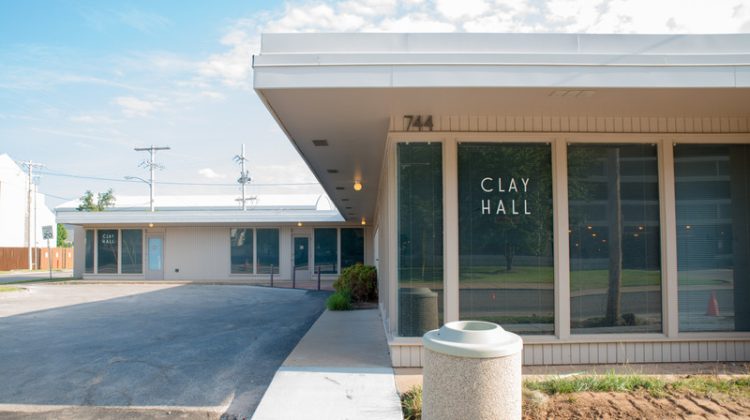
OPHI is housed in Clay Hall at Missouri State University.

Public health is not just a service in Missouri. It is a shared commitment among residents, health care providers, community partners and educational institutions, working together to improve health outcomes across the state. 

The Ozarks Public Health Institute (OPHI) at Missouri State University brings university expertise into communities. It focuses on practical solutions that address real public health needs beyond policy discussions. 

Created to address public health needs 

Over two decades ago, President John Keiser of what was then Southwest Missouri State University formed a committee with representatives from every college to establish an institute focused on health prevention funding.  

As discussions progressed, the work aligned under public health, with a focus on preventing disease, prolonging life and promoting health. For this reason, the committee named the institute OPHI to address pressing public health challenges in Missouri. 

On Feb. 16, 2001, the university’s Board of Governors officially approved OPHI and appointed Dr. Dalen Duitsman as its director.  

Since then, OPHI has followed a grassroots approach, bringing together local government and academic partners to support better health outcomes across Missouri communities. 

“For 25 years, the OPHI has shown what’s possible when a university commits to partnering with communities, said Dr. Mark Smith, dean of McQueary College of Health and Human Services. “Under Dr. Duitsman’s steady and visionary leadership, OPHI has built partnerships with local agencies, advanced prevention efforts and prepared the next generation of professionals.” 

A statewide track record 

OPHI has a strong history of supporting Missouri’s public health system through local, regional and statewide projects. 

For example, OPHI managed a multi-year Missouri Department of Health and Senior Services (DHSS) project that supported nearly 60 local agencies and partners working to reduce health disparities in their communities. 

OPHI’s tobacco prevention work is another long-term effort.  It helped advance smoke-free laws in Nixa and Springfield. It also supported Missouri State’s move to become a smoke-free campus in 2012. 

The institute has also played a key role in emergency preparedness. It served as a primary evaluator during Missouri’s statewide full-scale emergency response exercise, contributing to exercise design, implementation and after-action reporting. 

As it marks 25 years of service, OPHI continues to expand its work. Current efforts include strengthening resources tied to Missouri’s Foundational Public Health Services Model. OPHI is also building a statewide database and mapping tool for sexual violence prevention and response, while partnering with DHSS to improve communication with local public health agencies. 

 In addition, the institute is supporting rural health departments as they pursue accreditation through quality improvement, strategic planning, performance management and community health assessment. 

Student engagement and the next chapter 

OPHI carries out its mission through community partnerships, applied research and workforce development. A key part of that work is student engagement. Faculty, staff and graduate assistants (GAs) from across the university contribute to OPHI projects. 

Over the years, OPHI has employed many GAs from the public health program. More recently, it has expanded student involvement to include counseling, sustainability, project management, marketing, English and digital film and television production. These students contribute directly to public health projects while gaining practical field experience. 

Looking ahead, OPHI will continue to work in public affairs, rural health, health communication and workforce development to respond to emerging public health needs across Missouri. 

“As we look to the future, OPHI’s foundation of collaboration, innovation and service ensures its impact will continue to shape healthier communities across our state for decades to come,” Smith said.  

Explore OPHI

Filed Under: MCHHS News Tagged With: Counseling, Mark Smith, Ozarks Public Health Institute, public health

How RStats turns data into direction

August 20, 2025 by Sewly Khatun

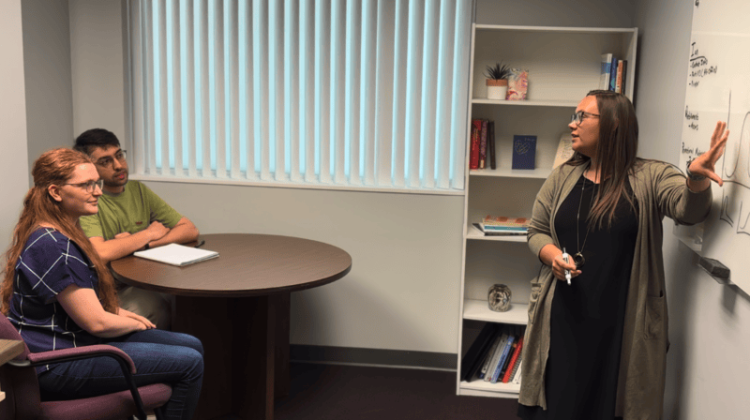
Jessica Willis demonstrates data analysis techniques during an RStats session.

Research can feel overwhelming when you don’t know where to start. 

That’s why the RStats Institute within the McQueary College of Health and Human Services (MCHHS) exists — to make the process easier, less intimidating and even enjoyable. 

Here, students and faculty work with experts who guide them with clear directions, simple tools and steady support. 

Guiding research at every stage 

The RStats Institute is a free resource dedicated to supporting faculty and students in MCHHS.  

Services include choosing the right design, finding the best measures, selecting proper statistical tests, developing surveys, collecting data and analyzing them using software like JASP, SPSS and Qualtrics. 

“We want students and faculty to feel confident at every step,” said RStats Director Jessica Willis. “Whether they’re designing research or interpreting complex results, we’re here to make the process easier.” 

Most support goes to graduate students working on capstone projects, theses or community-based research. Faculty can also receive help, usually up to three hours per project. 

A history of growth 

The RStats story began in the early 2000s, when Dr. Chantal Levesque, professor in psychology from 2002-2012, and Dr. Wayne Mitchell, faculty emeritus, started helping colleagues with statistical needs.  

They joined forces with the Ozarks Public Health Institute and Dr. Frederick Maxwell, faculty emeritus, to propose a dedicated consulting center. In 2006-07, RStats officially launched within MCHHS.  

During COVID-19, RStats expanded through online consultations, connecting students and faculty from more than 15 programs. Over time, it has grown from basic support to a full-service research hub. 

From student to RStats leader

Jessica Willis
Jessica Willis

A proud Missouri State alumna, Willis earned her bachelor’s and master’s degrees in psychology in 2015 and 2017, respectively. She also holds a graduate certificate in statistics and research design.  

Before joining RStats, she worked as a health care data analyst for the Missouri Primary Care Association. 

She joined RStats in September 2018 as coordinator and was promoted to director on July 1, 2024. Since then, her focus has shifted more toward overseeing RStats while still teaching ANE 700 each fall. 

In recent years, Dr. Caitlin Masterson, assistant professor in the School of Health Care Professions joined the team to teach research and statistics courses while also providing RStats consultation support. 

Together with two graduate assistants, they form the core team supporting RStats clients. 

The impact in action 

RStats doesn’t just ‘do the stats.’ It teaches students how to use them. They learn to run analyses, interpret their findings and share results with confidence. 

“Toward the end of the project, we often see that ‘light bulb’ moment where everything clicks,” Willis said. “They make the connection between theory and practice, and their learning goes beyond just the classroom.” 

Willis shared an example of a project led by Dr. Ashlea Cardin, professor and Master of Occupational Therapy program director.  

She and a few of her OT students studied 150 infants in the Neonatal Intensive Care Unit at Mercy Hospital to understand factors affecting hospital stay and oral feeding progress.  

RStats handled the data analysis, explained the results and assisted in the publication process. The study was published in the Journal of Neonatal Nursing in 2023, a big accomplishment for the team involved. 

“What made this project so impactful was how it showed students the real-world relevance of research and statistics,” Willis said. 

Explore RStats Institute

Filed Under: Staff spotlights Tagged With: Jessica Willis, Ozarks Public Health Institute, Psychology, research, RStats Institute, School of Health Care Professions, staff

Categories

Archives

Meta

  • Log in
  • Entries feed
  • Comments feed
  • WordPress.org
  • Accessibility
  • Disclaimer
  • Disclosures
  • Equal Opportunity Employer and Institution
  • © 2026 Board of Governors, Missouri State University
  • Contact Information

Loading Comments...