
Missouri State University

Skip to content Skip to navigation
a b c d e f g h i j k l m n o p q r s t u v w x y z

Art History Virtual Exhibition

Beaded Belt: Researched and Conserved by Alexis Henson

October, 2025 by Emalie Neise

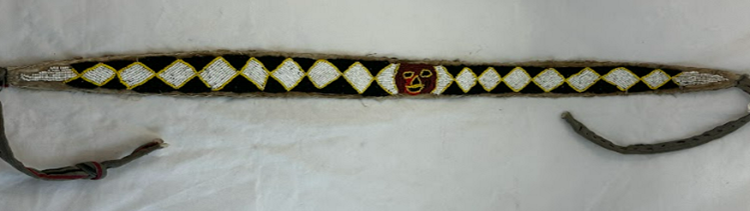
Elaborate beadwork first appeared as a Yoruba artform in the late 19th century, when European glass seed beads were imported into Nigeria. Soon afterwards, labor-intensive bead-covered items such as bags, footwear, knife sheaths, sashes, and belts became symbols of wealth, power, and well-being for the Yoruba ruling class. As high-ranking Yoruba bestowed beadwork items on the … [Read more...] about Beaded Belt: Researched and Conserved by Alexis Henson
Filed Under: 2024 Fall, ART/MST488: Basic Conservation of Art and Artifacts Tagged With: 20th century, 20th century art, africa, african art, beadwork, conservation, yoruba, yoruba culture

African Status Symbols: Researched by Emily McClain and Zoë Pixler

August, 2025 by Ashley McLaughlin

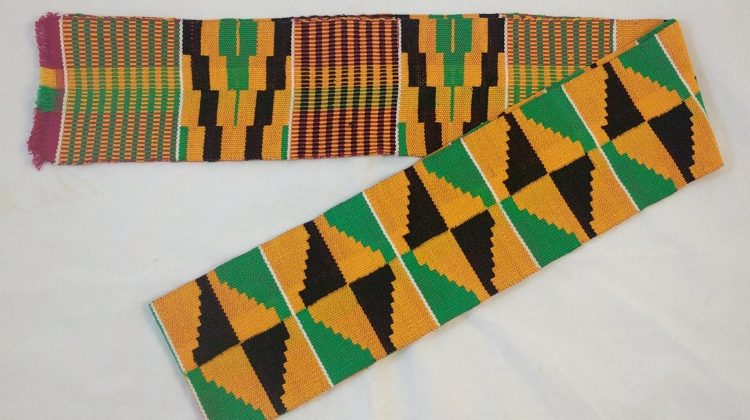
As in most cultures, in African cultures, symbols of status are used to make distinctions among classes or other groups of people.  The owners of status objects are recognized as powerful, wealthy, or high-ranking.  In Africa, high-status individuals include people with hereditary power such as royalty; spiritual leaders; high-ranking military or civic leaders; prosperous … [Read more...] about African Status Symbols: Researched by Emily McClain and Zoë Pixler
Filed Under: 2018 Spring, ART 386: Art of Africa Tagged With: africa, african art, aksum-style, asante culture, ceremonial ladle, ceremonial scoop, dan culture, ethiopian culture, fly whisk, gabata board, hair comb, head rest, horsetail, irukere, karamojong culture, kente cloth, kudu figures, mancala board, oyokoman, senufo culture, senufo mask, wake mia, wunkirmian, yoruba culture

African Beadwork: Researched by Amanda Horned and Cortney Metzger

August, 2025 by Sarah Teel

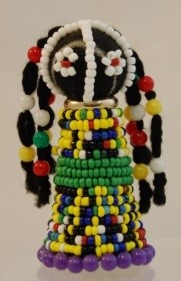
From ancient times through today, African cultures have made beads of many different materials, including shells, seeds, bone, ivory, horn, clay, gourd, wood, rock crystal, iron, copper, brass, and gold.  The widespread trade of colorful European glass seed beads, however, enabled African artisans to greatly expand traditional beadwork forms and designs, and they elevated this … [Read more...] about African Beadwork: Researched by Amanda Horned and Cortney Metzger

Filed Under: 2016 Spring, ART 386: Art of Africa Tagged With: african art, ankle bracelet, beaded belt, cowrie shell collar and choker, maasai culture, ndebele culture, skullcap, yoruba culture, zulu culture

Categories

  • 2014 Fall, ART/MST 488: Basic Conservation of Art and Artifacts
  • 2015 Fall, ART/MST 488: Basic Conservation of Art and Artifacts
  • 2016 Fall, ART 385: Art of the Americas
  • 2016 Spring, ART 386: Art of Africa
  • 2017 Fall, ART/MST 488: Basic Conservation of Art and Artifacts
  • 2018 Fall, ART 385: Art of the Americas
  • 2018 Spring, ART 386: Art of Africa
  • 2019 Fall, ART/MST 488: Basic Conservation of Art and Artifacts
  • 2020 Fall, ART 487: Art of the Americas
  • 2020 Spring, ART 386: Art of Africa
  • 2021 Fall, ART/MST 488: Basic Conservation of Art and Artifacts
  • 2022 Fall, ART/MST 488: Basic Conservation of Art and Artifacts
  • 2024 Fall, ART/MST488: Basic Conservation of Art and Artifacts
  • 2025 Spring, ART486: Art of Africa
  • Art History Virtual Exhibit

Tags

19th century 20th century 20th century art africa african art African basketry akua'ba american midwest american midwest ozarks culture asante culture bamana culture basketry baule culture beadwork berber culture bonniebrook CASL Exhibit ceramic ceramics ceremonial masks conservation cowrie shells footstone gravestone Great Plains Cultures headstone kente cloth lakota culture luba culture maasai culture mask metal artifacts Navajo/Diné culture ndebele culture oceania ozarks culture panama peru senufo culture Sioux Culture staffs staffs of power textile tourist trade art zulu culture

Meta

  • Log in
  • Entries feed
  • Comments feed
  • WordPress.org
  • Accessibility
  • Disclaimer
  • Disclosures
  • Equal Opportunity Employer and Institution
  • © 2026 Board of Governors, Missouri State University
  • Contact Information