

This mask depicts Malintzin, also known as Doña Mariña or La Malinche, a historical figure in the Spanish Conquest of Mexico. Malintzin was an Aztec woman who was captured as a child and enslaved by the Maya, who then sold her to Hernán Cortés. With the help of Géronimo de Aguilar, a Spaniard who had learned the Maya language after being shipwrecked, Malintzin served as a … [Read more...] about Masks and Papier-Mâché Angel: Researched and Conserved by Melia Richardson

The Kamëntsá are an indigenous culture that still inhabits its ancestral territory, which is located within the Putumayo region of Colombia. This region was colonized by the Spanish in the 16th century, and the Spanish forced the Kamëntsá to convert to Christianity and suppressed their belief systems, traditional language, and agricultural practices. Nevertheless, the Kamëntsá … [Read more...] about Traditional Dolls: Researched and Conserved by Abby Wade
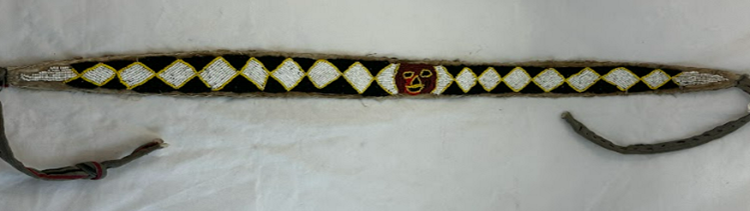
Elaborate beadwork first appeared as a Yoruba artform in the late 19th century, when European glass seed beads were imported into Nigeria. Soon afterwards, labor-intensive bead-covered items such as bags, footwear, knife sheaths, sashes, and belts became symbols of wealth, power, and well-being for the Yoruba ruling class. As high-ranking Yoruba bestowed beadwork items on the … [Read more...] about Beaded Belt: Researched and Conserved by Alexis Henson
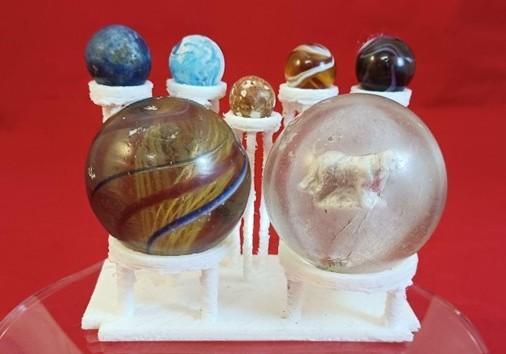
Marbles are among the world’s oldest toys, with the earliest-known examples made of highly polished stone appearing in Mohenjo-Daro, Pakistan by 2,500 BCE. Marbles of fired and unfired clay also appear in ancient times, and throughout history, clay has been the most common material used to make marbles – earning clay marbles the enduring nickname of “commies.” The two clay … [Read more...] about American Toys: Researched and Conserved by Zane Wigton