Missouri State University

Skip to content Skip to navigation
a b c d e f g h i j k l m n o p q r s t u v w x y z

Health and Human Services News

  • McQueary College of Health and Human Services

Leaving a legacy of athletic training and service

December 8, 2025 by Sewly Khatun

A Lady Bears basketball game in Great Southern Bank Arena.

When Gary Ward joined what was then Southwest Missouri State University in 1978, he was the first athletic trainer for women’s athletics.  

While he retired in 2010, he continued teaching part time until 2019. He remains active on game days, running the clock for Missouri State football and basketball. In addition, he also serves on the McQueary College of Health and Human Services  Community Advisory Board. 

His dedication to Missouri State athletics has earned him recognition beyond campus. 

On Oct. 7, Ward was honored at the 39th annual Springfield Area Sports Stars induction ceremony of the Springfield Area Sports Hall of Fame.  

“I’ve been honored in other halls of fame, but being recognized here in Springfield means a lot. This is where I spent my career, so this one feels special,” Ward said.

Gary Ward
Gary Ward

Finding his calling in athletics

Ward’s journey into the world of athletics started far from Missouri. Born in Laramie, Wyoming, he grew up playing multiple sports.  

His curiosity about sports medicine deepened when he began noticing who helped injured players on the field. 

“I remember watching college football games on TV and seeing a player get hurt,” Ward said. “Someone would run in from the sideline and I wondered, ‘Who is that person?’ That was the athletic trainer. And that’s how I got interested in athletic training.” 

 He earned his first bachelor’s degree in physical education in 1974 from Montana State University and completed a master’s in athletic training in 1975 at the University of Arizona. Later, he completed a second bachelor’s degree in physical therapy from Florida International University in spring 1978 and joined Missouri State that fall. 

Building programs from the ground up 

When Ward came to the university, he had a dual appointment as an athletic trainer and instructor in physical education. Soon after, he helped launch the undergraduate athletic training program in 1979.   

By 1981, he also played a key role in establishing a campus-based sports medicine clinic that served the community, especially high school athletes who lacked access to athletic trainers. The clinic later partnered with St. John’s Hospital (now Mercy), expanding both services and hands-on training opportunities for students. 

Ward is proud of the national recognition that Missouri State’s athletic training program earned over the years.  

“For many years, we had a 100% pass rate on the national exam,” he said. “We were also one of the earliest accredited programs in the country.” 

His contributions extended beyond athletic training. As the only physical therapist on campus at the time, Ward served on committees that helped establish both the physical therapy and occupational therapy programs. 

“I got to do a lot of different things. Hopefully, I was helping programs grow and giving something back to the university,” he said. 

Batman, Robin and the scorer’s table 

Ward is well known for his long-standing partnership with colleague Jimmy Wright at the scorer’s table. The duo is often described as “Batman and Robin.” 

Gary Ward (right) and Jimmy Wright (left).

Together, they have worked on an estimated 6,000 sporting events together on the official table crew for Missouri State, Greenwood Laboratory School, the Blue and Gold Tournament and the Bass Pro Tournament of Champions. Ward handles the main clock duties in various sports. 

The partnership began informally in the early 1990s at a basketball game at Greenwood Lab. As Ward was sitting in the stands watching his son play junior high basketball, he needed a break from the other dads. So, he went down and sat with Wright, who was working the clock at the game. 

“After a few games, I started keeping the official scorebook for Greenwood at that time while Jimmy continued to run the clock,” Ward said. “Those roles are what we still do at Greenwood.” 

At Missouri State football games, Wright runs the play clock and Ward runs the game clock. In basketball games, Wright handles the shot clock and has been the only person to have ever done that job since the shot clock was added in 1985, while Ward manages the game clock. 

The Springfield Area Sports Hall of Fame honored them together at the induction ceremony — celebrating their decades of teamwork, consistency and behind-the-scenes dedication to the local sports community. 

“It was nice to be recognized together. It wouldn’t have been right to honor one without the other,” Ward said. 

Reflections from his career 

According to him, he hopes people remember that he treated others with respect and dignity.  

“You never know what someone else is going through, so give them the benefit of the doubt and always look for the best in people.” 

His years of dedication reinforced his belief that sports could help students develop leadership, teamwork and resilience — skills that matter far beyond the classroom or the training room.  

Having worked in teaching, clinical practice, program development and game-day service for over four decades, Ward describes his career in one word: “varied.” Through his contributions, he has left a lasting influence felt across campus and throughout the community. 

Explore athletic training programs

Filed Under: Faculty Spotlight, MCHHS News, Occupational Therapy Tagged With: faculty, Gary Ward, Public health and sports medicine, School of Health Care Professions

Honored for outstanding teaching

November 21, 2025 by Ella Reuter

Natalie Allen headshot.

Registered dietitian. Clinical associate professor of nutrition and dietetics. Team dietitian for all Missouri State University athletes.

Natalie Allen juggles roles that keep her woven into campus life. Her dedication has earned her the 2025 Governor’s Award for Excellence in Teaching.

The award is presented to an outstanding faculty member from each participating higher education institution in Missouri annually. It recognizes effective teaching and advising, dedicated service to the university community and a commitment to excellence in supporting student success.

Allen, who received her BS in Dietetics from Missouri State in 1995, was surprised and grateful to receive the award.

“Missouri State has played such a meaningful role in my life – my parents studied here, I met my husband here, our son graduated here and our daughter is now a student,” she said. “This university is truly home for us, and this recognition makes me even more proud to be part of this community.”

In the spring, she will travel to Jefferson City. Gov. Mike Kehoe and the Missouri Coordinating Board for Higher Education members will honor her and fellow recipients for their achievements.

A trusted voice for nutrition

Natalie Allen teaches students in a classroom.
Natalie Allen teaches students.

Allen has a background in sports nutrition and experience in both clinical and community dietetics. Her favorite part about being a dietitian is the variety the work brings.

“Dietitians work with everyone from babies to older adults, in settings from hospitals and clinics to sports and food service. There’s never a dull moment and that variety has kept me passionate about the field,” she said.

“I often say, “Everyone eats, so everyone needs a dietitian. I love being part of a profession that touches everyone in some way.”

While all her experiences have shaped her into the dietitian she is today, Missouri State is where she is happy to be now.

“I’m surrounded by amazing faculty here at Missouri State. And my students are truly the best part of my day,” she said.

Allen’s teaching philosophy is simple: share practical information, as well as empathy and kindness with her students.

“My students are smart, scientifically trained and highly capable. But how they communicate, treat patients and show up as colleagues matters just as much,” she said. “I want them to leave my classes as kind humans first and excellent dietitians second.”

Learn more about nutrition and dietetics

Filed Under: Faculty Spotlight Tagged With: faculty, Natalie Allen, Nutrition and Dietetics, School of Health Sciences

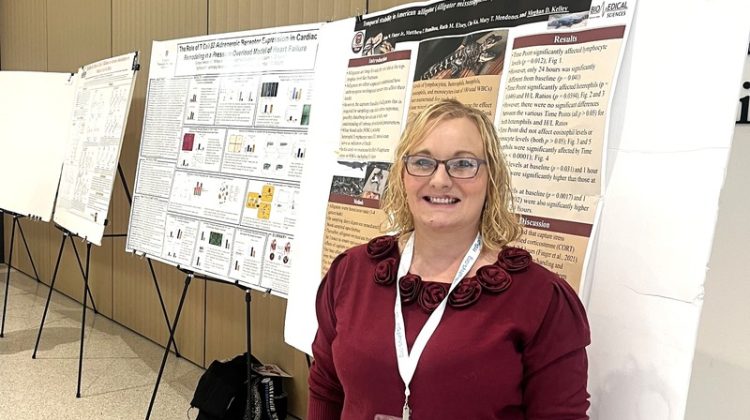
Faculty spotlight: Dr. Meghan Kelley

November 13, 2025 by Sewly Khatun

Dr. Meghan Kelley

Our featured McQueary College of Health and Human Services (MCHHS) faculty member is Dr. Meghan Kelley. She is an assistant professor in the School of Health Sciences.  

She combines animal and sensory physiology research with hands-on teaching to help students think like scientists and future health professionals.  

Let’s get to know her better.  

Where are you originally from? 

I’m from Gibraltar, Michigan, a small island community south of Detroit along the Detroit River. 

What brought you to Missouri State University? 

After 10 years living in Alabama, coming to Missouri State felt a bit like coming home to the Midwest. I wanted to work at Missouri State because I liked and appreciated the university’s vision and the strength of its biomedical sciences program. During my interview, I saw a very collaborative environment where people could disagree on logistics but still work toward a shared goal. That mattered to me.  

Where did you work prior to joining Missouri State? 

I was an academic-teaching postdoctoral instructor in human anatomy and physiology (A&P) at the University of Alabama. In this role, I taught A&P and managed up to 32 sections of the lab. Simultaneously, I also continued my physiology-driven animal research.   

Can you share your academic journey? 

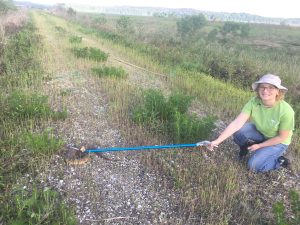
Kelley handles a snake during field research.

I completed both of my bachelor’s degrees through Lyman Briggs College, the science honors college at Michigan State University: a BS in Zoology in 2010 and a BS in History, Philosophy and Sociology of Science in 2011, along with a specialization in Bioethics and Humanities in Society.  

In 2014, I completed my MS in Biology from John Carroll University. Later, I pursued a PhD in Biology from Auburn University in 2021, where I studied sensory physiology and social behavior in gopher tortoises.  

What inspired you to pursue biology/physiology and higher education? 

I’ve always known that I was interested in pursuing animal-based research. I once planned to be a veterinarian because I loved caring for pets. Working as a vet assistant, I saw how business-focused that path could be; whereas research and higher education allow me to stay immersed in science, continually asking questions, learning and teaching something new to others. I’ve never regretted this decision since finding this path.  

Are there current trends in your field that you find exciting?  

In my field of sensory physiology, I’m most interested in neurological pathways that shut down other physiological functions. It’s surprising how simple stressors can lead to long-lasting health effects. These scientific pathways are very exciting opportunities for research in the medical field to explore diseases like Alzheimer’s and developing proactive measures that help people take better care of their health.   

What do you enjoy most about your role? 

I enjoy working with students and making a positive impact on their lives. I find fulfillment in student advising, teaching and mentoring them during both lectures and lab classes. I help them build confidence in their research work and write recommendations for them. Receiving a thank-you email from a student stating, “I’ve been accepted into my chosen program,” is an incredibly rewarding feeling for me.  

What’s your teaching philosophy and how do you engage students in your class and research?     

My teaching philosophy begins with a teacher-centered approach because I believe science requires shared vocabulary and step-by-step guidance. As we move forward, I transition to a student-centered learning model. I encourage students to take the lead in class discussions, ask questions that inspire case studies and actively take notes instead of simply following along with the slides.  

What are you most grateful for this year? 

I was in a serious car accident this August that totaled my vehicle and uncovered health issues I didn’t know I had. This entire experience brought me face-to-face with my mortality, and I felt it was a very close call for several reasons. I’m abundantly grateful to my husband, our son, our family and friends, as well as my colleagues and students.     

What do you enjoy outside of work? 

I love being outside with my husband and son. We enjoy hiking and nature walking, looking for animals, insects and plants to identify. My son and I enjoy painting together and working on seasonal art projects. Reading is also one of my favorite hobbies and I usually carry one or two books with me everywhere I go.  

What might surprise people about you?  

Fun facts about me — I was born on my oldest brother’s 24th birthday. I’ve been practicing martial arts since I was 7 years old and earned my black belt by the age of 12. My husband affectionately calls me a “hard head,” and I’ll admit I can be quite stubborn, like a bull at heart.  

Explore programs in the School of Health Sciences 

Filed Under: Faculty Spotlight, MCHHS News Tagged With: Biomedical Sciences, faculty, Meghan Kelley, School of Health Sciences, Spotlights

Faculty spotlight: Drs. Sara Wilson and Kristen Thompson

October 27, 2025 by Sewly Khatun

Missouri State University Campus Photo

The McQueary College of Health and Human Services (MCHHS) is proud to feature Dr. Sara Wilson and Dr. Kristen Thompson, assistant professors in the School of Mental Health and Behavioral Sciences. 

Together, they are shaping future clinical psychologists through Missouri State University’s Doctor of Psychology (PsyD) program, focusing on trauma-informed care and resilience.  

Let’s get to know them better. 

Dr. Sara Wilson
Dr. Sara Wilson

Where are you originally from? 

Wilson: I’m from Springfield, Missouri.
Thompson: I grew up in St. Charles, Missouri. 

What brought you to Missouri State and how long have you been here? 

Wilson: I’ve worked in clinical psychology for nearly 15 years and have been drawn to teaching, supervision and clinical training. I joined Missouri State in fall 2024 after seeing the PsyD program as the perfect way to combine my passions for practice, education and mentorship.

Thompson: I’m a proud Missouri State alum and was excited to return as a faculty member. After working for years as a clinician and administrator in community mental health, I wanted a change. Teaching and training were always my favorite parts of my roles. When I saw that the PsyD program needed faculty to help develop the program, I knew it was the perfect fit. 

Can you share your academic journey? 

Wilson: I earned a bachelor’s degree in psychology from Missouri State in 2007. I completed my master’s degree in 2010 and my Doctor of Clinical Psychology degree in 2012 at Forest Institute. 

Thompson: I earned my bachelor’s degree in psychology with a minor in criminology from Missouri State in 2009 and my PhD in Clinical Psychology from Northern Illinois University in 2016. 

What inspired you to pursue a career in clinical psychology? 

Wilson: I’ve always been fascinated by how people think, feel and make meaning of their experiences. Clinical psychology drew me in because it combines science, compassion and the opportunity to help others heal and grow through adversity. 

Thompson: My path to clinical psychology evolved during my undergraduate years as I explored several careers. I eventually figured out that clinical psychology offered the perfect combination for me: the intellectual challenge of understanding why people think, feel and behave as they do, paired with the opportunity to apply that knowledge in working directly with others. 

Where did you work prior to Missouri State? 

Wilson: I worked as system director of clinical education at Burrell Behavioral Health, leading trauma-informed care initiatives, clinical training and consultation across the system. 

Thompson: I worked at Burrell Behavioral Health for seven years as director of pediatric integration and co-founder of the Youth Focus Clinic. 

What excites you most about being part of the PsyD program at Missouri State?

Dr. Kristen Thompson

Wilson: It’s exciting to be part of building a strong, high-quality program alongside such dedicated psychologists. Most of all, I’m inspired by our students — the chance to mentor, support and learn with them is what truly brought me to Missouri State. 

Thompson: Working with students is easily the best part. My professors deeply influenced who I am and how I’ve moved through my career. I’m grateful to have the opportunity to pass on that mentorship by helping students grow personally and professionally. 

How do you engage doctoral students in the classroom? 

Wilson: I want learning to feel meaningful and connected for my students. I strive to create a supportive space where students can show up authentically, take risks and see how what they learn applies to real clinical work. 

Thompson: I don’t think it’s possible for graduate students to learn every theory or technique, so I focus on teaching them how to evaluate research on their own and develop skills in new areas. We analyze research studies, discuss central themes and mechanisms of action and make connections across theories and treatments. We do role plays and give feedback, not to master a specific skill, but rather to master the skill of mastering skills. I want them leaving my classes thinking, ‘I may not know everything about this approach, but I know how to learn it, evaluate it critically and figure out if it’s right for this situation.’ 

What research areas or clinical interests do you focus on? 

Wilson: My clinical and research focus is trauma and trauma-informed care. With Dr. Thompson, I co-lead the Resilience and Connection Collective, guiding projects with real-world impact, from ROTC training to ACEs (Adverse Childhood Experiences) research and community initiatives. 

Thompson: Like Dr. Wilson, I focus on early adversity and trauma-informed strategies. One project that I’m especially excited about is our development of a trauma-informed leadership training with Lt. Col. Kyle Reeves and the ROTC program. 

Outside of work, what’s your favorite way to spend your time? 

Wilson: I love spending time with my family and pets, being outdoors, listening to music and reading. Those moments help me recharge and stay grounded. 

Thompson: Traveling with my family and exploring national parks. We’ve visited 11 so far and plan to reach number 12 soon! 

What might surprise people about you? 

Wilson: Despite striving to be warm and reflective in my work, I can be fiercely competitive, especially during board games or trivia nights. 

Thompson: I’m a mom to four and a pediatric psychologist, yet I’m really not a fan of cartoons. I’m not a Disney lover and I especially don’t like adult cartoons. Comedies, yes. Kids books, absolutely. I can’t really put my finger on it, but I’ve always felt this way.

Learn more about Doctor of Psychology

Filed Under: Faculty Spotlight, MCHHS News Tagged With: faculty, Kristen Thompson, Psychology, PsyD, Sara Wilson, School of Mental Health and Behavioral Sciences

« Previous Page
Next Page »

Categories

Archives

Meta

  • Log in
  • Entries feed
  • Comments feed
  • WordPress.org
  • Accessibility
  • Disclaimer
  • Disclosures
  • Equal Opportunity Employer and Institution
  • © 2026 Board of Governors, Missouri State University
  • Contact Information

Loading Comments...