Missouri State University

Skip to content Skip to navigation
a b c d e f g h i j k l m n o p q r s t u v w x y z

Health and Human Services News

  • McQueary College of Health and Human Services

Faculty research on display

April 28, 2025 by Sewly Khatun

The Fountain in front of Meyer Library.

Research took the spotlight at Missouri State University on April 11. 

The Faculty Center for Teaching and Learning hosted its first-ever Spring Scholarship Summit in Meyer Library. Faculty members from various disciplines showcased their latest research and scholarly projects through interactive poster presentations.  

Over 20 presenters participated with 14 posters displayed. Attendees got to meet the presenters, explore new research ideas and engage in meaningful conversations.  

Ten faculty members from McQueary College of Health and Human Services (MCHHS) took part in the Spring Scholarship Summit. Five led poster presentations while the rest contributed as interdisciplinary co-authors. 

The summit underscored Missouri State’s continued commitment to teaching excellence and interdisciplinary collaboration.

Promoting trauma-informed care 

From the School of Nursing, Dr. Diane Smith, assistant professor, collaborated with Dr. Cindi Aurentz, assistant professor, and Dr. Melissa Penkalski, associate professor and graduate program director.

From left to right: Drs. Cindi Aurentz, Melissa Penkalski and Diane Smith.

Together, they presented “Trauma-Informed Education for Nursing Faculty: Caring for the Next Generation of Nurses.”    

The team began the project in 2021, aiming to help faculty use trauma-informed care training to better support students both in classrooms and clinical settings.

“We welcome every opportunity to share the principles of trauma-informed care, as this is a topic we all care deeply about,” Smith said. “We hope these practices are integrated.” 

Fostering interprofessional collaboration 

From left to right- Natalie Allen, Bonnie Slavych, Wendy Jackson, and Traci Garrison.
From left to right: Natalie Allen, Dr. Bonnie Slavych, Wendy Jackson and Dr. Traci Garrison.

Registered dietitian Natalie Allen is a clinical associate professor of nutrition and dietetics. She presented “Emphasizing Interprofessional Education Through a Virtual Case Study Connecting Healthcare Students” alongside her colleagues as part of ongoing interprofessional collaboration. 

Allen and three other faculty members from multiple disciplines worked together on this project. They included: Dr. Traci Garrison, clinical associate professor in the School of Health Care Professions; Wendy Jackson, clinical assistant professor in the School of Mental Health and Behavioral Sciences; and Dr. Bonnie Slavych, assistant professor in communication sciences and disorders.

Their poster explored how virtual case studies can strengthen interprofessional collaboration in health care education.  

The study brought together students from different majors to build teamwork, communication and decision-making skills in an online setting. It also helped them understand each other’s roles and practice collaborative contribution to patient-centered care in real-world environments. 

“The summit was a great opportunity to promote interprofessional collaboration and show the value of connecting different disciplines,” Allen said. “This project helped all of our students gain the skills and confidence they need before stepping into real-world practice.” 

Focusing on resilience 

Dr. Debbie Horine, assistant professor in the School of Nursing, presented “Introducing Resilience to Pre-Licensure Nursing Students to Recognize and Address Lateral Violence.”

From left to right- Cindi Aurentz, Kristen Thompson, Sara Wilson, and Diane Smith.
From left to right: Drs. Cindi Aurentz, Kristen Thompson, Sara Wilson and Diane Smith.

Her project focused on preparing nursing students to recognize workplace challenges and strengthen emotional resilience early in their careers. 

“While we can’t eliminate lateral violence, we can prepare students to recognize it, build resilience and manage stress,” Horine said. 

Dr. Sara Wilson and Dr. Kristen Thompson, both assistant professors in the School of Mental Health and Behavioral Sciences, co-presented two posters: 

  • “The Impact of Adverse Childhood Experiences in Higher Education” 
  • “Combating Loneliness Through Intergenerational Living Communities” 

The first study examined how early trauma affects college students’ academic performance and mental health. The second study focused more broadly on community well-being, exploring how intergenerational housing can reduce isolation and foster connection. 

Together, the research underscores the importance of trauma-informed practices and community-based solutions that strengthen resilience and belonging. 

“I’m driven to explore how we can support positive outcomes right here on our campus and in our communities,” Wilson said. 

Explore degree options in MCHHS

Filed Under: MCHHS News Tagged With: Bonnie Slavych, Cindi Aurentz, Communication Sciences and Disorders, Debbie Horine, Diane Smith, faculty, Kristen Thompson, Melissa Penkalski, Natalie Allen, Nutrition and Dietetics, research, Sara Wilson, School of Health Care Professions, School of Mental Health and Behavioral Sciences, School of Nursing, Traci Garrison, Wendy Jackson

Optimizing the health of female athletes

March 24, 2025 by Sewly Khatun

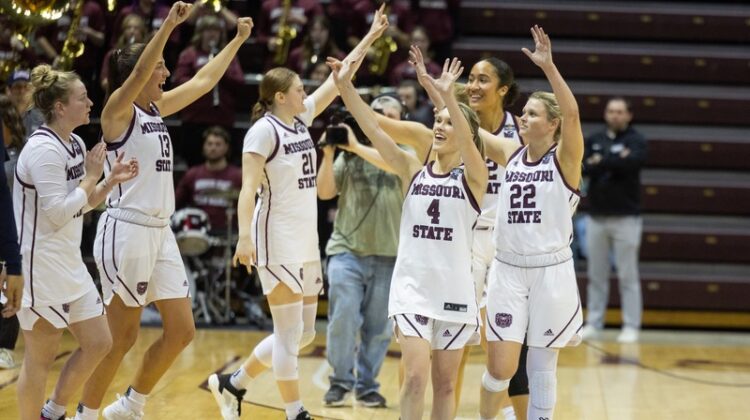
Missouri State University Lady Bears basketball players.

For athletes, staying healthy is crucial to remain competitive.  

Many female athletes, however, face an increased risk of stress fractures due to a combination of physiological, hormonal and nutritional factors. This can lead to missed time from competition. 

To address this issue, an interdisciplinary research team from Missouri State University and North Central College conducted a study assessing the effectiveness of early identification and intervention strategies. By using early screening for energy deficiencies, the goal was to reduce stress fractures and the time lost from sports among collegiate female athletes. 

Missouri State has 15 female teams and 269 female athletes, making this research especially relevant to the university’s athletics program.

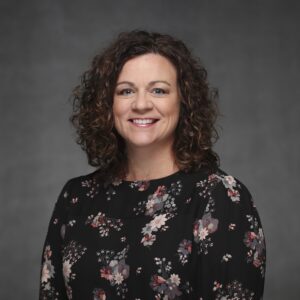
Natalie Allen headshot.
Natalie Allen

“Our beginning is a fun story. Back in 2017, at a Missouri State athletics holiday party, we found ourselves in a conversation that took an unexpected turn. As health care providers, we got to talking — what if we teamed up to support student-athletes in a whole new way? One idea led to another and our research team was born,” said registered dietitian Natalie Allen, clinical associate professor of nutrition and dietetics in the School of Health Sciences.  

“One common concern that emerged from our discussion was stress fractures in female collegiate athletes and the Female Athlete Triad.” 

A condition that affects female athletes, the Female Athlete Triad involves three main issues: low energy availability, menstrual dysfunction and low bone density.

The study began in 2018 but faced delays due to COVID-19. The team persisted and published the research findings in the Internet Journal of Allied Health Sciences and Practice this January. The paper is titled “Strategies for Optimizing Female Athlete Health: A Multidisciplinary Approach to Mitigate Stress Fractures and Minimize Missed Participation in Collegiate Sports.” 

Besides Allen, who also serves as team dietitian for Missouri State athletes, the research team comprised:

  • Dr. Melissa Penkalski, associate professor and graduate program director in the School of Nursing 
  • Shannon Hauschildt, associate professor and program director in the department of physician assistant studies 
  • Dr. Kristin Ann Patel, associate professor and program director of health science at North Central College 

Combining their expertise, the researchers identified health gaps in female athletes and developed evidence-based interventions for improved outcomes. 

Research specifics and findings

Shannon Hauschildt
Shannon Hauschildt

The study involved 234 female athletes across nine Missouri State teams. To identify those who were at risk for low energy availability and related conditions, they underwent pre-season physicals. The physicals included screening using a tool called the Female Athlete Triad Cumulative Risk Assessment (FACTRA). 

Athletes with a FACTRA score greater than one received nutrition education and consultation from the team dietitian. Athletes were also referred to doctors, athletic trainers and psychologists as needed. 

Before implementing the screening, Missouri State recorded 18 stress fractures among female athletes. This resulted in 848 missed participation days. After early detection and intervention, stress fractures fell to one and missed participation days dropped to 50 — a 95% and 94.6% reduction, respectively.  

The athletes also showed marked improvement in their knowledge and understanding of nutrition risks. 

“This research showed how screening and intervention can keep athletes competing instead of recovering,” Hauschildt said. 

Patel added, “Success comes from a strong multidisciplinary team approach, where coaches and health care providers also work together to support athletes.”  

Power of prevention

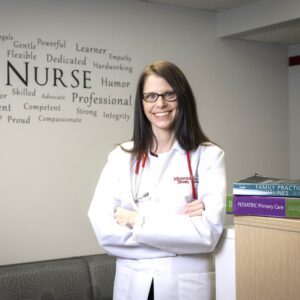
Dr. Melissa Penkalski

One key aspect of the study was the role of nutrition education. At-risk female athletes received targeted dietary guidance, helping them optimize their energy availability and overall health.  

“FACTRA screening is now a standard for pre-participation physicals at Missouri State, setting a model for female athlete health nationwide,” Allen said. 

As a pediatric nurse practitioner, Penkalski notes she sees firsthand how early intervention shapes long-term health.  

“This research empowers athletes to take charge of their well-being, both on and off the field.” 

But there is more to explore.  

The next steps include refining screening tools and investigating new areas, such as iron deficiency in endurance athletes and the impact of Relative Energy Deficiency in Sports on both men and women. 

Read the published article

Filed Under: MCHHS News Tagged With: Natalie Allen, Nutrition and Dietetics, Physician Assistant Studies, Public health and sports medicine, research, School of Health Sciences, School of Nursing

A new effort to ensure student success

November 14, 2024 by Ella Reuter

A female student works on her laptop.

In the last decade, some universities created online programs that offered course curricula but no student life or student affairs opportunities.

Online program students might benefit from lower fees but miss out on important aspects of college living and learning.

An interdisciplinary team of McQueary College of Health and Human Services (MCHHS) faculty members and student leaders saw the need to educate the whole learner, understood the fee/funding concern and took up the challenge.

What’s the MSSIP grant?

Thanks to a MCHHS Student Success Innovation Projects (MSSIP) grant worth about $8,000, team members launched a full-year pilot project in 2023. Called “More Than the Sum of Their Credits,” the project focused on integrating high-impact learning and social connection opportunities into two of Missouri State’s online academic programs – social work and psychology.

This project originated from the belief that the quality of education for students in online programs at Missouri State is enhanced by the traditional melding of academic affairs and student affairs.

MSSIP offers funds to implement real impact projects that improve undergraduate student success. Multi-year funding is available for up to four years and a maximum of $100,000.

“It allows teams to launch projects fast. We were able to pivot quickly from ‘someday we should’ to ‘let’s get started,’” said project leader Dr. Tim Daugherty. He is a psychology professor in the School of Mental Health and Behavioral Sciences at Missouri State.

The other faculty members involved include:

  • Natalie Curry, clinical associate professor and coordinator of the Bachelor of Social Work program in the School of Mental Health and Behavioral Sciences
  • Dr. Paul Deal, associate professor in the School of Mental Health and Behavioral Sciences
  • Dr. Leslie Echols, associate professor in the School of Mental Health and Behavioral Sciences
  • Dr. Dana Paliliunas, former faculty member
  • Dr. Tanya Whipple, senior instructor in the School of Mental Health and Behavioral Sciences
  • Dr. David Zimmerman, associate professor and undergraduate coordinator of the forensic child psychology certificate program in the School of Mental Health and Behavioral Sciences

More about the project

Through the university’s Learning Management System, the team experimented with delivering weekly club meetings, monthly events and plenty of accessible content. The content included links to career-related sites, news articles, videos to facilitate students’ understanding of their major curriculum and interviews with faculty members via Zimmerman’s “ZimTube.”

A year after the project began, Daugherty notes the team has been able to leverage lessons learned to continue offering the most effective project elements without additional funding.

Successful outcomes

“The team succeeded in reimagining high-impact practices to make them accessible and meaningful for online-program students,” Daugherty said.

The data the team collected and reflected on from this project resulted in a peer-reviewed scholarly paper that will soon be published in the Journal of College Orientation, Transition and Retention. This paper features a student co-author who worked closely with the team.

In addition, two online-program students seized the opportunity to collaborate with faculty members on clinical research during the pilot period. That opportunity was a first for the online program, and the successful students co-authored a paper presented at the APS (Association for Psychological Science) Global Psychological Science Summit in October.

“Working together, we can do great things,” Curry said. “We’re grateful that MSSIP funds helped launch these efforts.”

The team is available to consult with and support the efforts of teams in other programs wanting to take the next step.

Find out more about the MSSIP grant

Filed Under: MCHHS News Tagged With: Dr. Tim Daugherty, Natalie Curry, Psychology, research, School of Mental Health and Behavioral Sciences, Social Work, students

Dr. Ashlea Cardin featured in Mind’s Eye

September 18, 2024 by Strategic Communication

Congratulations to Dr. Ashlea Cardin for her feature in the Mind’s Eye magazine. Cardin is an associate professor of occupational therapy at Missouri State University.

Her research dives into removing barriers that prevent and/or restrict people from engaging in meaningful daily activities they need to do, want to do or must do that occupy their time. When they cannot engage in these activities, it affects their health and quality of life. 

She focuses her work on two groups – babies (and their family members) in the Neonatal Intensive Care Unit (NICU) and the Amish community.

Congratulations Dr. Cardin!

The full story is now available online.

Excerpt:

As an infant, Dr. Ashlea Cardin came into the world with many limb differences. This meant undergoing plenty of surgeries, therapies and rehabilitation throughout her childhood.

While she received high-quality care, it was not geared toward kids or their families.

“My therapy looked very much like a younger version of adult therapy,” said Cardin, associate professor of occupational therapy at Missouri State University. “I loved my therapists, but my therapy wasn’t fun.”

Her parents also lacked the information and guidance to help her at home. This caused them to see her as fragile, afraid of what she could and could not do.

“They didn’t have that person or coach who came alongside them and said, ‘It’s OK she does cartwheels or push-ups or goes across the monkey bars. Her movements are going to look a little bit different. Here’s how we protect her body. Here’s how we adapt,’” Cardin said.

Their collective experiences — both positive and negative — led her to pursue a career in health care, as a pediatric occupational therapist (OT).

Tagged With: Ashlea Cardin, Mind's Eye, Occupational Therapy, research

« Previous Page
Next Page »

Categories

Archives

Meta

  • Log in
  • Entries feed
  • Comments feed
  • WordPress.org
  • Accessibility
  • Disclaimer
  • Disclosures
  • Equal Opportunity Employer and Institution
  • © 2026 Board of Governors, Missouri State University
  • Contact Information

Loading Comments...