
Missouri State University

Skip to content Skip to navigation
a b c d e f g h i j k l m n o p q r s t u v w x y z

Health and Human Services News

  • McQueary College of Health and Human Services

Recognized for teaching excellence

March 19, 2026 by Ella Reuter

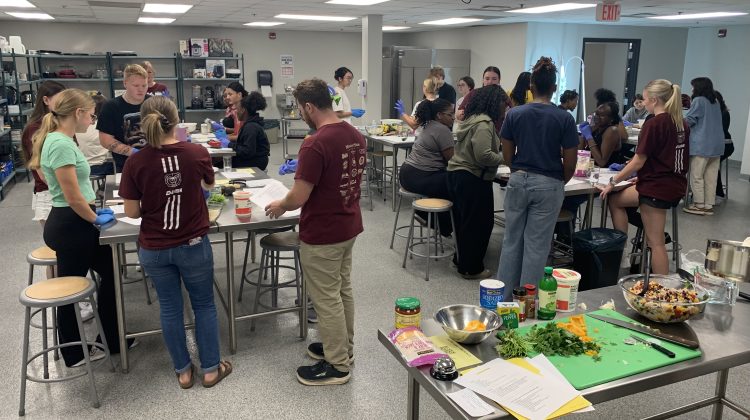
One of Dr. Daniela Novotny's hands-on Teaching Kitchen program.

For her years of service and dedication to educating and preparing registered dietitian nutritionists, Missouri State University’s Dr. Daniela Novotny received the NDEP South Central Region Outstanding Dietetic Educator Award (Didactic Program in Dietetics category) for 2026.
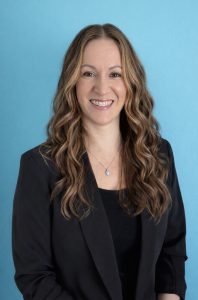
Dr. Daniela Novotny headshot.
Dr. Daniela Novotny.

A registered dietitian and senior instructor in the School of Health Sciences, Novotny was selected for the award by a committee of her peers. The award recognizes the teaching, mentoring and leadership activities of faculty in ACEND®-accredited dietetics education programs.

The NDEP (Nutrition and Dietetic Educations Preceptors) is an organizational unit comprising over 1,350 educator and preceptor members.

“Being selected by colleagues who understand the work involved in teaching and mentoring future dietitians makes the award especially meaningful,” Novotny said.

Teaching philosophy

She has invested in students for the past 14 years. She has developed a teaching philosophy “grounded in a student-centered, constructivist approach that emphasizes engagement, skill development and real-world application.”

Case studies and experiential learning are central to her teaching.

“Case studies help students analyze complex situations and build clinical reasoning skills. Experiential learning gives them opportunities to apply knowledge in real-world contexts and bridge the gap between classroom learning and professional practice,” Novotny said.

She also values teaching her students to think critically about new and current nutrition research.

“Helping students evaluate research, interpret evidence and communicate accurate information is essential for preparing professionals who can navigate today’s complex nutrition landscape,” she said.

NDEP experience

Novotny’s 12-year involvement in the NDEP has helped guide her through her career as an educator.

The organization offers an online community, including discussion boards, mailing lists and a resource library full of members’ ideas and teaching materials. It also has webinars for educators to learn new teaching practices and strategies.

“Being part of a national community of educators who are thinking critically about the future of dietetics education has been valuable for my own professional growth,” Novotny said.

The NDEP recognition is especially meaningful to her.

“Creating an organized, welcoming and inclusive learning environment – whether in person or online – requires intentional effort, and this award reinforces the value of that commitment,” she said.
Learn more about nutrition and dietetics

Filed Under: MCHHS News Tagged With: Daniela Novotny, faculty, Nutrition and Dietetics, School of Health Sciences

Faculty spotlight: Dr. Molly Lancaster

February 18, 2026 by Ella Reuter

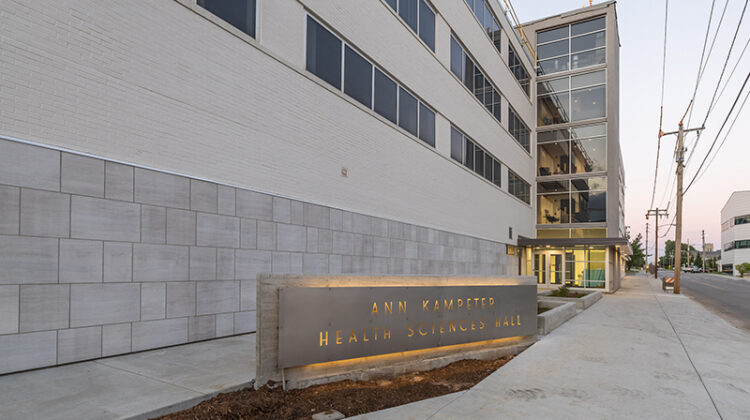
Exterior of Ann Kampeter Health Sciences Hall.
Dr. Molly Lancaster
Dr. Molly Lancaster

Our featured McQueary College of Health and Human Services faculty member is Dr. Molly Lancaster. She is an assistant professor in the School of Health Sciences.

Let’s get to know more about her.

Where are you originally from?

I was born in California but grew up in Missouri. I attended kindergarten in rural Shell Knob, and then Crane for first grade before moving to St. Louis, where I also attended college. I spent my childhood summers on Table Rock Lake with my grandfather about an hour south of our campus. I attended graduate school in California and spent 15 years in Los Angeles before returning to Missouri.

What brought you to Missouri State University and how long have you been here?

I was drawn to Missouri State for its commitment to student-centered learning. It’s amazing to be at a teaching focused institution and in close proximity to my childhood upbringing in the Ozarks. In fall 2024, I returned to the region to share what I learned in California and apply my prevention science training to advance health equity across rural communities in Missouri.

Where else have you worked before joining Missouri State?

I have over 10 years of teaching experience and have worked in public health practice across California and globally before returning to Missouri. I taught at Santa Monica College, California State University-Dominguez Hills and the University of Southern California. I also worked as a public health researcher and practitioner at an HIV clinic in Hollywood, as well as the University of California Davis Medical Center. I have extensive consulting experience in grant writing, strategic management consulting and change management in private sector and public serving spaces. I’ve also worked as a health educator in Uganda, Gabon and the United States.

What’s your educational background?

I completed my Associates of Arts degree from St. Louis Community College-Meramec before transferring to Fontbonne University to complete my bachelor’s in psychology with a minor in biology. I completed my PhD in Preventive Medicine from Keck School of Medicine at the University of Southern California, where I was a TL1 Fellow in Translational Science with a certificate in clinical, biomedical and translational investigations. I’m also a master certified health education specialist with over 13 years of experience in both domestic and global health education.

What inspired you to pursue your field of study and higher education?

My family was a huge inspiration to me. My mother and grandmother were both nurses, and originally, I was planning to pursue a Doctor of Medicine career. However, I realized that I wanted to pursue research and focus on the prevention of disease and illness. This led me to pursue a doctorate in preventive medicine and health behavior research.

What topics or research questions are you most passionate about in your field?

My research agenda focuses on rural health and what I call “Servant Research” – research in service to underserved communities. Traditional academic research often centers on the researcher’s questions and career needs; Servant Research flips that script by asking communities what they need and building research agendas around those priorities. It’s about showing up, listening and putting our skills to work for the people we study alongside rather than just about.

I’m passionate about community-based participatory research, drowning prevention on Table Rock Lake and democratizing access to research skills both within and beyond traditional academic walls. For example, my current Safe Waters project grew directly from conversations with community members about a problem they identified – preventable drownings in our local waterways. We’ve built a Community Advisory Board, so residents have real decision-making power in how the research unfolds. I just received a $15,000 grant for this project from the Open Research Community Accelerator.

I also coordinate an All of Us Research agenda, which aligns perfectly with my equity-focused approach. Through the National Institutes of Health, All of Us is building one of the most diverse health databases in history, ensuring that medical research finally reflects the full spectrum of who we are, not just the populations traditionally studied. It’s exciting to share that resource with students and our community.

This year, I’m also developing a Rural Health Toolkit to empower rural communities to advance health equity from within, because lasting change happens when communities have the tools to lead their own solutions.

What courses do you teach?

I teach PBH 754 Health Policy Seminar; a data-science class called PBH 735 Software Applications and Data Sources in Public Health; and PBH 783 International Health and Infectious Disease – all within the Master of Public Health (MPH) program. I lecture frequently in the biology department for classes related to immunology, microbiology and pathogenic microbiology.

What do you enjoy most about working with MCHHS students?

Our students are ambitious and highly intelligent students. Our MPH program in particular has a large international student population, and students bring a diverse set of viewpoints to the classroom. I enjoy deploying active learning and flipped classroom environments, where students learn through discussion, hands-on activities and critical thinking through experiential learning. The students across McQueary exemplify the values of our public affairs centered institution, which is exactly aligned with my professional goals of health equity within public health specifically.

What’s your teaching philosophy?

I believe students learn best when they are active participants in their education rather than passive recipients of information. In the classroom, I work to strengthen feedback loops with students, refine my use of technology and ensure that every course I teach connects public health theory to the lived realities of the communities we serve.

What do you do for fun or leisure?

I’m an avid gardener and permaculture enthusiast. I’m a member of my local gardening club and enjoy growing native perennials, as well as fruits trees and organic vegetables. This year, I want to cultivate more cut flowers to bring the outdoors inside during the growing season. I also plan to incorporate a new water feature into my garden this year to enhance the sensory experience of sound along with garden sights.

What might surprise people about you?

I’m a neurodivergent scholar. While I’m energized by teaching, I’m really an introvert at heart who enjoys quiet time and reflection to recharge as well. My experience as a neurodivergent scholar informs my commitment to creating learning environments where all students can thrive.

Learn more about the Master of Public Health

Filed Under: Faculty Spotlight Tagged With: Faculty spotlight, Molly Lancaster, public health, School of Health Sciences

A small grant leads to a lasting impact

January 20, 2026 by Sewly Khatun

Amy Harrington (left) and Clara Gust (right) with food waste collected during dietetics lab sessions.

Through the Missouri State University Student Sustainability Fund, the nutrition and dietetics program received $1,500 to address food waste in the dietetics food lab.  

The funding supported purchasing a high-tech composter and reducing waste generated during lab classes. What began as a simple observation grew into a year-long experience built on data, teamwork and real-world application. 

From noticing waste to building a solution 

Hands-on lab classes in nutrition and dietetics naturally produce food waste. Instead of viewing that as inevitable, a group of undergraduate and graduate students worked to understand the scope of the waste and how to reduce it.

From left to right: Clara Gust, Amy Harrington and Spencer Shafer presented the sustainability proposal to the office of student affairs.

Seniors Clara Gust, Spencer Shafer and Janelle Patterson, as well as graduate student Amy Harrington led the effort, gaining skills that extended beyond technical training. 

“This project was really about giving students the chance to take their own ideas and try them out in a real-world way,” said registered dietitian Stephanie Mitchell Urich, clinical instructor in the School of Health Sciences.  

To strengthen their proposal for funding, the students gathered waste data during lab sessions. They used firsthand measurements to show the scale of food waste generated.   

After reviewing several solutions, they selected the Mill composter, an electric, indoor food-waste processor. It breaks down food scraps and turns them into a dry, soil-like material instead of sending them to the landfill. The Mill composter can process items that traditional composting methods cannot, producing a ready-to-use end product.   

Students also compared pricing, installation needs and logistics before presenting their proposal to Dr. Dee Siscoe, vice president for student affairs and the Student Government Association Senate. 

The funding request was student-led and focused on bringing the composter into the dietetics food lab as a long-term teaching tool. 

“It can reduce waste in our lab, create connections with campus gardens, support nutrition security in our community and inspire future students to explore sustainability projects of their own,” Urich said. 

Learning beyond the classroom 

The project took a full year and required steady commitment from the students alongside their coursework.

“Roadblocks happen and it can feel like nothing is moving,” Shafer said. “Staying persistent, keeping a schedule and following up made a big difference.” 

For Harrington, the project showed her the value of collaboration. 

“If you have an idea, share it with others,” she said. “Working together and using everyone’s strengths leads to a stronger plan.” 

Explore the Student Sustainability Fund

Filed Under: MCHHS News Tagged With: Nutrition and Dietetics, School of Health Sciences, Stephanie Mitchell Urich, Student Success

Celebrating the next generation of health care professionals

December 12, 2025 by Sewly Khatun

A group of McQueary College of Health and Human Services students at commencement.

The McQueary College of Health and Human Services (MCHHS) proudly celebrates its students’ achievements. 

Nearly 400 students will graduate this December. Many participated in department or school ceremonies, where they were hooded, pinned and/or received a white coat. 

“William Shakespeare once said, ‘It is not in the stars to hold our destiny, but in ourselves.’ This reminder feels especially meaningful as we celebrate the accomplishments of our students,” said Dr. Letitia White Minnis, MCHHS associate dean. 

She added that each graduation ceremony reflects a moment of transition.  

“On behalf of the MCHHS, I want to congratulate all students celebrating important milestones, whether it be a white coat ceremony, a pinning ceremony or graduation. These achievements reflect your dedication and hard work. We look forward to the positive impact you’ll make in your profession and the communities you serve.” 

These ceremonies mark key academic milestones for students at different stages in their programs. Hooding and pinning recognize progress toward degree completion, while white coat ceremonies represent the transition into clinical rotations.  

The programs 

Occupational Therapy  

  • Twenty-six Master of Occupational Therapy students were hooded. 

Nursing 

  • Fifty-two Bachelor of Science in Nursing students were pinned.
  • One Master of Science in Nursing–Nurse Educator student graduated this December. 

Speech-Language Pathology (SLP) 

  • Twenty-six SLP students were pinned this December. The ceremony recognizes their readiness to begin clinical rotations ahead of spring graduation. 

Physician Assistant Studies (PAS) 

  • Thirty-three PAS students received white coats as they transitioned into clinical training, while another cohort of 33 students graduated this fall. 

Doctor of Nurse Anesthesia Practice (DNAP) 

  • DNAP CRNA (Certified Registered Nurse Anesthetist) students celebrated their program completion at a graduation ceremony, with 21 graduates this year – 15 in August and six in December. 

Counseling program 

  • Twenty-four students in the counseling program graduated this December. 

Psychology 

  • Two students in the psychology program will receive master’s degrees. 

MCHHS remains committed to supporting students as they move from classroom learning into professional practice. These new graduates and trainees will strengthen communities and contribute to the future of the health and human services workforce. 

Explore MCHHS programs

Filed Under: MCHHS Events, MCHHS News, speech-language pathology Tagged With: Letitia White-Minnis, Master of Occupational Therapy, Physician Assistant Studies, School of Anesthesia, School of Health Care Professions, School of Health Sciences, School of Mental Health and Behavioral Sciences, School of Nursing, students

« Previous Page
Next Page »

Categories

Archives

Meta

  • Log in
  • Entries feed
  • Comments feed
  • WordPress.org
  • Accessibility
  • Disclaimer
  • Disclosures
  • Equal Opportunity Employer and Institution
  • © 2026 Board of Governors, Missouri State University
  • Contact Information

Loading Comments...