Missouri State University

Skip to content Skip to navigation
a b c d e f g h i j k l m n o p q r s t u v w x y z

College of Education News

Understanding the rise of the four-day school week

December 2, 2022 by Strategic Communication

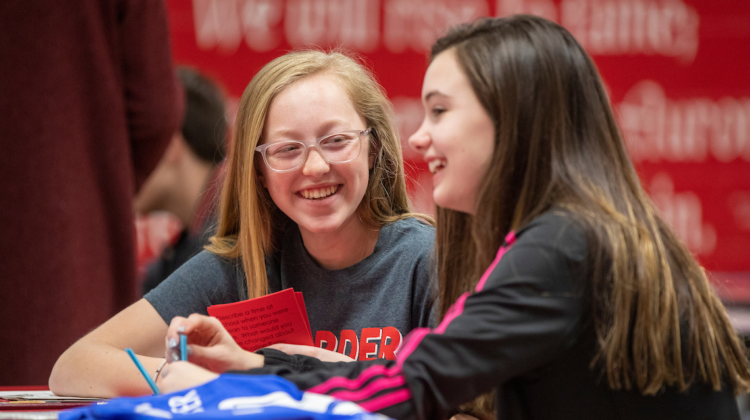
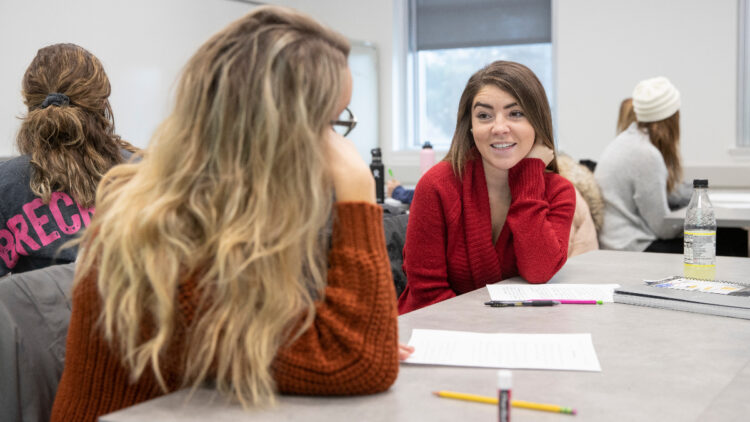
Two students work together on an assignment.

Shorter weeks and longer weekends have become a reality for many in Missouri.  

Over 25% of school districts in Missouri switched to a four-day school week since 2008. Only one has reverted.   

“Districts started using the four-day week for financial savings. But the reasons for transitioning have changed over the past few years,” said Dr. Jon Turner.  

Turner is an associate professor of counseling, leadership and special education (CLSE) at Missouri State University.  

Shorter weeks bring positive changes 

Districts primarily transition to shorter weeks to combat teacher shortages.  

“Less than half of Missouri teachers remain in the field after the first five years of teaching, according to a recent report,” Turner said.  

“The four-day week helps schools attract and retain teachers.”  

And for good reason: Faculty and staff reported that shorter weeks improve morale and the academic quality of their teaching, according to a study Turner conducted with CLSE colleagues Dr. Ximena Uribe-Zarain and Dr. Kim Finch.  

More benefits include:  

  • Higher attendance rates among students. 
  • More time for teachers to plan, collaborate and train. 
  • Better “work/life balance” for teachers and students. 
  • An extra day for students to seek opportunities, such as job shadowing, dual credit programs and volunteering.    

Though there is research that raises concerns about impacts on student achievement, as Turner notes, “the number of instructional minutes is what’s important to student learning. Both four-day and traditional weeks have 1,044 hours of instruction.”  

Additionally, school faculty and staff have more time to work on their professional development.  

Missouri State’s Pathways for Paraprofessionals program allows para educators to pursue a degree and certification in special education while they are employed.  

In districts using the four-day week, paras can use the fifth day to work on their coursework for their degree and certification.    

Learn more about the four-day week 

Barriers of the four-day school week 

Despite the benefits, shortened school weeks can pose challenges.  

“Some families struggle to find childcare for their children on the weekday school isn’t in session,” Turner said. “This mostly affects families who only have elementary-aged children and families with students receiving special education services.” 

To help families with their childcare needs, some districts offer school-operated childcare for the fifth weekday.    

Other concerns include:  

  • Reduced access to school lunches. 
  • More time over the weekend for students to forget what they learned. 
  • Increased risk to children’s safety on the weekday without school.  

Turner said his research indicates most parents do not hold these concerns.  

“Overall, parents tend to support the four-day week. But we need to pay special attention to those families with unique challenges,” he said. 
Become a teacher 

Filed Under: Uncategorized Tagged With: counseling leadership and special education, Jon Turner, Pathways for Paraprofessionals

Grow your own program works to add teachers to SPS classrooms

November 22, 2022 by Strategic Communication

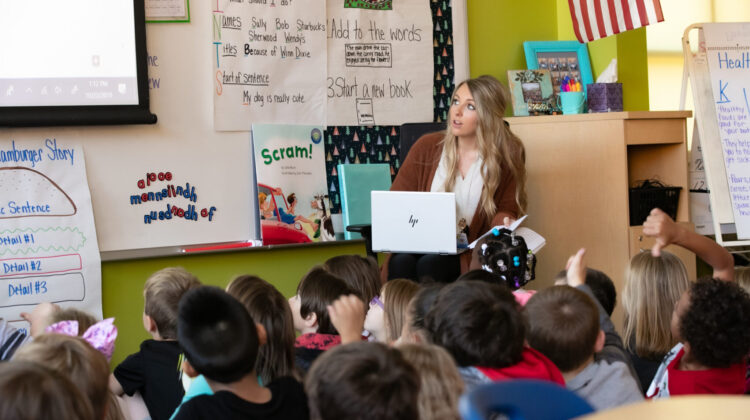
Class is in session for the first semester of the Future Educators Program, a cooperative arrangement between Missouri State University and Springfield Public Schools. It’s a grow your own program, where Springfield graduates commit to Missouri State University and then commit to teaching in SPS once they graduate.

“Grow your own programs are popping up around the country to draw more folks into the teaching profession,” said Dr. Chloe Bolyard, assistant professor in the College of Education at Missouri State.

“One of the challenges that we are facing nationwide is our student population is diversifying far faster than our teaching workforce, and so this partnership between SPS and MSU hopes to increase the diversity of our teachers so that students have teachers who look like them.”

Future Educators program grows their own

One of the tools to assist with recruitment in this program is the financial incentive, Bolyard explained. 

  • For the high school to educator pathway: Students would receive $2,000 per academic year through an access scholarship from MSU.  Additionally, they would receive a $3,000 per year from Springfield Public Schools.
  • For our college to educator pathway: Current college students would receive $2,000 per academic year through an access scholarship from MSU. They would also receive a $5,000 per year incentive from Springfield Public Schools. 

“Once they are here at Missouri State University, we provide resources for passing their teacher certification exams, resume prep, interview prep, and support them with a mentor in Springfield Public Schools,” Bolyard said. “They would meet with that mentor, who’s a current classroom teacher, once a month and develop a relationship with them.

Apply to the Future Educators program

“We also provide them with four professional learning opportunities for each year that they are in the program and focus on culturally responsive teaching, financial literacy, test preparation and community engagement.”

Read transcript

Filed Under: Uncategorized

From kindergarten to college

September 26, 2022 by Strategic Communication

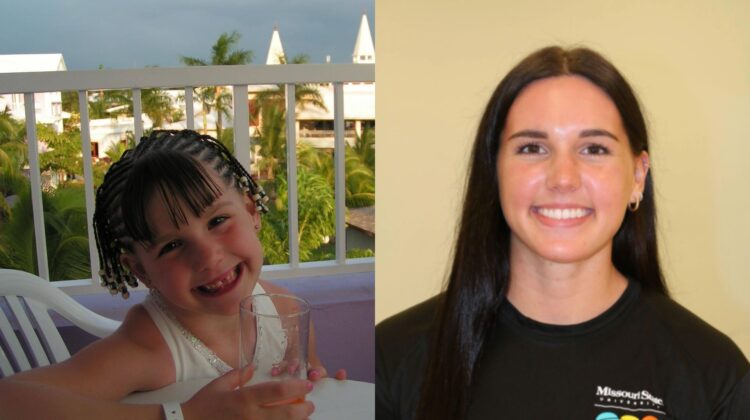
Allison then versus now.

The teaching profession is more than educating students. It is also about building meaningful relationships that impact both the teacher and the students.  

Allison Kramer built a special relationship with her kindergarten teacher, Linda Wolff, that she carried with her throughout her education. When Allison was in eighth grade, she nominated her for the Golden Apple Teacher Award. Mrs. Wolff sent a letter to Allison to thank her and encourage her to consider attending Missouri State University. 

Allison is now in her third year at Missouri State. She recently re-discovered the letter from Mrs. Wolff in her old memories box. She knew her favorite teacher would be thrilled that she attended Missouri State after all and decided to send her a letter by mail.  

“I was so excited to send her a letter telling her I chose MSU. I also wanted to tell her that my current roommate was also in her kindergarten class with me,” Allison said. After three attempts, Allison finally found the correct mailing address. 

The letter Mrs. Wolff sent in response was filled with stories of her experience at Missouri State. She wrote that she thought everything Allison was doing at Missouri State was awesome, and Allison plans to write back to her to tell her to visit the campus again.  

Mrs. Wolff and Allison made a connection that’s lasted for many years. Teachers have the power to inspire and encourage students to achieve their personal and professional goals, just as Mrs. Wolff did for Allison.  

Filed Under: Uncategorized Tagged With: alumni, college of education

More teachers than ever are leaving the profession

August 2, 2022 by Strategic Communication

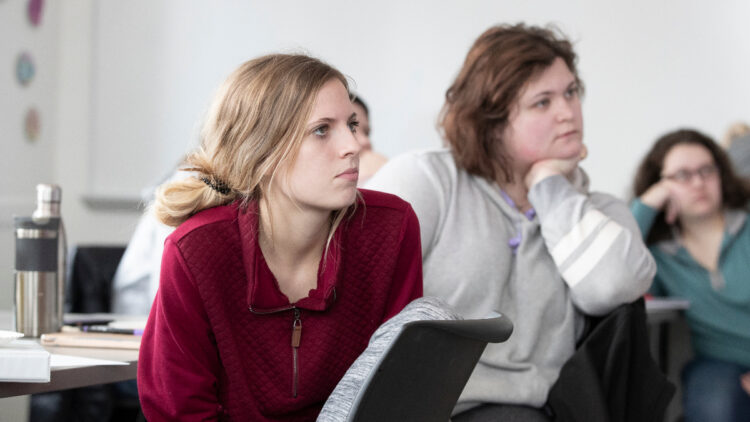
Alumni teaching.

Across the nation, teachers are leaving the profession. The pandemic and shifting political landscape have left teachers feeling overworked and undervalued. 

According to a 2022 Gallup poll, K-12 teachers report the highest burnout rate of all U.S. professions. More than four out of every 10 teachers said they feel burned out “always” or “very often” at work. 

Dr. Stefanie Livers, associate professor in the department of childhood education and family studies at Missouri State University, gives reasons for why teachers are fleeing and provides advice for current teachers and teacher educators.  

The challenges 

Teaching is historically undervalued, according to Livers. She said, “Teachers are underpaid, benefits are always unstable and the workload keeps increasing.”  

The pandemic has increased the stress levels for teachers because they had to introduce virtual learning in their classes.

In addition to the systemic challenges of teaching, teachers face social and emotional challenges.  

People often direct their frustrations about political, societal and curriculum issues onto teachers. Some even attack teachers on a personal level.  

“If you’re under attack, it’s a hard place to be,” Livers said.   

The teaching profession is becoming deprofessionalized. Schools are starting to require teachers to follow hyper-specific guidelines for teaching, limiting teacher autonomy. 

Teachers go through rigorous programs to become experts in their field. To become teachers, candidates must apply to and get accepted into the program. Then they must complete programmatic coursework, student teach and pass numerous assessments. 

Teachers need the ability to use their expertise to build their instructional practice based on the students’ needs, but deprofessionalization restricts that ability. 

“We need to provide teachers with the professional courtesy to do their job with integrity,” Livers said. 

The current climate of the teaching profession is problematic.

For the future of education, Livers said, “Something needs to change, and something needs to change quickly.” 

For teachers seeking jobs, Livers recommends they look for supportive administrations that make their teachers feel valued.    

Feeling valued at work leads to better mental and physical health, and higher job satisfaction, according to a survey from the American Psychology Association.    

“Your administrator matters,” Livers said. “With the teacher shortage, teachers can be more intentional in their job search and look for schools with support systems for teachers.”   

Update teacher preparation programs  

Teacher educators need to adapt and evolve their teacher preparation programs to accommodate the current climate of the teaching profession. 

If future teachers enjoy their time in the classroom from the start of their teaching program, they are more likely to feel satisfied and prepared for their profession.    

Teachers may enjoy teaching more when their preparation includes active learning activities, like teaching small groups and providing one-on-one support to students.  

Less time on campus and more time in schools could prove to be more meaningful for future teachers. 

Missouri State has updated its teacher preparation programs to include more practical experience.  

For example, the students who take the Methods of Teaching Social Studies in Elementary Schools course partake in a service-learning practicum. Throughout the semester, the students provide a safe environment for children who are refugees to learn through play.   

“Students should be able to develop their learning through hands-on experiences,” Livers said. “Teacher educators should act more like mentors on the ground in local schools and play an active role in helping future teachers learn how to teach within local classrooms.”     

“Creating a network of ideas is important,” Livers said. “We could use more out-of-box experiences within teacher preparation that allow future teachers to use their expertise and develop their teaching practice in creative ways that would also help our local community.”    

The bottom line 

The teaching profession has challenges, but overall, it is a rewarding career.  

On the most difficult days, Livers recommends that teachers try to remember why they became teachers.  

“I know teaching can be challenging but remember why it matters,” Livers said. 

“Teachers matter, and I hope that we can collectively improve the profession so that teachers can always feel supported and valued.”

Explore education programs

Filed Under: Uncategorized Tagged With: childhood education and family studies, Stefanie Livers

What if your child struggles in a classroom?

July 26, 2022 by Strategic Communication

It’s a true hallmark of parenting: We all want what’s best for our kids. Parents are fierce protectors, consistent teachers and faithful advocates.

When a child has an emotional or behavioral disorder, educators must work with parents and students to develop goals, a beneficial plan and appropriate structure.

Dr. Reesha Adamson, associate professor of special education at Missouri State University, shares about developing positive learning environments and implementing inclusive instruction.

In 2021, she and Dr. John William McKenna from the University of Massachusetts – Lowell wrote the book “Inclusive Instruction for Students with Emotional and Behavioral Disorders: Pulling Back the Curtain.”

Making school more fluid for kids with behavioral disorders

Buy the book

Getting the structure in place

When a student will be moving between a special education and general education classroom, there is a lot of necessary coordination, said Adamson, and it begins before the student ever enters the inclusive classroom.

A general educator and special educator have to meet and work together regularly to set goals, build supports and determine accommodations needed to help students in an individualized manner.

The book includes tips and strategies for educators, but Adamson says it all comes down to flexibility and assessing the question: What is best for this student in this time and in this place?

When a peer is in a crisis

Between 20-40% of students will experience a behavioral or emotional disorder during their lifetime, according to Adamson. This underscores the importance for empathy and understanding among peers, parents and educators.


Read the transcript

Filed Under: Uncategorized

« Previous Page
Next Page »

Categories

  • Bear POWER
  • Child Life Studies
  • COE Alumni
  • COE Faculty
  • COE Staff
  • COE Students
  • Counseling
  • Early Childhood and Family Development
  • Educational Administration
  • Elementary Education
  • Graduate Program
  • Literacy
  • Middle School Education
  • Secondary Education
  • Special Education
  • Student Affairs
  • Uncategorized

Archives

Meta

  • Log in
  • Entries feed
  • Comments feed
  • WordPress.org
  • Accessibility
  • Disclaimer
  • Disclosures
  • Equal Opportunity Employer and Institution
  • © 2026 Board of Governors, Missouri State University
  • Contact Information