Missouri State University

Skip to content Skip to navigation
a b c d e f g h i j k l m n o p q r s t u v w x y z

Health and Human Services News

  • McQueary College of Health and Human Services

Guiding research across MCHHS

March 23, 2026 by Sewly Khatun

Psychology undergraduate and graduate students showcase their research at the Student Research Symposium.

New knowledge often starts with simple questions. At Missouri State University, research events turn those questions into new ideas and discoveries. 

The McQueary College of Health and Human Services (MCHHS) will host its 30th Annual Student Research Symposium on April 16. This yearly event challenges undergraduate and graduate students to present scholarly work across disciplines. 

Dr. Leslie Echols, professor of psychology in the School of Mental Health and Behavioral Sciences and current MCHHS research fellow, helps lead the college’s research efforts. 

“It’s been a valuable opportunity for faculty from one program to learn about what someone from another program is doing,” she said. “We can all learn from each other and the different experiences we’ve had.” 

Strengthening faculty research 

Dr. Leslie Echols
Dr. Leslie Echols

Echols joined Missouri State in 2014 after completing a postdoctoral appointment at the University of California, Los Angeles. Since then, she has centered her teaching, scholarship and service around research. 

In fall 2025, she was appointed the MCHHS research fellow, a role focused on expanding research support across the college. She works with fellow faculty members, helping them navigate research processes and connect with available resources. One of her first initiatives was developing a centralized SharePoint hub where faculty can access information about funding opportunities, research tools and institutional guidance. 

Echols also hosts monthly research “brown bag” sessions, informal gatherings that allow faculty to discuss emerging topics and exchange ideas. The upcoming brown bag session topics are related to creating a sustainable research pipeline and setting summer scholarship goals. 

“These sessions give colleagues a chance to learn from each other,” Echols said. “We have faculty doing interesting work across the college and creating space for those discussions often leads to new partnerships.” 

In addition, she provides individual consultations to faculty who are preparing grant applications, designing studies, completing the Institutional Review Board approval process and navigating university research procedures. 

Engaging students in research 

Beyond faculty support, Echols also works to expand opportunities for student involvement in research activities. Through mentorship and collaboration, she encourages faculty to include students in research design, data collection and analysis. 

“I think one of our biggest strengths is how MCHHS faculty bring students into the research process,” Echols said. “Those experiences are incredibly valuable, especially for students considering graduate school.” 

She believes hands-on research allows students to explore complex questions, develop analytical skills and gain a deeper understanding of their discipline. When students work alongside faculty researchers, learning extends beyond the classroom and benefits everyone.  

Developing school-based interventions 

Alongside her leadership role within the college, Echols continues to lead several research projects through internal and external partnerships.  

One study she is currently working on is a school-based intervention program designed for students with hostile attribution bias. 

“Hostile attribution bias occurs when students interpret negative social events as intentional attacks, even when they may be accidental,” she said. “This pattern can lead to reactive behavior, social conflict and increased vulnerability to bullying.” 

To address this, Echols and her research team are developing screening tools to identify students who may need support and lesson plans that help them respond more constructively to peer interactions. They plan to pilot the intervention program in Springfield-area schools this spring, an important step in moving the research into real-world practice. 

Looking ahead to Research Week 

Research efforts across the college will take center stage during the upcoming Student Research Symposium. It is scheduled from 3-5 p.m. in the Plaster Student Union Grand Ballroom. 

The event allows students from different MCHHS programs to share their research through poster presentations and academic discussions. These projects reflect the work they have conducted over the past year. 

For Echols, the symposium represents one of the most meaningful moments of the academic year because it highlights research and collaboration across programs.  

She is also helping coordinate several Research Week activities, including two faculty panel discussions.  

“Both sessions offer faculty practical ways to strengthen their research and scholarly work. It’s very timely and relevant to where we are right now,” Echols said. 

One panel, “Using AI in Your Research,” is scheduled for April 13 from 3:30-5 p.m. in the O’Reilly Clinical Health Sciences Center, Room 100. The second, “Leveraging Teaching to Increase Research Productivity,” will be held April 14 from 12:30-2 p.m. in Kampeter Hall, Room 238. 

Explore MCHHS

Filed Under: MCHHS Events, MCHHS News Tagged With: faculty, Leslie Echols, Psychology, research, School of Mental Health and Behavioral Sciences, Student Success

Supporting student success through partnerships

March 23, 2026 by Sewly Khatun

Dr. Mark Smith speaks at the grand opening of the Collaborative Care Clinic on Feb. 20.

Supporting student success comes in many different forms, through multiple avenues and from individuals across the McQueary College of Health and Human Services (MCHHS) community. These include philanthropic financial donations and grants. 

“Philanthropic gifts and grants are essential for the college,” said Dr. Mark Smith, MCHHS dean. “They help us expand access to advanced instructional technology and equipment, provide support services, develop innovative experiential learning opportunities and offer students financial aid.” 

Two recent examples of support for MCHHS are a community partnership gift from Arvest Bank and a collaborative workforce development grant from the U.S. Department of Labor. 

Opening more doors 

 The Arvest Bank gift will benefit the newly opened Collaborative Care Clinic in Kampeter Hall.  

The funds enable the clinic to purchase new toys and essential supplies. These resources will make the clinic more welcoming and help it provide children with the high-quality pediatric and mental health care they deserve. 

As for the workforce development grant, MCHHS partnered with Ozarks Technical Community College, the Alliance for Healthcare Education and several regional health care organizations to secure the grant from the U.S. Department of Labor.  

Through the Strengthening Community Colleges grant program, Ozarks Tech received nearly $5.7 million. It was one of only 18 institutions nationwide to receive the award and the only recipient in Missouri. Missouri State was part of the grant consortium, which brought together education, workforce and health care partners across the region.

This collaboration has provided $800,000 in scholarships for students pursuing degrees in key health fields at MCHHS. 

Eligible programs include: 

  • Bachelor of Science in Nursing (BSN) programs (direct entry, completion and accelerated) 
  • Radiography 
  • Health Services 

Additionally, BSN students at the Alliance campus will also benefit from these funds. They will support the renovation of instructional spaces and facilities, helping to strengthen health care training. 

Explore MCHHS

Filed Under: MCHHS News, School of Nursing Tagged With: Collaborative Care Clinic, Mark Smith, School of Health Care Professions, School of Health Sciences, students

A journey beyond limits

March 10, 2026 by Sewly Khatun

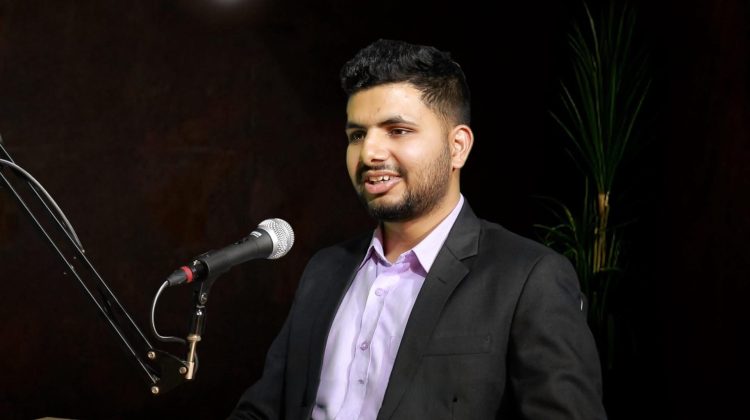
Madhusudan Ghimire

For many international students, moving abroad can feel overwhelming. Leaving home and starting over in a new country test even the most confident person.   

Missouri State University counseling graduate student Madhusudan Ghimire knows this firsthand. His journey shows how resilience can grow from life’s hardest moments.  

Though he once felt alone, he learned to turn that experience into a sense purpose, one that began long before Missouri State became part of his story. 

Overcoming a tough childhood 

Born with a visual impairment in a remote village in western Nepal, Ghimire spent his early years there before his family moved to Kathmandu when he was two. His parents relocated the family so he could attend school and access better opportunities. 

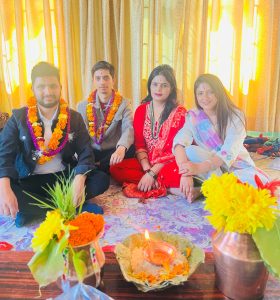
Ghimire with his sisters and cousins at a family program.
Ghimire (left) with his sisters and cousins at a family program.

But school was not always easy for Ghimire. Inclusive education was limited in Nepal, and his parents had to find a school where he could learn using braille. Even then, he felt lonely. 

“I used to experience isolation and had very few friends,” he said. “Most of the time, I was by myself. While other students played soccer or gathered with friends, I often stayed on the sidelines.” 

Social activities were difficult and classmates usually did not know how to interact with him. During those years, his siblings became his closest companions. His younger sister especially helped him through moments of loneliness.  

One experience in middle school stayed with him for years.  

In Nepal, students must ask permission before entering a classroom if a teacher is already inside. One day in seventh grade, Ghimire walked into a classroom without realizing the teacher was there. Because of his visual impairment, he could not see where she was standing among some of the students. The teacher reacted harshly, pulling his hair and forcing him out of the classroom.   

“That incident made me think about who I am and what I need to do in my life,” he said.  

The moment was painful, but it pushed him to reflect on his future. 

Finding a voice through literature and radio 

Madhusudan Ghimire
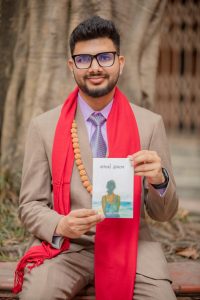
Ghimire’s first poetry book, “Mayako Aayatan.”

During those difficult years, Ghimire found comfort in listening to radio programs featuring poetry, storytelling and literature.  

“Radio programs inspired me to begin writing and literature became an important part of my life, helping me express myself and fill emotional gaps,” he said. “Those broadcasts became a quiet escape when I felt isolated.”  

Reading soon became a passion as well. In high school, he immersed himself in Nepali literature and once read more than 150 novels in a single year. Writing helped him process emotions and express experiences that were difficult to share in other ways. In 2024, he published his first poetry collection, “Mayako Aayatan” (Volume of Love).  

He also hosted a poetry-focused radio program for more than three years during his undergraduate studies in Nepal. Listeners often wrote to him about their personal struggles and emotional challenges.  

“People would share their feelings with me. Sometimes they just needed someone to listen,” he said. 

Those conversations gradually sparked his interest in mental health. 

Global experiences that shaped his path 

Technology also opened new doors for Ghimire. His older brother introduced him to screen reading software that enables blind users to navigate computers through audio feedback.   

“I was amazed when the computer started reading the screen,” he said. “I quickly learned how assistive technology worked and began helping others install accessibility tools.”  

However, not everyone believed in his potential. After he struggled early in class, his computer teacher made him take economics as an elective instead of computer studies. For Ghimire, the experience shook his confidence and affected his self-esteem.   

Despite the setback, he continued learning. Even with limited resources, he explored technology outside the classroom, driven by his interest in computers. That passion eventually led him to represent Nepal on the international stage.   

In 2017, he traveled to Hanoi, Vietnam, to compete in the Global IT Challenge for Youth with Disabilities. It was also his first time traveling abroad.  

“Before 2017, I had never traveled outside my country or even taken a plane. The first time I flew, it was to leave Nepal. I still remember how big that felt for me,” he said. 

After Vietnam, he attended similar events in India and South Korea before COVID-19. Those experiences built his confidence and strengthened his commitment to support young people with disabilities worldwide.

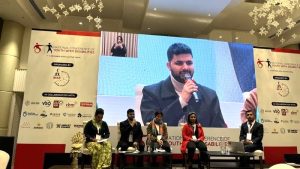
Madhusudan Ghimire speaks as a panelist on SRHR and access to mental health services at the National Conference of Youth with Disabilities.
Ghimire speaks as a panelist on access to mental health services at the National Conference of Youth with Disabilities.

Journey to Mo State 

Ghimire first came to Missouri State in spring 2023 through the Global Undergraduate Exchange Program. It is a Fulbright-supported initiative that brings international students to the United States for a semester of study. Only two students from Nepal were selected that year and Ghimire was one of them. 

After returning to Nepal, he finished his undergraduate degree in psychology. His work took a new direction in 2024, when he served as a psychosocial counselor in integrated schools through the United Kingdom-funded Nepal Earthquake Recovery project in partnership with the Blind Youth Association. Then, in 2025, he received the Fulbright Innovation Fund Award to launch a YouTube podcast on mental health and disability awareness. The 10-episode series focused on mental health and personal stories.  

This spring, he returned to Missouri State to pursue a master’s degree in counseling. He also works as a graduate assistant in Global Education and Engagement, where he helps exchange students adjust to campus life and supports digital accessibility initiatives. 

“Missouri State University is committed to creating a supportive and accessible environment for every student,” said Daezia Smith, leadership programs specialist in Global Education and Engagement. “In our office, Madhusudan helps us to recognize where our materials could be more accessible so we can better serve and reach a wider population.” 

According to Ghimire, Missouri State resources have played a key role in his success. The Disability Resource Center provides accommodations, such as accessible materials and extended testing time.  

“My supervisor, Kevin James, has been very supportive since the day I arrived here,” he said. “The office provided a mobility and orientation instructor, who helped me learn how to navigate campus, my house and offices using BearLine routes.” 

Experience in the counseling program 

So far, Ghimire has had a positive experience in his program and he appreciates the helpful faculty. As a new student, he is still adjusting to campus life and building friendships. Some parts of the counseling training can be challenging, especially lab sessions where students practice counseling with classmates. 

“Sometimes the cultural differences make it difficult because people talk about family or personal issues in ways that feel new to me,” he said. “But it’s helping me learn how support should reflect culture, background and lived experience.” 

As he thinks about his future, Ghimire hopes to combine counseling, disability advocacy and literature in his work. His earlier isolation and challenges now fuel his purpose: helping people facing emotional struggles feel heard, supported and less alone. 

Learn more about the counseling graduate program

Filed Under: Student spotlights Tagged With: Counseling, School of Mental Health and Behavioral Sciences, students

Social work programs reaffirmed through 2033

February 24, 2026 by Sewly Khatun

BSW students and faculty volunteer at Ozarks Food Harvest during Hunger Action Month in fall 2025.

Missouri State University’s social work programs have been reaffirmed through 2033 by the Council on Social Work Education (CSWE). 

The renewal verifies that both the Bachelor of Social Work (BSW) and the Master of Social Work (MSW) programs meet national educational standards. For students, it protects eligibility for licensure and reinforces professional credibility after graduation. 

Program structure and milestones 

The BSW program has been continuously accredited since 1977 and will mark 50 years of accredited social work education in 2027. It enrolled 134 students in spring 2026. 

Dr. Michele Brown (left) and Heather Eckhart (right).

The MSW program enrolled 142 students this spring and continues Missouri State’s decades of nationally recognized social work education since the 1970s. 

“During the recent review cycle, we worked with faculty and practicum leaders to align the MSW curriculum, policies and procedures with CSWE standards,” said Dr. Michele Brown, MSW program coordinator. “That work led to a virtual site visit in April 2025 and official reaffirmation in November 2025.” 

The review also included coordination of field education led by Heather Eckhart, clinical assistant professor in the MSW program. Her practicum oversight contributed to the program’s preparation throughout the review process. 

The BSW program completed a comprehensive review during the same cycle. According to Natalie Curry, BSW program coordinator, the process spanned nearly two years and focused on documenting curriculum alignment and assessment outcomes, with practicum serving as the signature pedagogy of social work education. 

Working closely with Regina Russell, clinical professor and BSW practicum coordinator, Curry helped demonstrate how the program meets accreditation requirements. The BSW program received official reaffirmation in November 2025. 

“Having our accreditation reaffirmed demonstrates the university’s longstanding commitment to high-quality social work education,” Curry said. 

Practical training from the onset 

Field education is central to both programs. The review process affirms that practicum placements meet supervision and learning expectations across sites and community settings. 

For MSW students, Brown noted that the review strengthened alignment between coursework, practicum education and workforce preparation, reinforcing graduates’ readiness for effective practice. 

Curry described accreditation as foundational for students beginning their careers. 

“Accreditation provides confidence that students are receiving an education aligned with national professional standards and preparing them for competent, ethical generalist practice,” she said. 

“Graduating from an accredited BSW program can support eligibility for advanced standing in many MSW programs. It can also help meet licensure requirements in states that recognize the bachelor’s-level social work credential.”

Natalie Curry (left) and Regina Russell (right).

A growing impact 

Reviewers highlighted strengths reflected in students’ day-to-day experiences. MSW students described a well-rounded education that integrates theory and practice while reinforcing the cycle of practice-informed research and research-informed practice. 

In the BSW program, the site visit report described a strong sense of pride across stakeholder groups. It also noted a welcoming, inclusive learning environment where students reported feeling supported, heard and valued by their instructors. 

Both Brown and Curry see this milestone as part of an ongoing process, not an endpoint.  

Brown emphasized the importance of “continuous curriculum enhancement informed by student feedback, community needs and the evolving demands of the social work profession.” 

Curry added, “Looking ahead to the next review in 2033, a key priority is building on what we do well while remaining responsive to student feedback and the evolving needs of the profession.  

“Overall, our goals focus on continuous improvement, maintaining strong accreditation standards and supporting student success.” 

Learn more about social work programs

Filed Under: MCHHS News Tagged With: faculty, Master of Social Work, Michele Brown, Natalie Curry, School of Mental Health and Behavioral Sciences, Social Work

« Previous Page
Next Page »

Categories

Archives

Meta

  • Log in
  • Entries feed
  • Comments feed
  • WordPress.org
  • Accessibility
  • Disclaimer
  • Disclosures
  • Equal Opportunity Employer and Institution
  • © 2026 Board of Governors, Missouri State University
  • Contact Information

Loading Comments...