
Missouri State University

Skip to content Skip to navigation
a b c d e f g h i j k l m n o p q r s t u v w x y z

College of Education News

Cheating in the time of COVID-19: An ongoing study

April 7, 2021 by Strategic Communication

The front of Hill Hall on Missouri State's campus.

Are my students cheating? 

That question looms over every teacher. With the shift to virtual learning due to the pandemic, some questioned if there was a way to prevent cheating at all. 

Professors at Missouri State, Marshall and Kansas State universities are examining the issue of cheating, specifically, whether the conditions of the pandemic caused an uptick in academic dishonesty.  

The original study  

Eleven years ago, while working at Marshall University, Dr. James Sottile, professor in MSU’s counseling, leadership and special education (CLSE) department, conducted research to determine if college students were cheating. Then, he compared cheating in seated courses to that of online classes.  

The results of the 2010 study showed that while some students were cheating, there was not a significant difference between the likelihood of cheating in person versus online.  

“Everybody assumed people would cheat more online, but that wasn’t the case,” Sottile said. “If people are given the opportunity to cheat, they’re going to cheat. That’s pretty similar for being online or face to face.” 

Data during the pandemic  

Considering the changes in class delivery during the pandemic, Sottile, along with Dr. Bonni Behrend, also a professor in the CLSE department, embarked on a follow-up cheating study.  

Not only did the pandemic present an interesting environment, but technological advancements over the past decade were also factors to consider.  

“Classes that were traditionally brick and mortar now have this virtual component,” Behrend said. “When you’re forced into a virtual setting, you maybe don’t have the time or the capabilities to think outside the box about what students could be doing whenever you’re giving them a test.” 

Sottile and his colleagues collected data through a survey like the one used in the original study. They added additional questions to gauge if students were more likely to cheat since the pandemic began. 

Survey results from 698 college student participants show that students may have cheated more during the pandemic.  
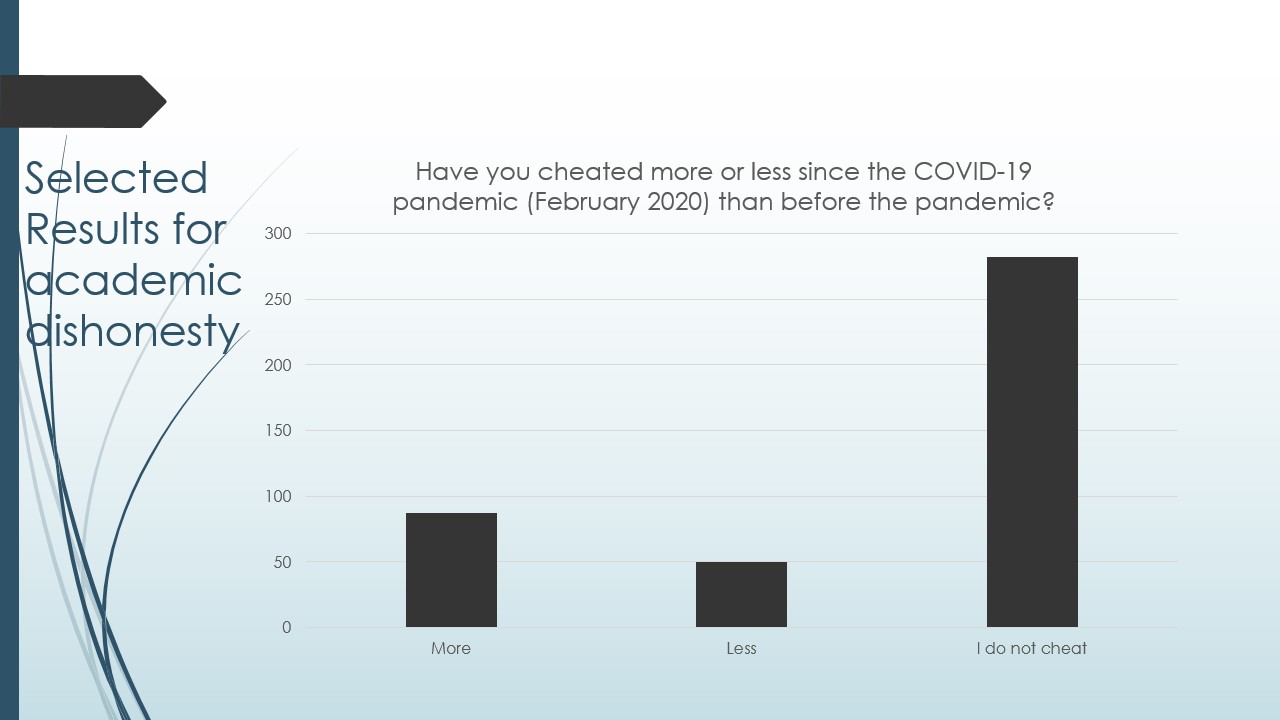
Survey results to the question: Have you cheated more or less since the COVID-19 pandemic (February 2020) than before the pandemic?

Sottile, Behrend and their co-researchers will return to the study for a third time with more specific questions including:  

  • What percent of students in your live classes do you believe cheat at least once during the semester? 
  • What percent of students in your online classes do you believe cheat at least once during the semester? 

They hope to narrow down their results to the most accurate depiction of what has happened during the pandemic.  

“It needs to be also stated that a lot of people said they don’t cheat at all, and that’s good,” Behrend said. “But I think as we get more sophisticated with technology, our curriculum and the ways that we deliver education, we have to anticipate the needs.” 

Addressing the issue of cheating 

According to major psychological theorists, people who cheat are often motivated by how cheating will benefit them.  

When it comes to academics, Sottile explained that the more competitive the atmosphere is, the higher the rates of cheating tend to be.  

For example, the original research showed that:  

  • Graduate students tend to cheat slightly more than undergraduate students. 
  • Athletes tend to cheat slightly more than non-athletes.  
  • Men tend to cheat slightly more than women. 

However, Sottile and his colleagues proposed that the solution is not to remove the competitive element. Rather, they would like to raise the moral standards students are held to in academics.  

“The way you increase a person’s moral development, which is backed up by research, is to provide them with ‘what if’ scenarios and codes of ethics,” Sottile said.  

Academic integrity at Missouri State  

Sottile affirmed academic integrity policies in place at Missouri State are adequate if they are supported by teachers and administrators.  

“I think everyone needs to be more aware of what we can do to prevent people from cheating, or decreasing the chances of cheating, as well as increasing a person’s moral development,” Sottile said.  

Behrend notes the purpose of conducting research on topics like this is not to highlight the negative, but to acknowledge that there is room for improvement.  

“People are going to cheat to meet a need,” Behrend explained. “We have to think about what we can do on the backside to be proactive about it as educators, as people who are educating the next leaders. At Missouri State, we talk about the public affairs mission in that way – how it helps to create greater thinkers.” 
MSU academic integrity policies   

Academic integrity resources for students  

Filed Under: COE Faculty Tagged With: counseling leadership and special education, COVID-19, education, research

Building teacher candidates’ cultural understanding

July 28, 2020 by Sydni Moore

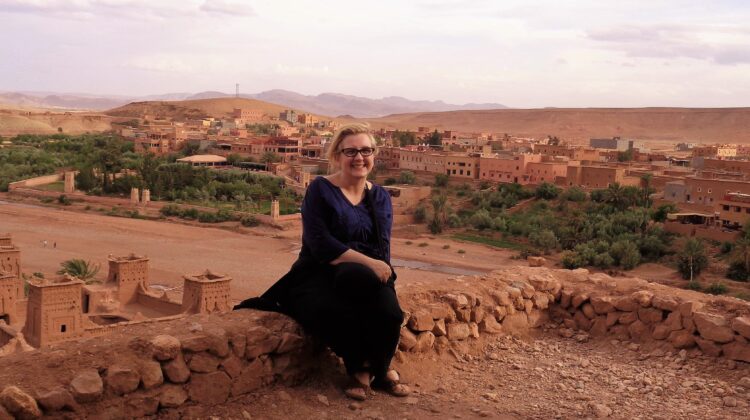
Dr. Jennice McCafferty-Wright sits in front of architecture in Morocco.

Missouri State University’s College of Education (COE) teacher candidates will soon connect with peers as far as North Africa through a program sponsored by the U.S. Department of State. The Virtual Exchange for Teacher Candidates program is made possible by a grant from the Stevens Initiative. 

“The Stevens Initiative is an international effort to build global competence and career readiness skills for young people in the United States and the Middle East and North Africa by growing and enhancing the field of virtual exchange,” a press release states. 

Missouri State is one of only 17 grantees to receive funding for a virtual exchange program. 

Promoting global understanding 

The Virtual Exchange for Teacher Candidates, in cooperation with Moroccan Regional Centers of Education and Formation, will build inclusive teacher education curricula that supports future teachers from Morocco and the United States as they learn with and from each other.  

The program will launch during the fall 2020 semester. The project’s coordinator is Dr. Jennice McCafferty-Wright, an assistant professor in the childhood education and family studies department. 

“The largest component of the project, an eight-week series of student dialogues, will be ready for students in our elementary social studies methods courses in September,” McCafferty-Wright said. “Other components of the exchange, such as an international colloquium series, will be open for the entire COE community. We’ll add more exchange features as the project grows.” 

While traditional, in-person exchange programs have been canceled, programs such as MSU’s will be a sustainable and accessible global learning tool.  

McCafferty-Wright said participating teacher candidates will build critical cultural understanding and literacies, as well as a commitment to global education. The program will help students enter careers with international, professional relationships to create their own virtual exchanges.  

“Teaching requires an understanding of the world. Connecting with teacher candidates in other parts of the world helps us better understand ourselves and our place in the world as educators,” McCafferty-Wright said. “Additionally, students with educators who teach for global understanding are better prepared for critical civic engagement in a diverse democracy.” 

Sharing knowledge 

Created in 2015, the Stevens Initiative is committed to expanding the virtual exchange field through three pillars of work: investing in promising programs, sharing knowledge and resources, and advocating for virtual exchange adoption.  

The Virtual Exchange for Teacher Candidates is supported by the Stevens Initiative, which is sponsored by the U.S. Department of State, with funding provided by the U.S. Government, and is administered by the Aspen Institute. The Stevens Initiative is also supported by the Bezos Family Foundation and the governments of Morocco and the United Arab Emirates.

Logos

Filed Under: COE Faculty, COE Students Tagged With: COVID-19, exchange program, grant, Jennice McCafferty, teacher candidates

Fall semester FAQ

July 15, 2020 by Sydni Moore

Hill Hall

Students in the College of Education asked questions. Faculty and staff were happy to provide answers. More information regarding the fall 2020 semester can be found in the Missouri State University Guide to Returning to Campus.

What is the university and College of Education’s plan for the fall semester?

We will offer traditional classes with social distancing in place, along with distance learning opportunities via Zoom, Blackboard and blended modalities.

How will I complete my practicum this fall if there are still restrictions? 

We have contingency plans for any scenario that might occur to ensure every student meets program and certification competencies.

Should I complete the requirements to participate in a practicum?

Yes. As long as you feel comfortable visiting the sites available to you, please complete all requirements to participate in a practicum or student teaching. Continue to watch your email for instructions from John Reinert regarding compliance for practicum and student teaching.

When will the testing centers open? What are the differences between the testing centers at Missouri State and Pearson Professional Center?

As of May 15, 2020, the Missouri-based Pearson VUE owned testing centers for the MEGA assessments are open where local guidance permits. MSU’s testing center is NOT a Person VUE-owned testing center. However, it is also open. You can view site availability on the MEGA website.

Some of my fall classes have switched from a seated to an online format since I registered for them. Will a lot of courses be online in the fall? 

No. In fact, as stated at the May 20 virtual town hall meeting, about 2/3 of courses at MSU are seated for fall 2020. Before the beginning of the semester, check your Detail Schedule under the Registration tab of Blackboard to reaffirm your classes’ formats and locations.

If students choose to take a class on a pass/not pass basis, how will this affect their future?

The pass/not pass policy was altered for spring 2020 due to COVID-19. Every spring 2020 student has an advising note explaining the spring 2020 pass/not pass policy. Students can contact their advisor or the registrar’s office for clarification. 


Filed Under: COE Faculty, COE Staff, COE Students Tagged With: COVID-19, fall 2020, practicum, student teaching, teacher certification

A focus on fatherhood

April 22, 2020 by Sydni Moore

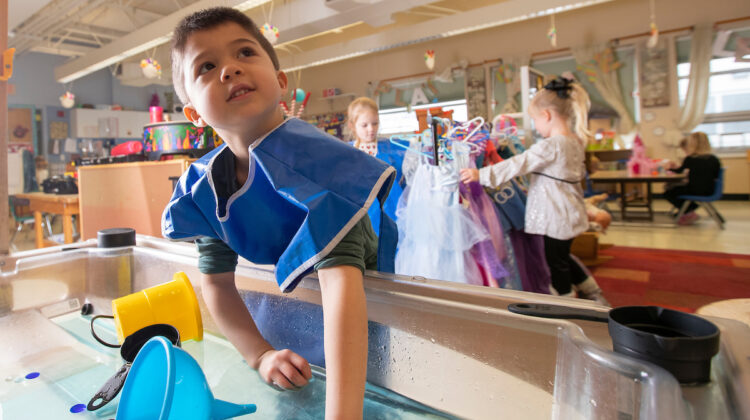
A young boy looks up from playing with toys in a tub of water.

When most of the country was ordered to stay at home in March, senior Eli Jones’s school environment did not change. The child and family development student was already completing coursework online while interning in Illinois.  

“I currently work for a family-focused, child-centered welfare agency called Hobby Horse House (HHH) in Jacksonville,” Jones says. “I’ve been able to be part of many aspects of the services we provide, a major one being parenting classes.”   

The spread of COVID-19 means Jones is completing intern duties remotely, too. 

“While I can’t go into details of my casework, I can tell you that we’re doing the best we can during this situation to provide our services while limiting person-to-person contact and working through telecommunications,” Jones says. 

Passion project 

Fortunately, working in ways he isn’t used to hasn’t meant the halt of what he calls his passion project: a parenting program exclusively for fathers. The idea came to Jones during a discussion with his workplace’s parenting services coordinator. 

“The goal of the program is that fathers will be able to handle all aspects of raising their children,” Jones said.  

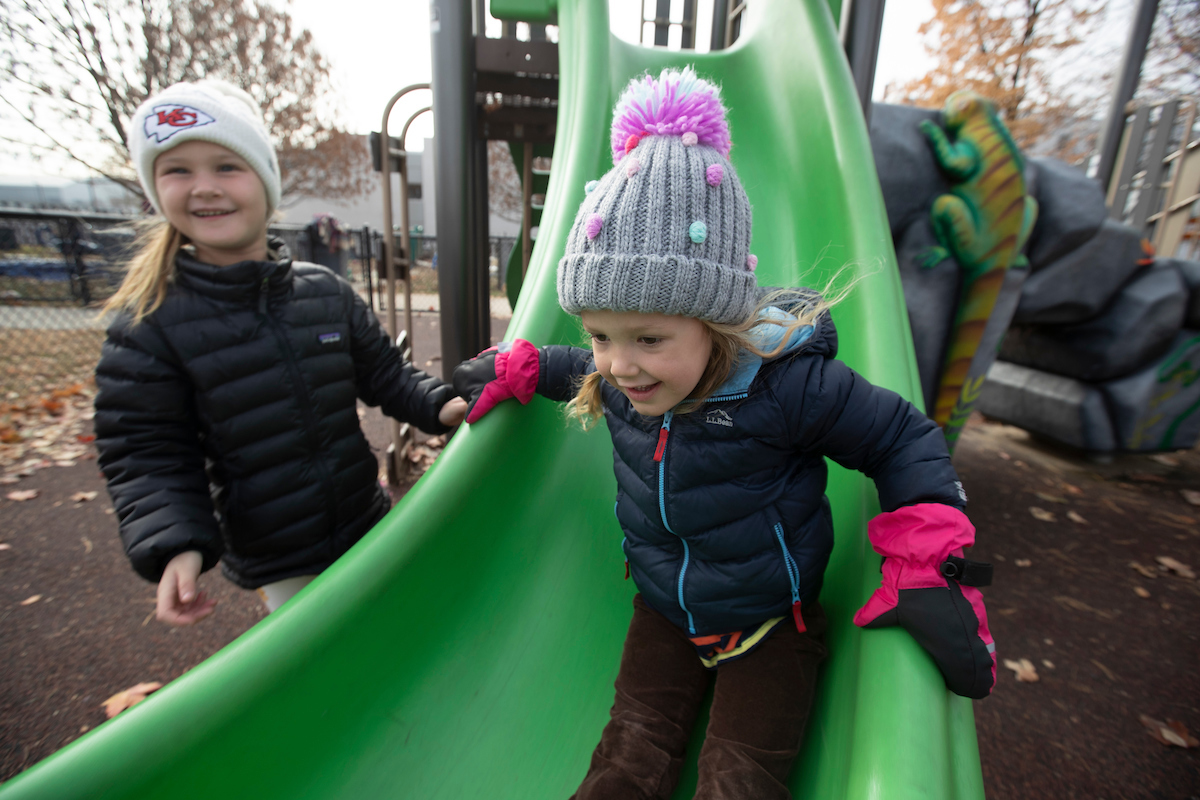
A young girl plays on a slide.
A young girl plays on a slide, her friend smiling.

He hopes it will also combat the notion that men cannot parent like women can.  

“Honestly, men get a bad rep as fathers, because many aren’t taught to be nurturing individuals,” Jones said.  

His goal is to combat toxic masculinity—an adherence to traditional, male gender roles that limit the emotions of boys and men.  

“Through toxic masculine traits, and the thought that it’s the mother’s job to raise children, we have created a standard that dads aren’t really parents, but simply babysitters.”  

Stages of life 

While Jones’s progress for his project has slowed, much of it has already been laid out. The program will consist of 12 modules—including several for every stage of childhood through maturity—to be covered across 12 weeks: 

  • Weeks 1-2 covers development from birth through two years of age. Fathers will learn how to feed, bathe and diaper their babies, as well as how to aid them as they learn to walk and talk.  
  • Week 3 teaches fathers about self-care, self-worth and how to ditch toxic masculinity.  
  • Week 4 covers ages 2-5, as well as how to find child care and preschools.  
  • Week 5 focuses on school-age children ages 5-12. It teaches fathers how to assist children with schoolwork and help them understand their changing bodies, gender roles, sex and body sovereignty.  
  • Week 6 shows fathers how to navigate the world of dating as their children become curious about romantic relationships.  
  • Week 7 covers brain development across stages of childhood, as well as how to manage stress and money as a parent. 
  • Week 8 focuses on puberty. 
  • Week 9 includes information about ages 12-18.  
  • Week 10 teaches fathers how to structure their days, managing chores, errands and schedules.  
  • Week 11 focuses on children’s educational needs and the possibility of raising a special needs child.  
  • Week 12 is for leftover information and unanswered questions, Jones says, as he is sure there will be spillover from previous modules.  

Jones acknowledged the program covers a lot of material in a short amount of time. It’s his hope, though, that the additional formation of a group to help fathers socialize will build community. Dads will receive support in their learning and growth.  

Putting it to work

Jones plans to form a trial group next spring to go through each module. Feedback will help him adapt the program to fathers’ needs.  

Jones is currently looking into grant funding for researchers to help with further development.  

“The end goal for this program is to publish the curriculum, so that other centers like HHH could use the content,” Jones says.  

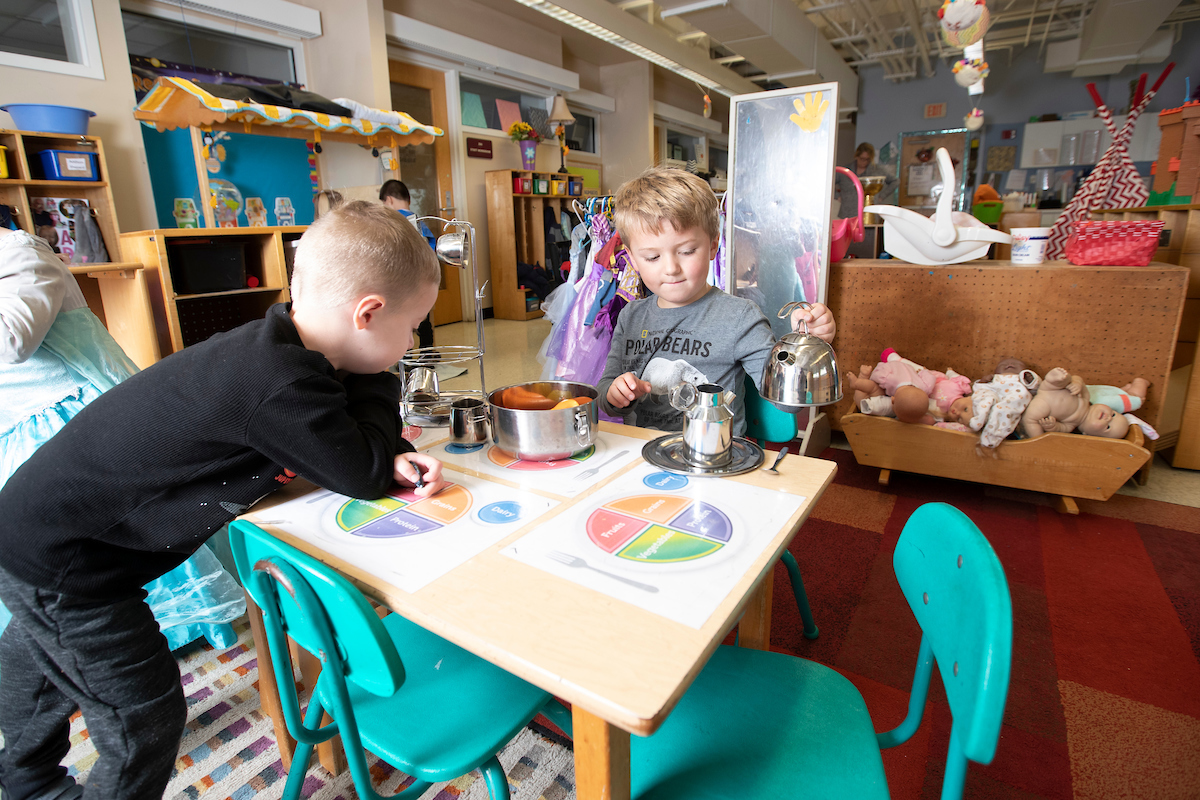
Two boys play with toy kitchenware at a small table.

Childhood education and family studies assistant professor Dr. Elizabeth King knows it’s possible. She calls Jones an “engaged and critical” student.  

“He doesn’t simply take content at face value, but he pushes it,” she says. “He wants not only to learn whatever material is covered, but to challenge the concept, turn it on its head and consider it in various contexts—always with a social justice lens.” 

Empowered parents 

Dr. King, who has worked with Jones for about two years, claims students like him make professors better at what they do. She’s happy for the opportunity to finally talk him up.  

“His approach to the parenting program he’s developing is innovative,” she says. “It’s not only a how-to for fathers, but it focuses on updating the narrative of what fathering looks like.” 

Many parenting programs put a focus on mothers, she says.  

“His program aligns directly with the American Psychology Association’s call for positive father involvement.” 

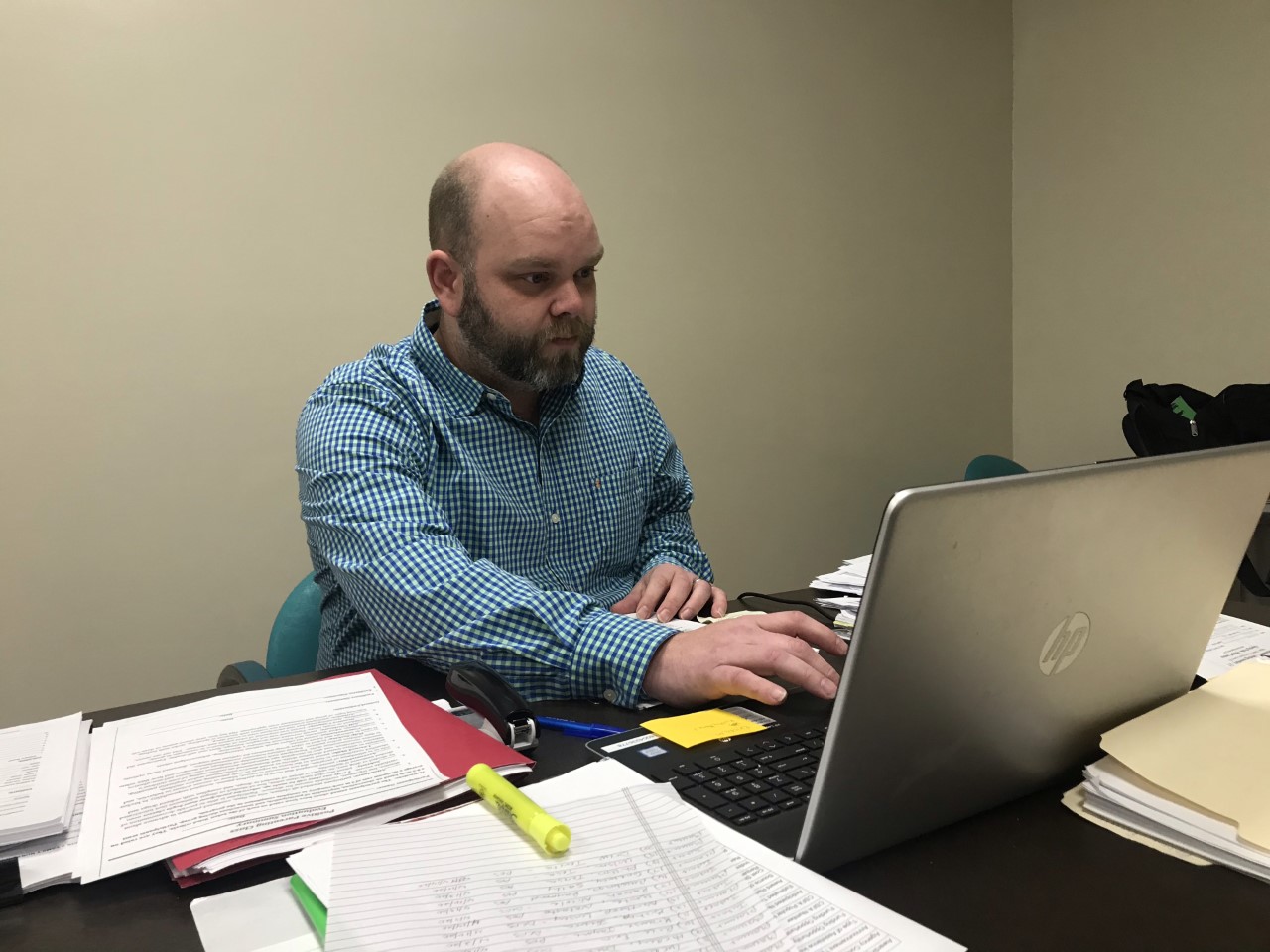
Eli Jones works on his parenting program at his desk.
Eli Jones works on his parenting program for fathers at his desk.

What’s better? Jones’s program aligns with his own ideal that fathers feel empowered to be the best parents they can be.  

“I believe this program will help fathers not only be better for their children,” he says, “but for themselves.” 

Filed Under: COE Faculty, COE Students Tagged With: COVID-19, Early Childhood and Family Development, Eli Jones, Elizabeth King, father, parent, parent program

Categories

  • Bear POWER
  • Child Life Studies
  • COE Alumni
  • COE Faculty
  • COE Staff
  • COE Students
  • Counseling
  • Early Childhood and Family Development
  • Educational Administration
  • Elementary Education
  • Graduate Program
  • Literacy
  • Middle School Education
  • Secondary Education
  • Special Education
  • Student Affairs
  • Uncategorized

Archives

Meta

  • Log in
  • Entries feed
  • Comments feed
  • WordPress.org
  • Accessibility
  • Disclaimer
  • Disclosures
  • Equal Opportunity Employer and Institution
  • © 2026 Board of Governors, Missouri State University
  • Contact Information